

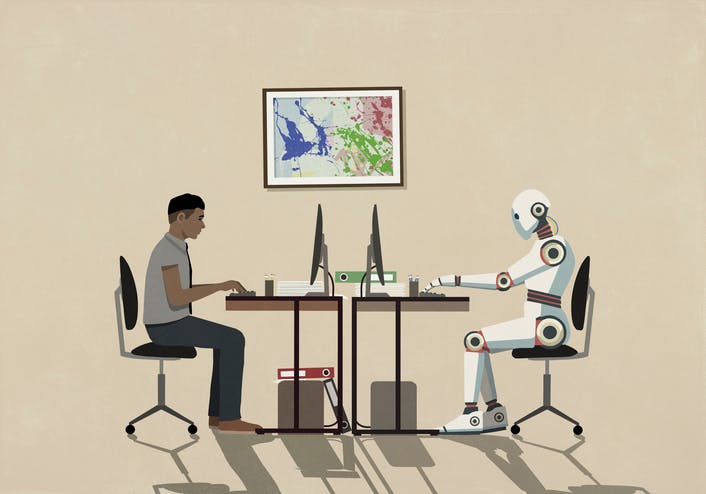
AI Becomes a Daily Tool for American Workers
As artificial intelligence (AI) continues to integrate into the modern workplace, a new report reveals that 12% of American workers now use AI tools as part of their daily job responsibilities. This finding highlights the growing reliance on technology to improve productivity, streamline operations, and support decision-making across various industries.
The data, compiled through recent workforce surveys, reflects how AI is no longer a futuristic concept but a practical reality for millions of professionals. From content generation to customer support and data analysis, AI applications are becoming indispensable tools for everyday tasks.
AI Usage Varies by Industry and Role
While overall adoption stands at 12%, the numbers vary significantly depending on the industry and type of work. Technology and media sectors see the highest levels of daily AI use, with professionals frequently leveraging generative tools like ChatGPT, Midjourney, and other machine learning platforms.
In contrast, fields such as manufacturing or retail may see slower adoption, often due to the physical nature of the work or limited access to relevant AI solutions. However, even in these sectors, AI is beginning to influence operations through automation, predictive maintenance, and supply chain optimization.
Why Workers Are Turning to AI
One of the main drivers behind the rise in AI use is its ability to save time and enhance efficiency. Employees report that AI tools help them complete repetitive tasks faster, generate ideas, and even handle customer inquiries with greater accuracy. This has not only improved productivity but also allowed workers to focus on more strategic and creative aspects of their roles.
Moreover, as AI platforms become more user-friendly, even those without technical backgrounds are able to integrate them into their daily workflows. This democratization of AI access is contributing to its rapid spread across the workforce.
Concerns About Job Displacement Persist
Despite the benefits, there are ongoing concerns about the impact of AI on employment. Some workers fear that the increasing efficiency of AI may lead to job reductions or shifts in required skill sets. Experts suggest that while certain roles may become obsolete, new opportunities will also emerge, especially in areas involving AI oversight, programming, and ethical management.
“The key will be adapting and reskilling,” says workforce analyst Jenna Thomas. “Organizations and employees alike must embrace continuous learning to stay relevant in this evolving landscape.”
Employers Encouraged to Support AI Training
To navigate the changes brought by AI, many experts recommend that companies invest in training programs. By equipping employees with the knowledge to use AI effectively, businesses can not only enhance performance but also reduce resistance to technological adoption.
Several major corporations have already launched AI literacy initiatives, offering tutorials, hands-on workshops, and access to AI tools. These programs aim to create a more agile and future-ready workforce.
The Broader Impact of AI on Work Culture
The integration of AI is also reshaping workplace culture. With the ability to automate mundane tasks, employees are finding more time for collaboration, innovation, and problem-solving. Additionally, AI-driven insights are helping managers make data-informed decisions, improving overall team dynamics and efficiency.
However, experts caution that organizations must also address potential ethical issues, including data privacy, algorithmic bias, and transparency. Ensuring responsible AI use will be crucial to maintaining trust between employers and employees.
Looking Ahead: AI as a Workforce Staple
As AI technologies continue to evolve, their role in the workplace is expected to grow. Analysts predict that the percentage of workers using AI daily will increase steadily, especially as new tools emerge and existing platforms become more accessible.
For now, the 12% figure marks a significant milestone—one that reflects a shift in how work is performed and the tools professionals rely upon. The future of work is being shaped today, with AI at the heart of that transformation.
This article is inspired by content from Original Source. It has been rephrased for originality. Images are credited to the original source.