

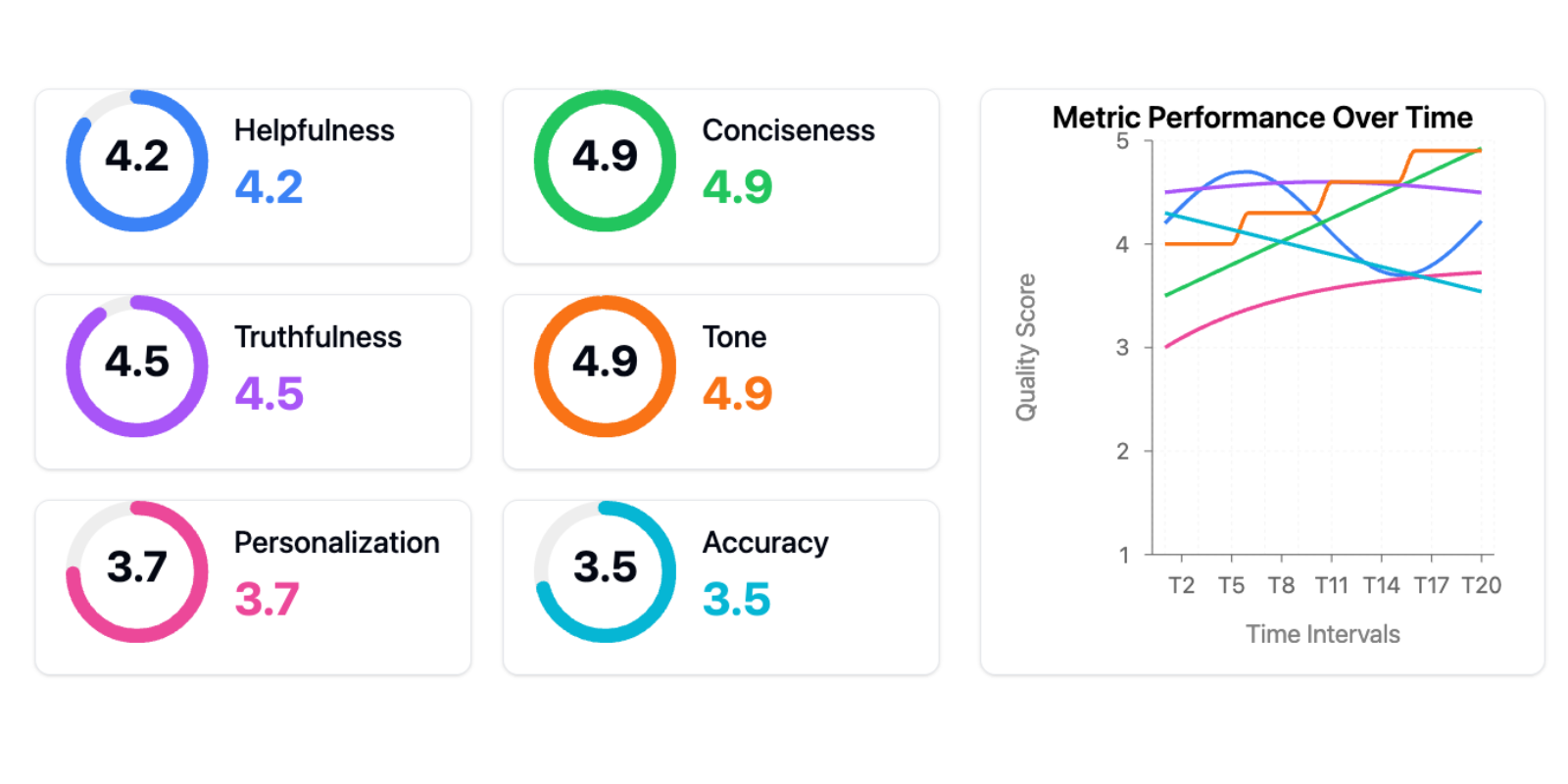
Measurement and Iteration: The Key to Successful AI Development
The Dynamic World of AI Technology
In the dynamic world of AI technology, teams often find themselves entranced by an array of new tools, frameworks, and architectures that promise revolutionary progress. However, a recurring scene in consulting work has unveiled a harsh truth: most AI teams are focusing on the wrong aspects of development. While delving into complex agent architectures and frameworks can be alluring, the success of AI teams hinges on one singular focus—measurement and iteration.
The Common Pitfall: Overemphasizing Tools
Imagine a bustling AI team enthusiastically presenting their latest agent architecture. There’s excitement about the utilization of RAG systems, advanced routers, and innovative frameworks. Yet, when posed with a straightforward question—how do you measure the effectiveness of these tools?—the room descends into silence. This scene is a microcosm of a larger issue plaguing many AI teams.
Error Analysis: The Key to Success
Teams are falling into what’s termed the “tools trap,” where adopting the right frameworks is seen as a cure-all for AI development challenges. This belief leads to the pursuit of vanity metrics that offer little insight into actual user experiences. Successful AI development demands a shift in focus towards error analysis—an activity that yields significant returns on investment.
A Case in Point: Nurture Boss
Nurture Boss, an apartment industry AI assistant company, exemplifies the importance of error analysis. By reviewing actual conversations and annotating failure modes, the team discovered systemic issues, such as trouble with date handling. Instead of jumping to new solutions, they focused on fixing the current system, improving success rates dramatically.
Bottom-Up Approach: Insights from Real Data
Adopting a bottom-up approach in error analysis allows for the identification of domain-specific issues. By categorizing errors observed in real data, AI teams can target significant problem areas and direct efforts towards meaningful improvements. This approach captures the unique challenges of a domain, providing actionable insights.
The Importance of a Customized Data Viewer
A simple, customized data viewer can revolutionize AI development. Unlike complex dashboards tracking generic metrics, a data viewer enables quick analysis of AI behavior against real-world scenarios. Such tools minimize the friction involved in understanding AI interactions, streamlining the error analysis and iteration processes.
Empowering Domain Experts
Another crucial strategy involves empowering domain experts to take active roles in AI development. By enabling them to write and iterate on prompts directly, teams can leverage expert knowledge without unnecessary technical translations. This not only streamlines development but also ensures AI solutions are deeply embedded in domain-specific needs.
Use of Synthetic Data: Overcoming the Data Drought
For teams in early-stage development lacking user data, synthetic data offers a practical solution. LLMs can generate realistic scenarios, allowing teams to test and iterate AI models effectively, even in the absence of real user interactions.
Maintaining Trust in Evaluation
For AI systems to evolve, the focus must remain on accurate and reliable evaluation. Regular alignment between automated evaluations and human judgment ensures systems remain trustworthy. This requires tools and processes that continuously adapt to changing criteria, preserving the integrity of development evaluations.
Conclusion
The strategic shift from tool-focused to measurement-focused development results in AI products that are not only effective but continuously improving. By adopting structured experimentation and maintaining a firm grip on evaluation processes, teams can cultivate robust AI systems that seamlessly adapt and advance within the rapidly evolving technological landscape.