

AI’s Growing Impact on the Workforce
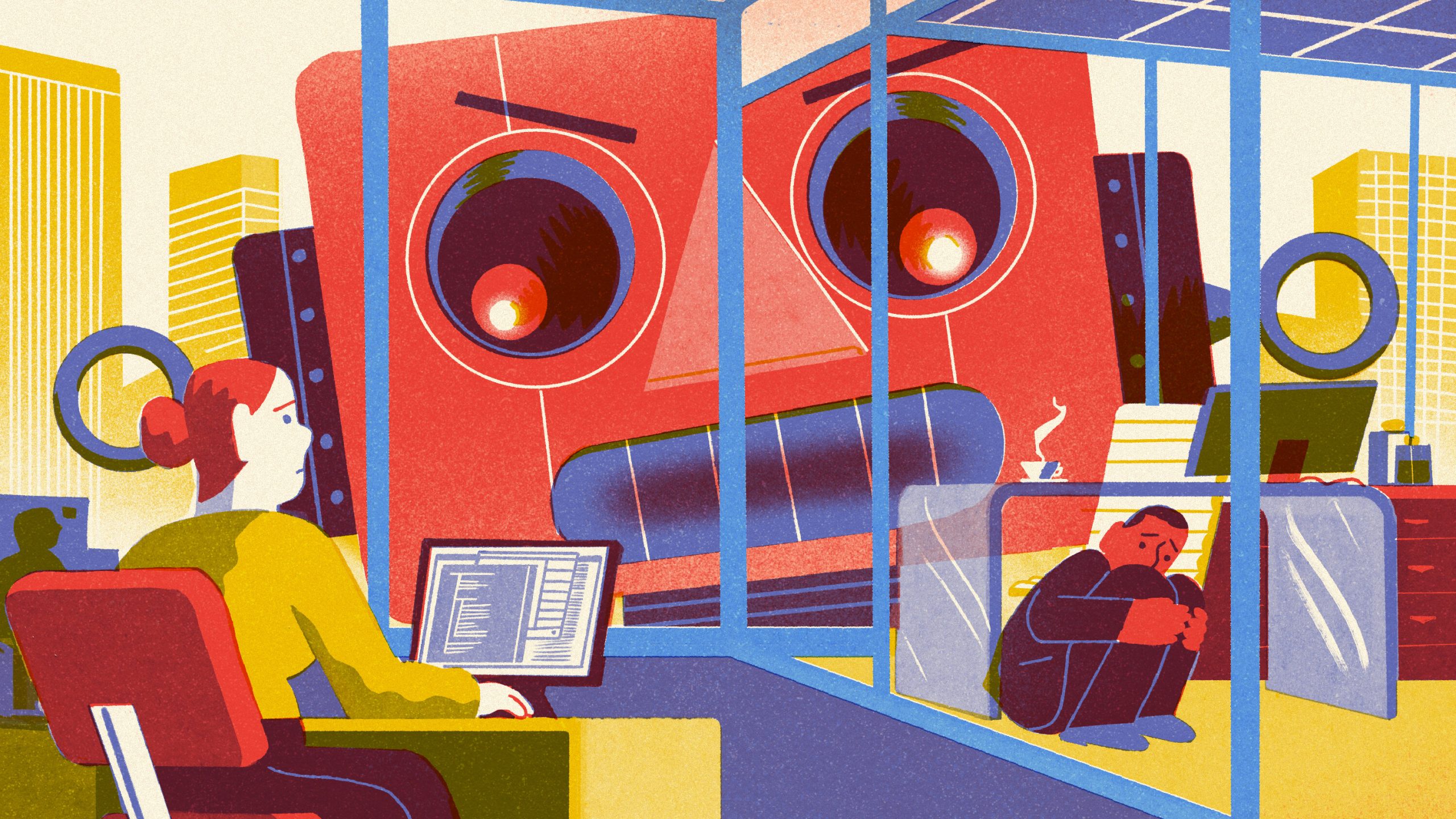
When Amazon CEO Andy Jassy recently stated that artificial intelligence (AI) would “reduce our total work force” in the coming years, it confirmed a growing worry among employees—that AI might replace their jobs. This sentiment was heightened when Microsoft announced layoffs affecting around 9,000 employees, approximately 4% of its workforce.
The discussion now centers on which types of workers are most at risk. Experts are split: some believe entry-level employees are more vulnerable because their tasks are more easily automated, while others argue that midlevel managers and seasoned professionals are increasingly at risk.
Entry-Level Workers in the Crosshairs?
Dario Amodei, CEO of AI company Anthropic, warned that AI could replace half of all entry-level white-collar roles within five years. Concerns are mounting, especially with rising unemployment rates among recent college graduates. Though AI may not be the sole cause, many suspect it plays a significant role.
Data from payroll processor ADP shows that in sectors like computer science and customer service, employment for workers with less than two years of experience peaked in 2023 and has since dropped by 20-25%. Conversely, employment for workers with more than two years of tenure has risen. This trend underscores the growing pressure on newcomers in tech-heavy roles.
AI’s Upside for Midlevel Talent
Despite these concerns, some industry leaders argue that AI could actually empower younger employees. Brad Lightcap, COO of OpenAI, suggested that AI may be more disruptive for tenured workers entrenched in traditional workflows. Meanwhile, junior employees, often more adaptable, could find new ways to leverage these tools.
Research supports this view. A study involving Italian software developers—who temporarily lost access to ChatGPT—found that midlevel coders benefitted more from AI than their junior counterparts. While junior developers used AI to speed up tasks, midlevel engineers utilized it to guide team efforts, review peers’ work, and contribute across programming languages.
“When people are really good at things, what they end up doing is helping other people rather than working on their own projects,” said Sarah Bana, a co-author of the study. She emphasized that AI amplified this collaborative tendency, increasing the overall value of midlevel employees.
Could Experienced Workers Face Displacement?
While midlevel workers may benefit in some scenarios, others argue that AI could undermine high-skilled professionals by detaching their unique skills from the humans who traditionally held them. Danielle Li, an economist at MIT, noted that AI can now perform complex tasks like coding or drafting legal documents—functions once reserved for highly trained experts.
“You’re being paid for the rarity of your skill, and what happens is that AI allows the skill to live outside of people,” Li said. She added that the rise in unemployment among college graduates might be due to companies expecting to need fewer employees overall—not just fewer entry-level staff.
Real-World Examples of AI Restructuring
Robert Plotkin, a partner at a law firm focusing on intellectual property, shared how AI has altered his firm’s operations. While the need for paralegals has remained steady, the firm now employs half as many contract lawyers as before. Plotkin often drafts patent applications more efficiently with AI assistance, reducing reliance on experienced freelance attorneys.
Major tech firms appear to be following similar strategies. Microsoft, Google, Meta, and Amazon have all enacted layoffs since 2022. Microsoft’s recent cuts included many middle managers and developers. Analysts suggest that roles involving routine administrative tasks—like managing emails and spreadsheets—are particularly susceptible to automation.
David Furlonger, a VP at Gartner, noted, “Anything that is administrative, spreadsheet-related, where there’s an email trail, a document-management type activity, AI should be able to perform fairly easily.” According to Gartner’s surveys, CEOs increasingly believe fewer managers are needed.
The Changing Value of Experience
Gil Luria, an equity analyst at D.A. Davidson, said that part of the layoff motivation stems from financial decisions. As companies pour billions into AI development, they’re compelled to cut costs elsewhere. High-salaried workers who resist adopting AI may become expendable, regardless of their experience.
“There are senior people who have figured out how to get leverage out of AI and senior people who are insistent that AI can’t write code,” Luria explained. This divide between adaptability and resistance could shape the future employment landscape more than tenure or expertise alone.
Harper Reed, CEO of 2389 Research, believes companies will increasingly favor a model with a few senior leaders overseeing many junior staff supported by AI. “How you decrease cost is not by firing the cheapest employees you have,” Reed said. “You take the cheapest employee and make them worth the expensive employee.”
A recent study by Microsoft and academic researchers found that AI coding assistants significantly boosted the productivity of junior developers more than that of experienced ones. This suggests that companies may start hiring more entry-level workers capable of handling midlevel responsibilities with AI support, reducing the need for a traditional middle layer.
This article is inspired by content from Original Source. It has been rephrased for originality. Images are credited to the original source.