

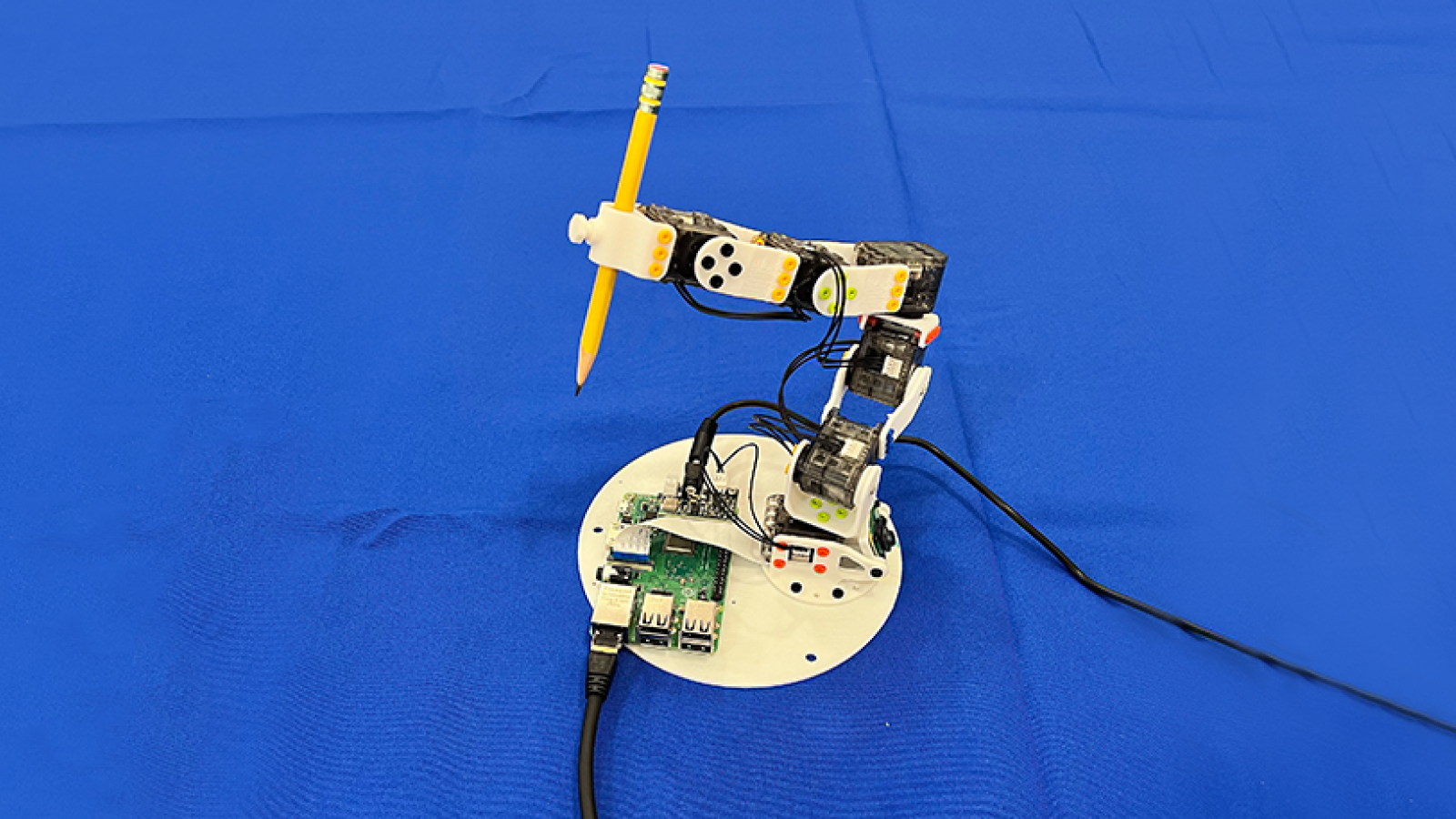
Revolutionizing Robotics with Vision-Based AI
Researchers at the Massachusetts Institute of Technology (MIT) have unveiled a groundbreaking artificial intelligence (AI) system capable of teaching itself to control a wide variety of robots. This innovative approach relies solely on visual data captured by standard cameras, eliminating the need for complex sensors or extensive pretraining. The development marks a major leap forward in robotics, potentially enabling machines to achieve a level of self-awareness akin to that of humans.
The AI system functions by interpreting a robot’s structure and movement using a camera, much like how humans use their eyes to learn about their own bodies. By observing itself in action, the robot is able to create an internal model of its body and environment, which it then uses to learn how to move effectively and interact with objects.
Learning Through Vision Alone
The core of this new system lies in a concept known as the “visuomotor Jacobian field.” This is a representation of the 3D space a robot occupies, based entirely on visual data. The AI uses this field to determine how visual changes correspond to specific motor actions. In doing so, it can predict how its movements will affect its position and surroundings.
“Think about how you learn to control your fingers: you wiggle, you observe, you adapt,” explained Sizhe Lester Li, a PhD student at MIT’s Computer Science and Artificial Intelligence Laboratory (CSAIL) and the lead researcher on the project. “That’s what our system does. It experiments with random actions and figures out which controls move which parts of the robot.”
Overcoming Traditional Robotics Limitations
Conventional robotic systems often depend on precise engineering, expensive sensors, and countless hours of training to perform even basic tasks. These systems are typically rigid and lack the flexibility to adapt to new hardware configurations or environments without significant reprogramming.
This new vision-based method, however, offers a cost-effective alternative. Without relying on intricate hardware setups, the system can be implemented using consumer-grade RGB-D cameras. In their experiments, researchers used 12 cameras to capture a few hours of video footage of a robot performing random movements. From this data, the AI system was able to learn how to control the robot without any human intervention.
Two-Tiered AI Framework
At the heart of the system is a two-part framework. The first component is a deep-learning model that allows the robot to understand its position and movement in 3D space. The second is a machine-learning algorithm that translates general movement commands into specific instructions the robot can execute.
This structure enables the robot to learn and adapt rapidly. Within just a few hours of observation, the AI can master the control of robots with unconventional architectures, including those made from soft or flexible materials. This opens the door to autonomous systems that are far more versatile than current models.
Outperforming Traditional Methods
To test the effectiveness of their approach, the MIT team compared their system with existing 2D camera-based control methods. The results were striking: the new system delivered greater accuracy, especially in scenarios where visibility was partially obstructed. While traditional methods struggled or failed in these conditions, the Jacobian field-based AI successfully generated navigable 3D maps and maintained control.
Once developed, the framework was applied across a variety of robotic platforms with differing designs. In each case, the AI was able to learn how to operate the robot using just a single camera. This adaptability is a testament to the robustness and scalability of the new approach.
Implications for the Future of AI and Robotics
According to the researchers, their work is inspired by the way humans use vision to understand and control their actions. “People can learn to pick and place objects within minutes when using a video game controller. The only sensors we require are our eyes,” the study notes.
Published June 25 in the journal Nature, the research could significantly reduce the cost and complexity of developing autonomous robots. By mimicking the human approach to learning and control, this AI system paves the way for more intuitive and adaptable machines capable of performing complex tasks with minimal setup.
Ultimately, this breakthrough represents a major step toward creating robots that can understand and interact with the world in a fundamentally human-like way—through vision and experience, rather than rigid programming and costly sensors.
This article is inspired by content from Original Source. It has been rephrased for originality. Images are credited to the original source.