


In the generative AI arms race, benchmarks have become both badges and blinders. For nearly two years, leaderboards such as Chatbot Arena and MMLU have shaped the public narrative, offering a fast, digestible way to rank large language models. But as these models mature, the question confronting both developers and enterprises is no longer “who’s smarter?” but rather “who’s usable?”
WAIC 2025, unfolding this week in Shanghai, provides timely contrast. Amid high-profile model releases and GPU-driven demos, a quieter undercurrent is gaining traction: deployment readiness. From enterprise APIs to on-device agents, the AI conversation is shifting from frontier capability to sustainable integration.
The shift is telling. While GPT-4o and Claude 3 dominate Western headlines, emerging models from Asia—including Tencent’s Hunyuan, Alibaba’s Qwen, and DeepSeek—are building relevance through usability, not just power. Their public wins on coding, mathematics, and reasoning are notable, but their uptake in real-world applications may prove even more consequential.
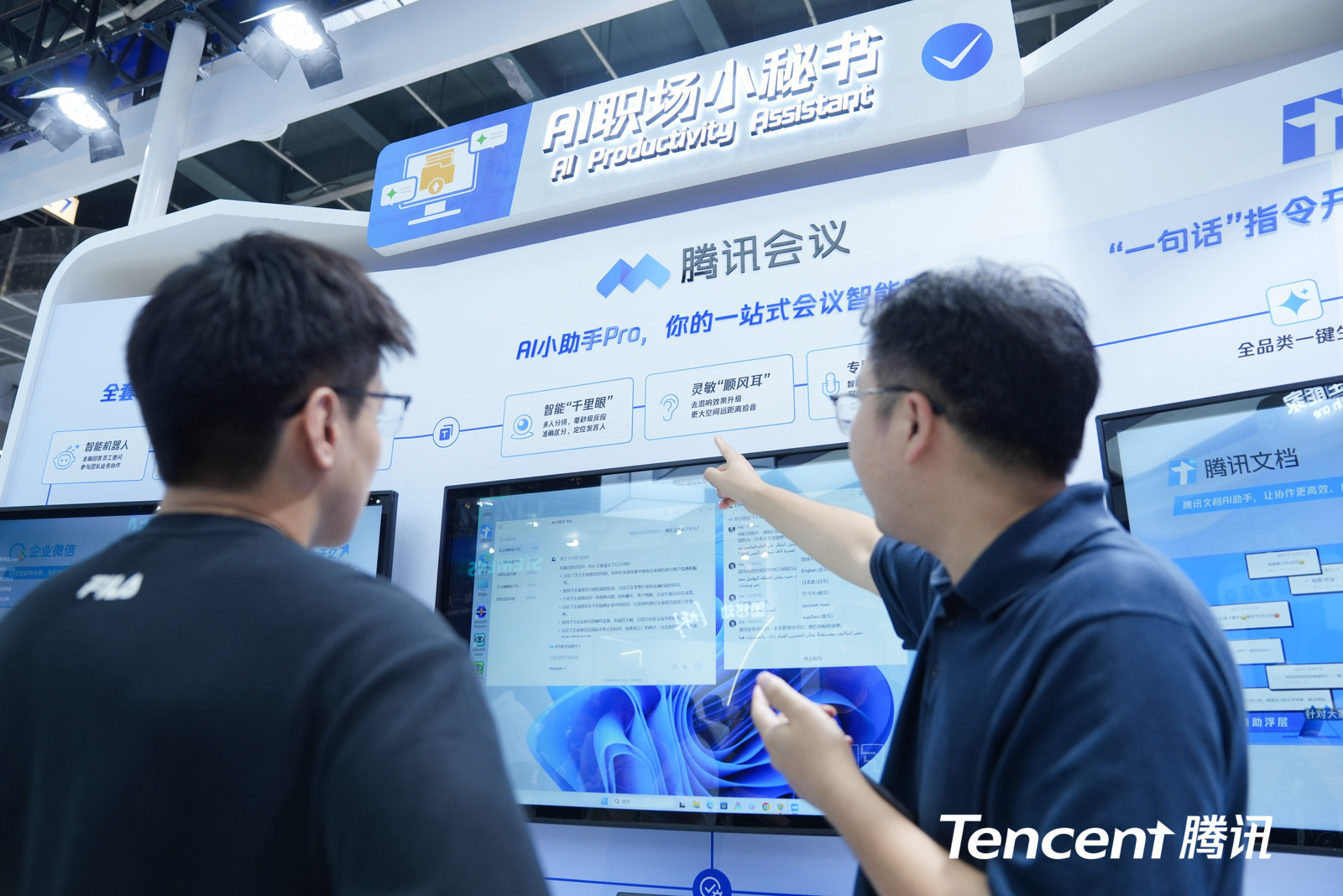
Hunyuan’s path offers a telling example. While its Turbo S variant recently ranked among the global top ten on Chatbot Arena, what industry insiders are paying closer attention to is how Tencent is distributing its model footprint: across healthcare consultations, rural assistant platforms, industrial design tools, and low-latency voice agents. Its integration into QQ, Tencent Docs, and even AI-powered navigation hints at a strategy not focused on headlines, but on infrastructure.
This isn’t unique to Tencent. Across the global landscape, a new generation of LLM providers is de-emphasizing scale in favor of specificity—fine-tuning for industries, regulatory environments, and edge deployments. In India, lightweight models are being embedded into local governance systems; in Europe, compliance-focused agents are being trained to handle sensitive public sector data. China’s domestic platforms are prioritizing compute-efficiency, hybrid-cloud adaptability, and multilingual customization.
What unites these efforts is a common realization: AI, to matter, must fit into the seams of everyday systems. It must be accessible enough for small developers and stable enough for critical services. Model capability is increasingly being measured not in FLOPS or tokens per second, but in developer SDKs, API uptime, and inference cost per query.
This deployment-oriented mindset is also reshaping how innovation is valued. Rather than racing to beat GPT on reasoning, many companies are racing to deliver AI copilots for logistics, manufacturing, and education—where “good enough and reliable” often trumps “state-of-the-art.” In China, this is evidenced by projects like Tencent’s “Yuanbao,” which puts voice-activated AI assistants into the hands of elderly rural populations, helping bridge digital divides with conversational interfaces tuned to local dialects and hardware limitations.
It’s a reminder that AI’s true test won’t be staged in a lab, but distributed in the field. Deployment—not demo—may be the defining battleground of the next phase.
That reality is forcing a recalibration. As AI enters the application-heavy phase, model providers will need more than parameter counts—they’ll need delivery channels, domain trust, and adaptable infrastructure. Companies with broad product ecosystems and existing user touchpoints may find themselves at an advantage—not because they’re building better models, but because they’re building the roads those models can travel on.
For all the fanfare around new architectures and multi-modal fusions, perhaps the most consequential question in 2025 is a practical one: can it ship?