

The Rise of Artificial Intelligence in San Francisco
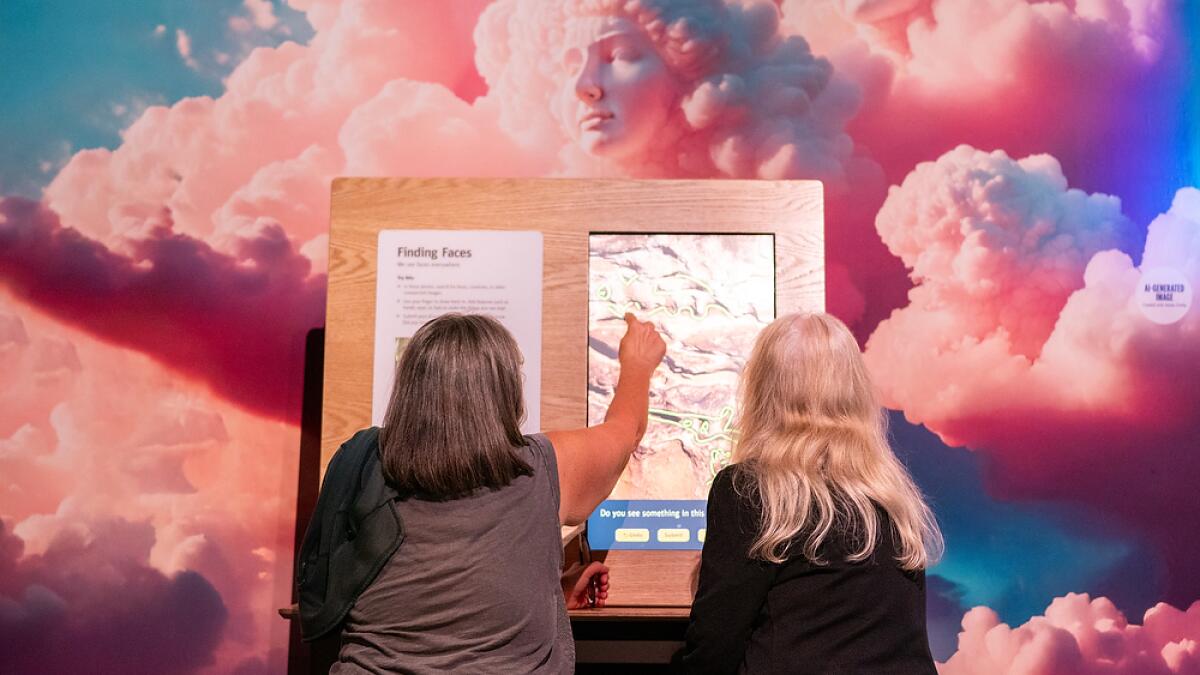
On a bright day along San Francisco’s scenic waterfront, the Exploratorium museum buzzes with families diving into the interactive world of artificial intelligence. Exhibits challenge visitors to interact with AI in innovative ways – from playing games that test human creativity against machines to creating music and art with the help of algorithms. Shadow puppets, robot hands, and AI chatbots all contribute to a vibrant experience that reflects a city rapidly evolving alongside technology.
Doug Thistlewolf, who oversees exhibit development at the Exploratorium, explained, “It sort of breaks down those guardrails, those big walls that people have put up around AI, and allows them to have a conversation with somebody else.”
AI Billboards, Office Leases, and Optimism
As visitors explore the AI exhibits, billboards across the city advertise companies like Fin and Outset, broadcasting their missions with bold slogans such as “Stop Hiring Humans.” These messages are part of a broader AI boom that has infused San Francisco with both hope and concern.
The election of Mayor Daniel Lurie has coincided with this AI surge, sparking renewed optimism in a city still recovering from post-pandemic challenges. However, anxiety over the displacement of workers and skyrocketing costs of living persists, especially as tech layoffs continue to affect major companies including Meta, Block, and Autodesk.
Venture Capital and AI Headquarters
The technological spotlight has shifted northward from Silicon Valley to San Francisco, now home to AI giants like OpenAI, Anthropic, Scale AI, and Databricks. These companies are redefining the city’s economic landscape, with venture capital funding for local AI startups surpassing $29 billion in the first half of 2025—more than double that of the same period in 2022.
According to PitchBook data, nearly 47% of all U.S. AI funding this year has flowed into the San Francisco Bay Area. This influx of capital is transforming the city’s office space as well. AI companies have leased more than 5 million square feet of commercial property, a number projected to triple by 2030. If realized, this could cut San Francisco’s 35.8% office vacancy rate by half.
Community Impact and Cultural Shifts
San Francisco resident Vijay Karunamurthy, a former executive at Scale AI, has witnessed the city’s tech highs and lows over 25 years. “That amount of energy being concentrated in San Francisco has just been huge for the city,” he said. “It means every single night there’s AI events, and if you go to a coffee shop, you’ll run into people working on AI.”
Despite the enthusiasm, skepticism remains. Protesters have taken to the streets outside OpenAI’s headquarters, warning against the unchecked rise of AI. Some even don costumes to make their point, holding signs like “AI will kill us all.”
Generative AI and Education
AI’s influence extends beyond business and into education. At San Francisco State University, Professor Arno Puder has seen a decline in computer science enrollment amid tech layoffs and the rise of generative AI. “Generative AI is a different beast,” he explained. “That does make me worry a little bit.”
In response, the university is launching a new undergraduate certificate in generative AI in 2026, aiming to equip students with tools to navigate the shifting landscape of tech work.
Exploratorium’s AI Exhibit: A Public Dialogue
The Exploratorium’s “Adventures in AI” exhibit has become a space where people can engage in thoughtful discussions about the future of AI. Created with input from researchers and backed by the AI firm Anthropic, the exhibit encourages visitors to write down their hopes and fears about AI, fostering a citywide dialogue.
Longtime San Francisco resident Martha Chesley, who visited with her grandchildren, is cautiously optimistic. “If it brings people and money, it’s good for the city because right now we have a lot of closed storefronts,” she said. “Maybe there would be more money also for housing being built.”
Neighborhoods Become AI Hubs
Various neighborhoods have embraced their roles in the AI ecosystem. Hayes Valley, now dubbed “Cerebral Valley,” has become a nucleus for hacker houses and AI-driven meetups. Nearby, the Northern Waterfront is emerging as a new tech hotspot, with companies leasing over 43,000 square feet of office space for ventures ranging from AI-driven loan servicing to lip-syncing technology.
Michael Phillips, chairman of Jamestown, a real estate firm, noted, “If you’re working on these fast to market, highly competitive products, you really need to be together.”
The Future of AI in San Francisco
As AI continues to reshape San Francisco’s economy, culture, and daily life, the city stands at the epicenter of a technological revolution. Whether this boom will lead to lasting prosperity or further inequality remains to be seen. But for now, the city is buzzing with ideas, talent, and a renewed sense of purpose.
This article is inspired by content from Original Source. It has been rephrased for originality. Images are credited to the original source.