

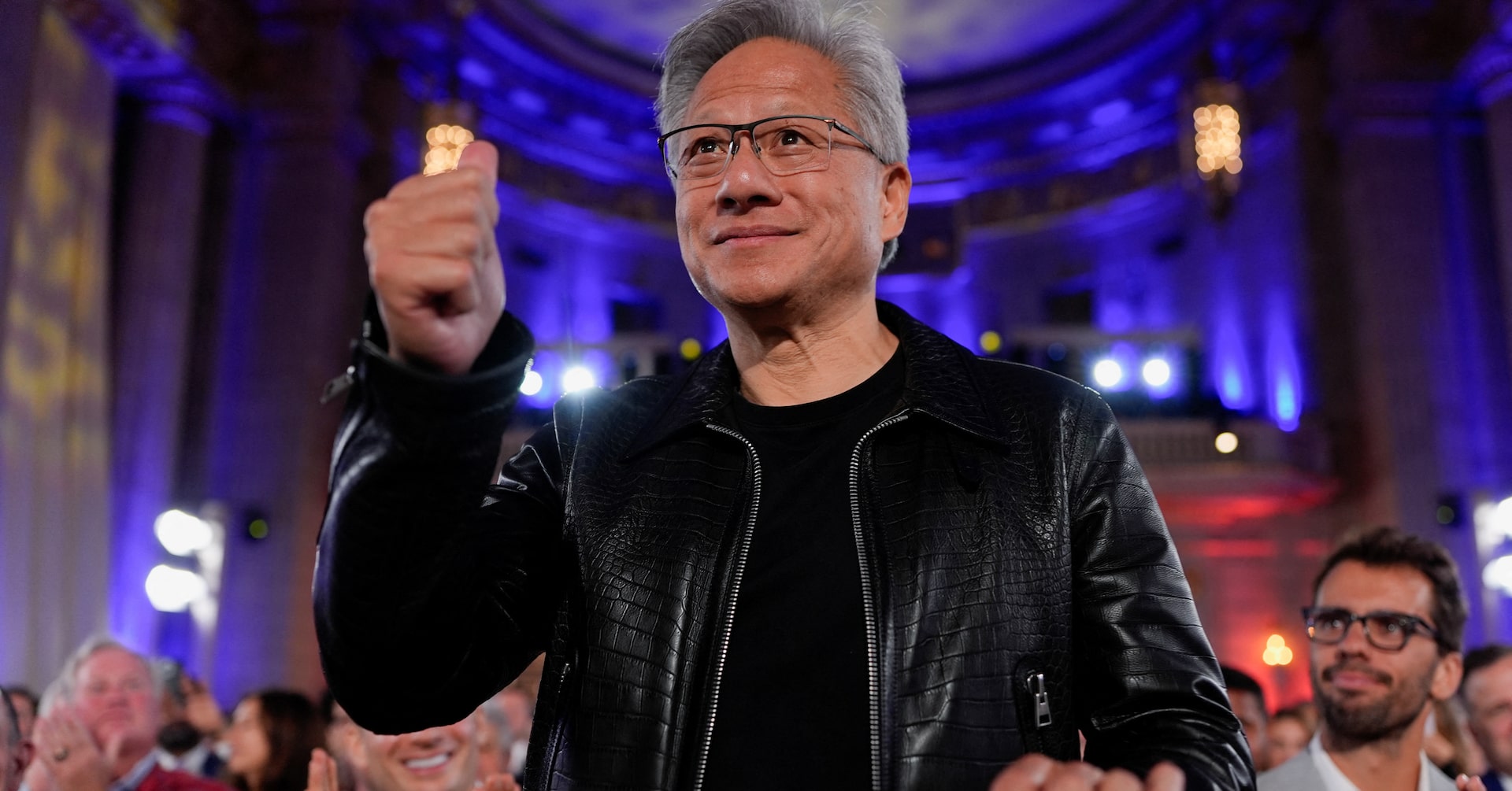
Nvidia CEO Reaffirms Confidence in AI Market Expansion
Nvidia’s CEO Jensen Huang has strongly reaffirmed his belief in the continued growth of the artificial intelligence (AI) sector, despite a third-quarter sales forecast that fell short of investor expectations. Speaking at the “Winning the AI Race” Summit in Washington D.C. on July 23, 2025, Huang emphasized that the AI boom is far from over and predicted a multi-trillion-dollar investment wave in AI infrastructure before the end of the decade.
“A new industrial revolution has started. The AI race is on,” Huang declared, noting that he anticipates between $3 trillion and $4 trillion in AI infrastructure spending by 2030. His remarks aimed to counteract concerns over tepid revenue projections that have stirred anxiety among investors recently.
Stock Reaction and Market Sentiment
Despite Huang’s optimistic outlook, Nvidia’s stock dipped 1.56% to $178.77 in premarket trading on Thursday, a signal of lingering investor unease. The company’s revenue forecast, while slightly exceeding expectations, failed to generate the kind of excitement that has previously boosted its valuation.
Analysts point out that the outlook notably excludes revenue from China, reflecting ongoing trade tensions between the United States and China. The omission highlights the geopolitical uncertainty that continues to cloud the tech industry’s prospects in Asia.
Matt Orton, head of advisory solutions at Raymond James Investment Management, noted, “This just highlights that there’s a lot of durability to this AI trade. The hyperscalers continue to accelerate, and Nvidia still sees strong demand.”
Huang Doubles Down on AI Optimism
In the face of a market showing signs of fatigue toward AI-related stocks, Huang remains undeterred. He emphasized that Nvidia’s cutting-edge technology enables clients to handle massive data loads with reduced energy consumption, a factor he believes will sustain demand.
“The more you buy, the more you grow,” Huang stated. “The buzz is: everything sold out.” This bullish sentiment comes even as some industry leaders have cautioned against overexuberance in the AI space. OpenAI CEO Sam Altman, for instance, recently warned that investors might be getting “overexcited” about AI’s short-term potential.
Major Clients and Strategic Focus
Huang highlighted that Nvidia continues to benefit from robust capital expenditures by major tech giants such as Microsoft and Amazon. He estimates that data centers alone could see $600 billion in capital spending this year. For facilities worth up to $60 billion, Nvidia anticipates capturing as much as $35 billion in revenue.
In the latest quarter, a customer outside of China purchased $650 million worth of Nvidia’s H20 chip, a reduced-capability product originally targeted at the Chinese market. This demonstrates continued global demand for the company’s technology, even amid regulatory and trade headwinds.
Product Demand and Competitive Edge
Nvidia’s newer-generation Blackwell chips are already largely allocated through 2026, indicating strong long-term demand. Even its older Hopper processors are seeing high uptake, further solidifying the company’s dominance in the AI chip market.
Thomas Martin, a portfolio manager at Globalt Investments, remarked, “When you have something that is new and it’s growing as fast as it is, it’s evidence that we’re in the early stages of the AI boom.” He added that the massive capex announcements from hyperscale cloud providers underscore the strength and longevity of the current AI investment cycle.
Looking Ahead: AI’s Future Role in Tech
While Nvidia’s recent earnings may not have wowed Wall Street, the company’s strategic positioning suggests it is well-prepared to capitalize on the next phase of AI development. The convergence of high-performance computing, machine learning, and global cloud infrastructure investments positions Nvidia as a central player in the AI revolution.
Despite short-term hiccups in stock performance and market sentiment, Huang’s long-term vision remains focused on sustaining innovation and meeting rising global demand. If his predictions hold true, AI infrastructure could become the backbone of a new industrial era, with Nvidia firmly at the helm.
This article is inspired by content from Original Source. It has been rephrased for originality. Images are credited to the original source.