

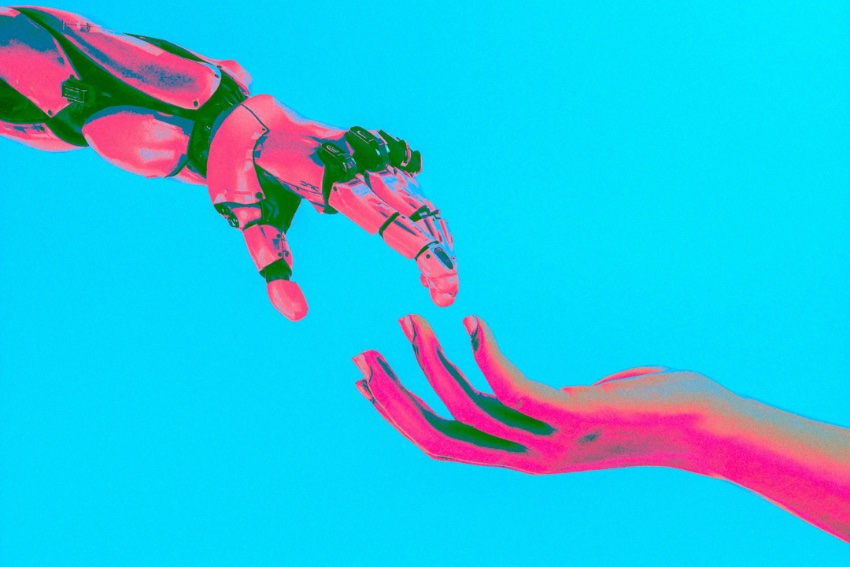
Supreme Court Declares Copyright Is Exclusive to Human Creators
In a landmark decision, Mexico’s Supreme Court of Justice of the Nation (SCJN) has ruled that works created entirely by Artificial Intelligence (AI) are ineligible for copyright protection under the country’s Federal Copyright Law (LFDA). This ruling underscores the legal position that authorship is inherently a human right, emphasizing qualities such as creativity, individuality, and consciousness as prerequisites for ownership of creative content.
“This resolution establishes a legal precedent regarding AI and intellectual property in Mexico,” the National Copyright Institute (INDAUTOR) stated in an official release following the court’s decision on August 28, 2025.
The verdict reinforces that creative works must originate from a human mind in order to qualify for copyright, and that purely algorithmic or autonomous AI-generated content lacks the essential human element required by law.
Key Judgments: AI Lacks Human-Like Creativity and Emotion
According to the SCJN, automated systems do not possess the attributes that qualify a being as an author under Mexican law. These attributes include originality, individuality, and emotional expression, all of which are considered uniquely human traits. The court explained that copyright is a constitutional right that emerges from the human intellect, creativity, and emotional experience — none of which are characteristics found in AI.
“The SCJN resolved that copyright is a human right exclusive to humans derived from their creativity, intellect, feelings and experiences,” the court stated. It also asserted that the limitations placed on authorship by the LFDA are both legal and compatible with international agreements.
Background: The Case of ‘Virtual Avatar: Gerald García Báez’
This ruling came in response to a legal dispute that began in August 2024 when INDAUTOR rejected an application to register a digital work titled “Virtual Avatar: Gerald García Báez”. The work was created using an AI tool named Leonardo and lacked any direct human input during its creation process.
INDAUTOR denied the registration on the grounds that the LFDA requires works to be original human creations, showcasing the individuality and personality of the author. The applicant challenged this decision, arguing that restricting copyright to human creators goes against principles of equality and violates international agreements such as the United States-Mexico-Canada Agreement (USMCA) and the Berne Convention.
However, the SCJN clarified that these international treaties do not compel Mexico to extend copyright protections to AI-generated content. “The treaties do not require the recognition of non-human entities as authors, nor do they obligate the expansion of the legal concept of authorship beyond what is already stated in the LFDA,” the court declared.
Human-AI Collaboration Still Eligible for Copyright
Despite this strict stance on purely AI-generated works, the court acknowledged that human-AI collaborative works could still be registered, provided there is significant and verifiable human input. This includes actions such as directing, editing, selecting, or transforming AI-generated content to infuse it with human originality and personality.
“Works created with the assistance of AI, but guided by human creativity, may be eligible for registration,” INDAUTOR confirmed. This opens the door for creators who use AI as a tool within their creative process, rather than relying on it entirely.
Legal experts consulted by the newspaper El Economista emphasized that individuals seeking to register AI-assisted works must carefully document their creative process. “It’s vital to show clear evidence of the human intervention and how it shaped the final output,” they noted, adding that this documentation must align with the standards outlined in the LFDA.
Broader Implications for Mexican Intellectual Property Law
The SCJN’s decision sets a significant precedent for the evolving relationship between technology and intellectual property law in Mexico. As AI becomes increasingly integrated into creative industries — from visual arts to music and literature — the court’s ruling offers a clear framework for distinguishing between protected human creativity and unprotected machine-generated content.
This ruling may also influence future legislative reforms and spark further debate on whether copyright laws should evolve along with advancements in AI capabilities. For now, however, the message is clear: authorship and the rights that come with it remain firmly in the hands of humans.
This article is inspired by content from Original Source. It has been rephrased for originality. Images are credited to the original source.