

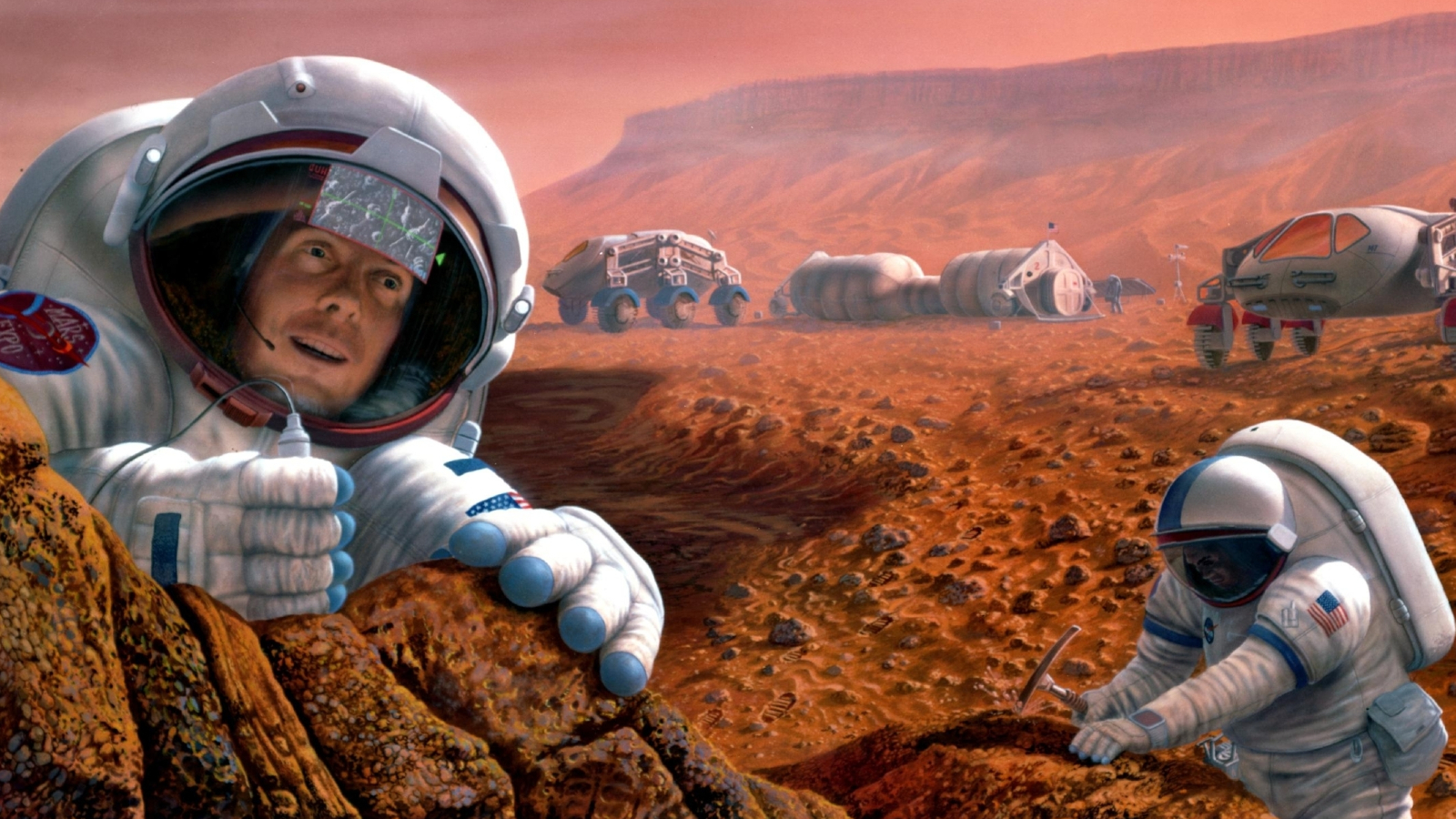
The Rise of Artificial Astronauts
As humanity sets its sights on Mars, the idea of sending not only humans but also advanced robotic counterparts is gaining momentum. These “artificial astronauts” are envisioned as humanoid robots capable of performing many of the same tasks as humans—without requiring the same life support systems or consumables. This development could play a crucial role in improving the efficiency and safety of Martian missions.
According to Pascal Lee, a planetary scientist at the SETI Institute, these robotic crew members could operate in extreme environments without the need for oxygen, water, or food. Lee is also the chairman of the Mars Institute and director of the NASA Haughton-Mars Project at NASA’s Ames Research Center. He believes that the accelerating advancement of artificial intelligence (AI) and robotics will be aligned with the timelines of planned Mars missions.
Entering the Age of Artificial Humans
“As we enter the ‘Age of AI,’ robotics and AI are making strides toward developing the first artificial humans,” said Lee. These humanoid robots, or androids, would possess not only the physical attributes and mobility of humans but also be equipped with artificial general intelligence (AGI). Lee presented these ideas during a Space Robotics Workshop held in late July, emphasizing the transformative potential of AI in space exploration.
This new generation of androids could eventually evolve into what Lee calls “artificial super astronauts,” animated by artificial super intelligence (ASI). These entities could surpass human abilities in every aspect of space exploration, from conducting research on Titan, Saturn’s largest moon, to traveling beyond our solar system.
A Glimpse Into the Future
Lee envisions a future where these artificial beings become more than just machines. “Once we achieve artificial humans, let alone artificial super humans, our relationship with androids will change. We will see them as our offspring and take pride in their accomplishments,” Lee explained. He imagines scenarios where interstellar missions are carried out by these super astronauts, carrying human DNA to potentially habitable exoplanets.
Rather than launching massive, multi-generational spacecraft filled with people, the future might involve sending a few artificial super astronauts on missions to settle new worlds. These missions would be more efficient, less risky, and could achieve more in a shorter timeframe.
Redefining Human Space Missions
In the near term, AI’s impact on space exploration is already prompting a reevaluation of how humans journey to and explore Mars. Lee suggests that beyond using robots as specialized assistants, we should prepare for the emergence of a new kind of explorer—one that is entirely artificial yet capable of contributing equally, if not more, to the mission’s success.
“I think humans will still go to space and explore Mars and beyond, but we will be in interesting company,” Lee concluded. These android explorers could work side-by-side with humans, taking on tasks that are too dangerous or complex for people.
SpaceX and the Optimus Initiative
Elon Musk, founder and CEO of SpaceX, shares a similar vision. Earlier this year, he announced plans to launch a small fleet of uncrewed Starship rockets to Mars as early as late 2026. These missions would carry Tesla’s Optimus humanoid robots to begin exploring the Martian surface.
“Starship departs for Mars at the end of next year, carrying Optimus. If those landings go well, then human landings may start as soon as 2029, although 2031 is more likely,” Musk wrote in a post on the social media platform X. This strategy highlights a growing reliance on AI and robotics as precursors to human arrival on the Red Planet.
Broader Implications for Space Exploration
The integration of AI and robotics into space missions extends well beyond Mars. These technologies are already being used to search for exoplanets and analyze astronomical data. As they become more advanced, their roles will expand to include constructing habitats, performing maintenance, and even making autonomous decisions during deep-space missions.
As the space community prepares for this paradigm shift, agencies and companies alike must adapt their planning and development strategies. Missions must now account for the inclusion of artificial astronauts, which may soon become indispensable partners in our quest to understand the cosmos.
This article is inspired by content from Original Source. It has been rephrased for originality. Images are credited to the original source.