

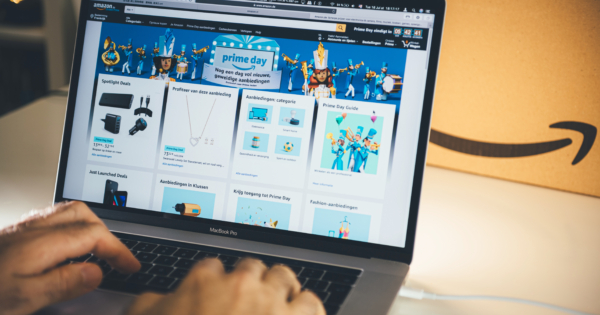
Artificial Intelligence Redefines Prime Day Shopping
This past summer, American consumers spent a staggering $24.1 billion online over a four-day period that aligned with Amazon Prime Day. While the financial figure alone is noteworthy, the transformation in shopping behavior tells an even more compelling story. Artificial intelligence (AI), once a tool operating behind the scenes, stepped into the spotlight, fundamentally reshaping how people approached one of the retail calendar’s most anticipated events.
According to Professor Luca Cian of the University of Virginia Darden School of Business, the shopping landscape experienced a seismic shift. Adobe Analytics reported a remarkable 3,300% increase in traffic coming from AI-powered shopping assistants. For the first time, these digital aides were not just supporting consumers—they were central to their decision-making process.
More Deliberate Shopping, Thanks to AI
While many might assume AI would accelerate the buying process by simplifying choices and streamlining purchases, Cian’s research revealed an unexpected outcome: AI actually slowed down consumer behavior. Shoppers became more thoughtful, deliberate, and strategic in their purchasing decisions. Rather than impulse buying, consumers used AI to compare prices, analyze product reviews, and evaluate alternatives before finalizing orders.
“AI encouraged people to take a step back,” said Professor Cian, who holds the Killgallon Ohio Art Professorship in Business Administration. “Instead of making quick decisions, shoppers began treating Prime Day more like a well-planned chess match. Each move was calculated.”
This shift in behavior marks a significant departure from the traditional frenzy associated with flash sales and limited-time offers. Consumers were no longer rushing to grab deals out of fear of missing out. Instead, they approached the event with a more analytical mindset, relying on algorithms to guide them through the buying process.
AI Assistants: The New Personal Shoppers
AI tools such as ChatGPT, Google’s AI integrations, and browser extensions powered by machine learning have become the new-age personal shoppers. These platforms can rapidly scan thousands of listings, synthesize customer feedback, and highlight the best value-for-money options. Their growing role was evident during Prime Day, where millions of users turned to these assistants for help navigating the sea of discounts.
“The AI didn’t just tell me what the best product was,” said one shopper interviewed by researchers. “It explained why—breaking down product specs, pointing out hidden costs, and even forecasting future price drops.”
This level of insight helped shoppers make more informed choices, reducing buyer’s remorse and increasing satisfaction post-purchase. For retailers, it also means they must rethink how they present and market products in an AI-dominated ecosystem.
Retailers Adjust Strategies to AI Behavior
Retailers are already adapting to these changes. With AI influencing purchasing decisions, companies are optimizing their product listings to cater not just to human eyes, but to algorithmic scrutiny. This includes clearer product descriptions, competitive pricing, and an increased focus on customer reviews—all of which are factors AI tools evaluate when recommending products.
“Retailers are beginning to understand that they’re no longer just marketing to people,” Cian explained. “They’re marketing to AI as well.”
In response, some companies are investing in their own AI solutions to level the playing field. These tools aim to understand consumer preferences, predict demand, and even engage in dynamic pricing strategies. As a result, Prime Day is evolving from a simple sales event into a complex game of strategy between consumers, AI, and retailers.
The New Norm for E-Commerce
The integration of AI into the shopping experience is not a temporary trend. Experts believe this behavior will become the norm in future online retail events. As AI tools grow more sophisticated, their influence will continue to deepen, affecting everything from how people discover products to how they evaluate and purchase them.
Moreover, the democratization of AI tools means that consumers across all income brackets can access high-level shopping insights once reserved for the tech-savvy. This could level the playing field in e-commerce, giving more people the ability to make smart, cost-effective decisions.
“We’re entering a new era where shopping is less about impulse and more about intention,” said Cian. “AI is empowering consumers to shop smarter, not faster.”
As Prime Day continues to evolve, one thing is clear: artificial intelligence has turned what was once a chaotic buying spree into a calculated, strategic endeavor. Both consumers and retailers will need to adapt to this new reality, where success is determined not just by flashy discounts, but by the intelligent use of data and technology.
This article is inspired by content from Original Source. It has been rephrased for originality. Images are credited to the original source.