

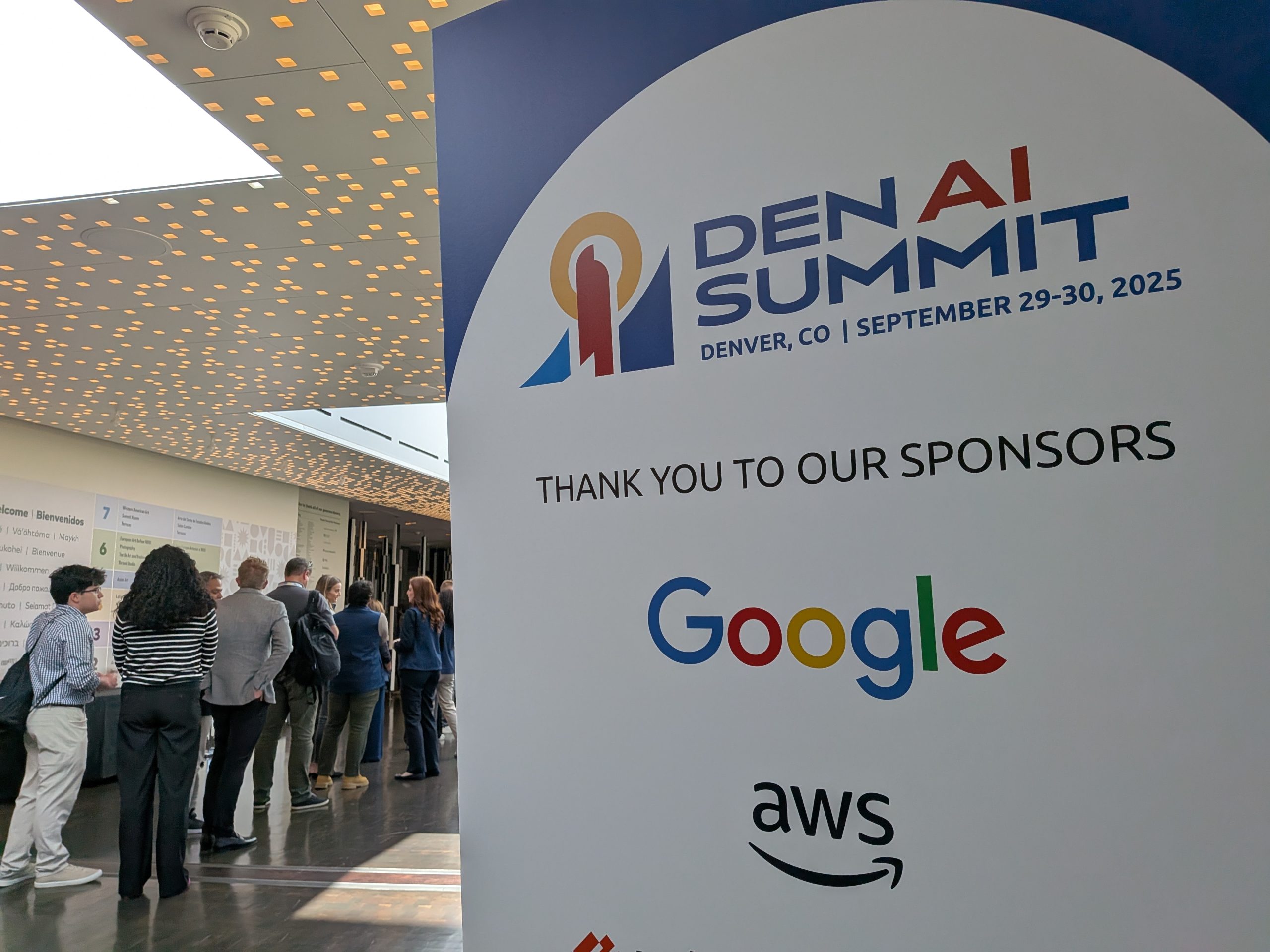
Ethics and Innovation Take Center Stage at DenAI Summit
The second annual DenAI Summit, hosted at the Denver Art Museum on September 29-30, 2025, brought together a diverse group of leaders to explore the implications of artificial intelligence (AI) on society, governance, and public services. Highlighting the event was an engaging conversation between Denver Mayor Mike Johnston and Tenzin Priyadarshi, a Buddhist monk and president of The Dalai Lama Center for Ethics and Transformative Values at MIT.
“The notion of biased data has been overly spoken about in terms of transparency,” Priyadarshi noted during their dialogue. “Cities and citizens need to be more involved in decisions about what technologies their governments adopt.”
Priyadarshi emphasized the importance of proactive governance in the face of rapid technological change. He praised Denver for being among the few cities openly discussing AI governance, rather than merely consuming tech products without questioning their societal impact.
Colorado’s Controversial AI Law in the Spotlight
Later in the day, Colorado Governor Jared Polis joined a panel with tech leaders including Cris Turner of Google and Eric Hysen of Salesforce to discuss the state’s pioneering AI law. Signed into law in May 2024, the legislation aims to protect consumers from algorithmic harm. However, it has faced significant criticism from the tech industry for potentially stifling innovation.
“The law’s requirements for developers to exercise reasonable care and prevent algorithmic discrimination are seen as vague,” said Susie Loyacona of the Daniels Fund, voicing concerns shared by many startup leaders in Colorado.
Polis acknowledged those concerns, stating his preference for a national AI policy that balances innovation with protection. “Absent that, states must ensure they are attractive for AI innovators through clarity and cost-effectiveness,” he said. Although the law’s start date was delayed to June 30, 2026, its core provisions remain unchanged.
Tech Leaders Urge Flexibility and Clarity
Turner, who handles government affairs for Google, expressed a preference for California’s recently passed Senate Bill 53, describing it as a better model than Colorado’s current framework. He warned of unintended consequences from vague legislation, which could hinder the growth of small AI startups.
“If this is a tool, bad actors will use it to be more effective at being bad,” Turner said. “But we already have laws that address much of that behavior. The question is how AI fits into existing legal frameworks.”
Hysen, who recently joined Salesforce after serving as CIO at the U.S. Department of Homeland Security, underscored the challenge of crafting rules in a fast-evolving landscape. He participated in the AI Safety and Security Board under the Biden administration and helped develop AI governance frameworks. “What we came up with already feels outdated,” he said, emphasizing the need for regulatory flexibility.
Consumer Advocacy and Real-World Impacts
While the summit focused on civic leaders and tech providers, consumer advocates were notably absent. Their voices had been prominent during legislative hearings for Senate Bill 205, warning of AI systems that can perpetuate biases and unfairly deny opportunities to job seekers, renters, or loan applicants.
Priyadarshi’s remarks brought those concerns back into focus. He highlighted the ethical responsibility of governments to vet technologies for bias before adoption. “Designers and companies don’t always prioritize social concerns,” he said. “That’s where governments must step in.”
Denver’s Role in Shaping AI Governance
Priyadarshi’s presence at the summit underscored Denver’s emerging leadership in AI policy. “Denver is one of the few places actually talking about AI governance,” he said. “Too often, cities are passive recipients of technology rather than active participants in shaping its use.”
The event served as a platform for civic leaders to explore how AI can streamline operations such as permitting and service delivery, while also weighing privacy, fairness, and transparency. The urgency of these discussions is amplified by the accelerating pace of AI innovation.
Looking Ahead: Navigating Rapid Change
As the summit concluded, the consensus among speakers was clear: AI governance must evolve alongside the technology itself. Policymakers, developers, and civic leaders must collaborate to balance innovation with safeguards, ensuring AI serves the public good without sacrificing equity or trust.
With federal legislation still years away, states like Colorado and California are left to experiment with their own approaches—offering both lessons and cautionary tales for others considering similar regulation.
This article is inspired by content from Original Source. It has been rephrased for originality. Images are credited to the original source.