

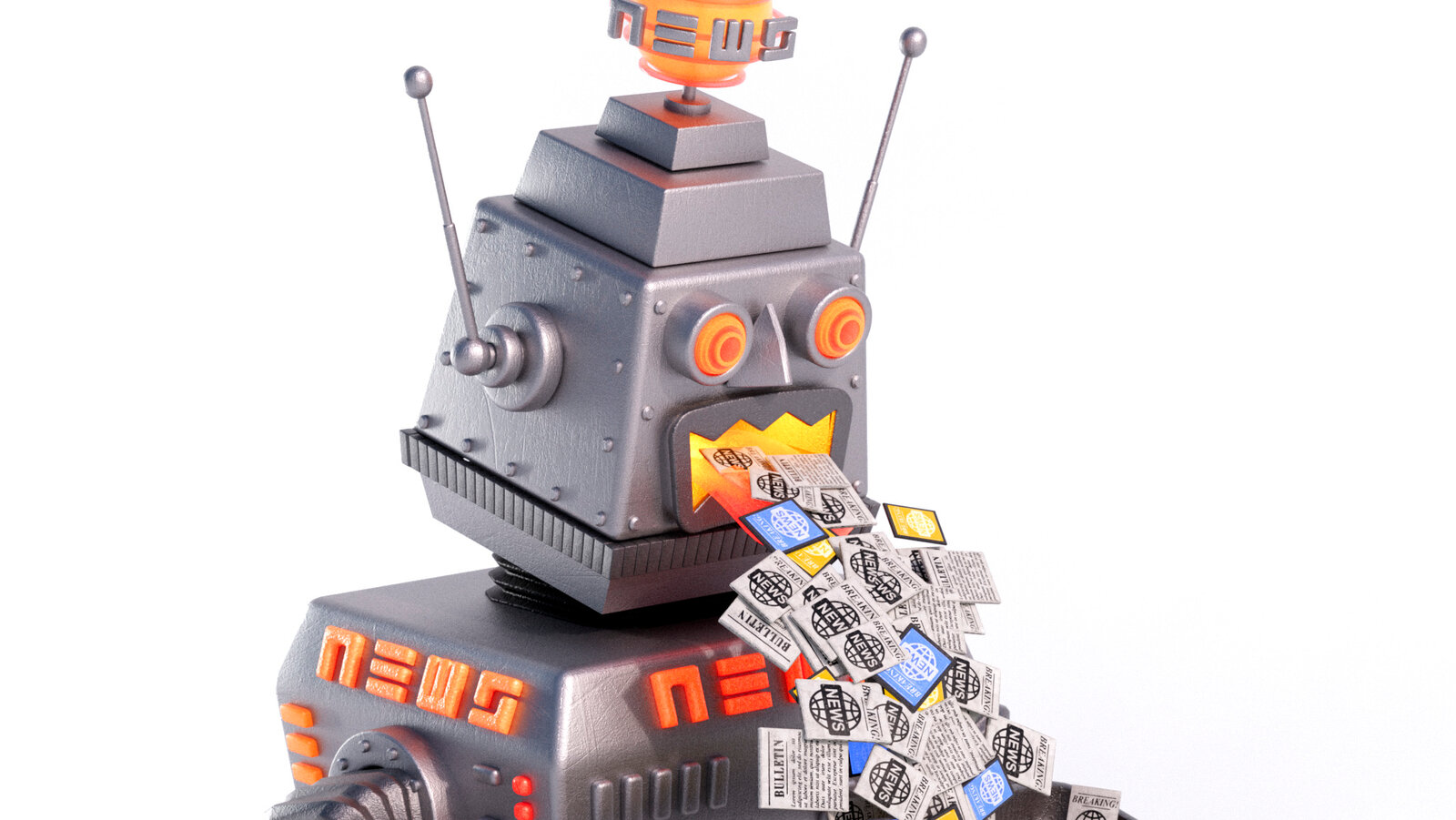
The Rise of Artificial Intelligence in Newsrooms
Artificial Intelligence (A.I.) is rapidly reshaping the landscape of journalism, ushering in a new era of reporting, editing, and audience engagement. Once a field reliant solely on human intuition and investigation, journalism is now increasingly supported by digital tools that can analyze data, generate drafts, and even suggest headlines.
Ryan Sabalow, a reporter for CalMatters, experienced this transformation firsthand. While covering California legislators in 2023, he noticed a trend: lawmakers vocally opposed bills but often abstained from voting. Curious about the implications, Sabalow turned to Digital Democracy, an A.I. tool that tracks legislative actions, donations, and speeches. The result was an investigative piece, and an Emmy-winning CBS segment, revealing how Democratic lawmakers effectively killed a fentanyl bill by not voting at all.
Efficiency Through Technology
News organizations increasingly rely on A.I. tools from companies like OpenAI and Google to streamline tasks. These range from sorting through vast datasets and identifying sources to generating article drafts. Fortune and Business Insider have even tested A.I.-authored articles, albeit with human oversight to catch potential errors.
Despite precautions, mistakes have occurred. Bloomberg, Wired, and Business Insider have all published A.I-generated content containing factual inaccuracies. These incidents highlight the need for clear editorial guidelines and human intervention in the publishing process.
Balancing Innovation and Ethics
Stephen Adler, former Reuters editor and now head of NYU’s Ethics and Journalism Initiative, emphasizes that A.I. can be a powerful asset for journalists. It can quickly analyze data, identify inconsistencies, and improve grammar. However, he warns of significant risks, particularly around content accuracy and ethical usage.
Media organizations are also grappling with broader implications. As A.I. systems are trained on existing content, news outlets are demanding compensation from tech giants. The New York Times has sued OpenAI and Microsoft, alleging unauthorized use of its articles to train language models. While OpenAI and Microsoft deny the claims, the legal battles underscore the high financial stakes involved.
Embracing A.I. Across the Industry
Many publications are actively exploring A.I. applications. Newsquest, a British media group, uses A.I. to deepen investigative reporting. Axel Springer launched an interactive travel planner powered by A.I., and Time magazine used a chatbot for its 2024 Person of the Year feature on President Trump.
Axios, known for its tech-forward approach, is integrating A.I. into its local newsletters. According to COO Allison Murphy, tools like ChatGPT help compile daily news roundups, which are then vetted by human editors. Axios also developed the “Axiomizer,” an A.I. assistant that suggests edits and generates signature content formats like “One Big Thing” and “Why It Matters.”
A.I. as a Time-Saving Mechanism
The Associated Press has leveraged A.I. to process thousands of pages of government documents, including files related to the assassinations of President John F. Kennedy and Martin Luther King Jr. The technology not only made the documents searchable but also summarized them and highlighted newly unredacted sections. “It saved days of work,” noted Troy Thibodeaux, AP’s director of A.I. products.
Concerns and Controversies
Despite these advancements, internal resistance remains. At The Washington Post, an engineer raised ethical concerns over a prototype tool designed to summarize articles from various outlets, fearing potential copyright violations. Though the tool was revamped, the episode reflects broader unease within newsrooms.
Bloomberg’s use of A.I. to create article summaries has also faced scrutiny. An August article incorrectly summarized a trade surplus as a deficit. Despite Bloomberg’s claim that 99% of summaries met editorial standards, the company acknowledged the need for transparency and human oversight.
Labor Rights and Union Pushback
The rise of A.I. has prompted union action. The NewsGuild, a U.S. journalist labor union, has addressed A.I. in 48 collective bargaining agreements since late 2023. Union president Jon Schleuss emphasized the need for legally enforceable protections, especially in the absence of government regulation.
At Politico and E&E News, unionized journalists claimed their employer breached contract terms by deploying A.I. without proper notification. The dispute is currently in arbitration. A Politico spokeswoman declined to comment.
The Debate Continues
The future of A.I. in journalism remains a contentious issue. NPR recently proposed using A.I. to convert radio stories into digital formats, sparking internal debates over editorial integrity. Producer Connor Donevan reportedly questioned the initiative, stating, “We are the middle. The middle involves journalistic choices.”
As A.I. continues to evolve, so will the conversations around its role in newsrooms. While many see it as a tool to enhance productivity and storytelling, others urge caution, emphasizing the irreplaceable value of human judgment in journalism.
This article is inspired by content from Original Source. It has been rephrased for originality. Images are credited to the original source.