

The Dawn of a New Technological Era
While recent headlines focused on a trade truce between US President Donald Trump and Chinese President Xi Jinping, a far more critical issue looms beneath the surface: the escalating race for artificial intelligence (AI) supremacy. This competition is not just about technology—it’s about redefining global power structures and the values that underpin them.
Unlike the nuclear arms race of the past, the AI race is waged with algorithms rather than atoms. The outcome will shape how societies operate, how decisions are made, and who sets the global norms for digital governance, commerce, and security.
China’s Unified Strategy
China views AI as a cornerstone of its “comprehensive national power.” The government has launched a coordinated campaign to integrate AI across sectors—surveillance, consumer services, manufacturing, military applications, and scientific research. This top-down approach allows for rapid scaling and strategic alignment under one national vision.
“One of the notable aspects of China’s approach is the prioritization of application, or what is called ‘AI-plus,’” notes Tess deBlanc-Knowles, senior director at the Atlantic Council’s Technology Programs. This strategic emphasis allows China to direct and incentivize AI deployment across all economic sectors.
In China, private tech companies align closely with state directives. The Communist Party maintains significant influence over innovation cycles, enabling a fusion of state priorities with corporate capabilities.
The United States’ Democratic Dynamism
In contrast, the United States relies heavily on its vibrant private sector, open research institutions, and international partnerships. However, this decentralized model presents challenges. The government struggles to align academia, industry, and federal initiatives at a national scale. Legal ambiguities around privacy and intellectual property rights further complicate cohesive AI progress.
Failure to maintain leadership in AI could have long-term consequences for the US. This technological race will determine whether global digital norms are shaped by democratic values or authoritarian efficiency.
Defining the Future of Global Norms
At the core of this competition lies a deeper ideological battle. The AI race is not just about producing superior chips or faster models. It’s about defining the future standards for privacy, freedom, and human dignity. Just as the internet reflected Western ideals of openness and free expression, AI presents a new opportunity to shape foundational global values.
If the US and its allies fall behind, the world may see AI used more as a mechanism for political control than for individual empowerment.
Launching the GeoTech Commission
Recognizing this pivotal moment, the Atlantic Council has launched its GeoTech Commission on Artificial Intelligence. This initiative gathers lawmakers, industry leaders, and innovators to craft actionable strategies that ensure American and allied leadership in the AI era.
The commission will focus on six key areas: AI innovation, supply chains, energy sources, government adoption and oversight, talent development, and international alliances. Rather than treating these areas as siloed priorities, the commission aims to integrate them into a unified strategic framework.
A Race Unlike the Manhattan Project
While comparisons to the Manhattan Project abound, the analogy has limitations. The Manhattan Project was a secret, centralized government initiative during wartime. In contrast, today’s AI revolution has been largely driven by the private sector, with companies like Google, Nvidia, Microsoft, and OpenAI leading the charge.
To succeed, governments must find effective ways to collaborate with these tech giants—entities whose budgets and global reach often rival national defense ministries.
China’s Strategic Advantage
China’s model integrates state ambition with private innovation. Companies that fail to align with the state face serious consequences, creating a powerful incentive structure. This fusion allows China to mobilize resources, capital, and research around clear national objectives set by the Communist Party.
In contrast, the US benefits from a dynamic, competitive market that attracts global talent and investment. However, this very openness can also be a disadvantage, as Washington lacks the ability to direct tech development with the precision seen in Beijing.
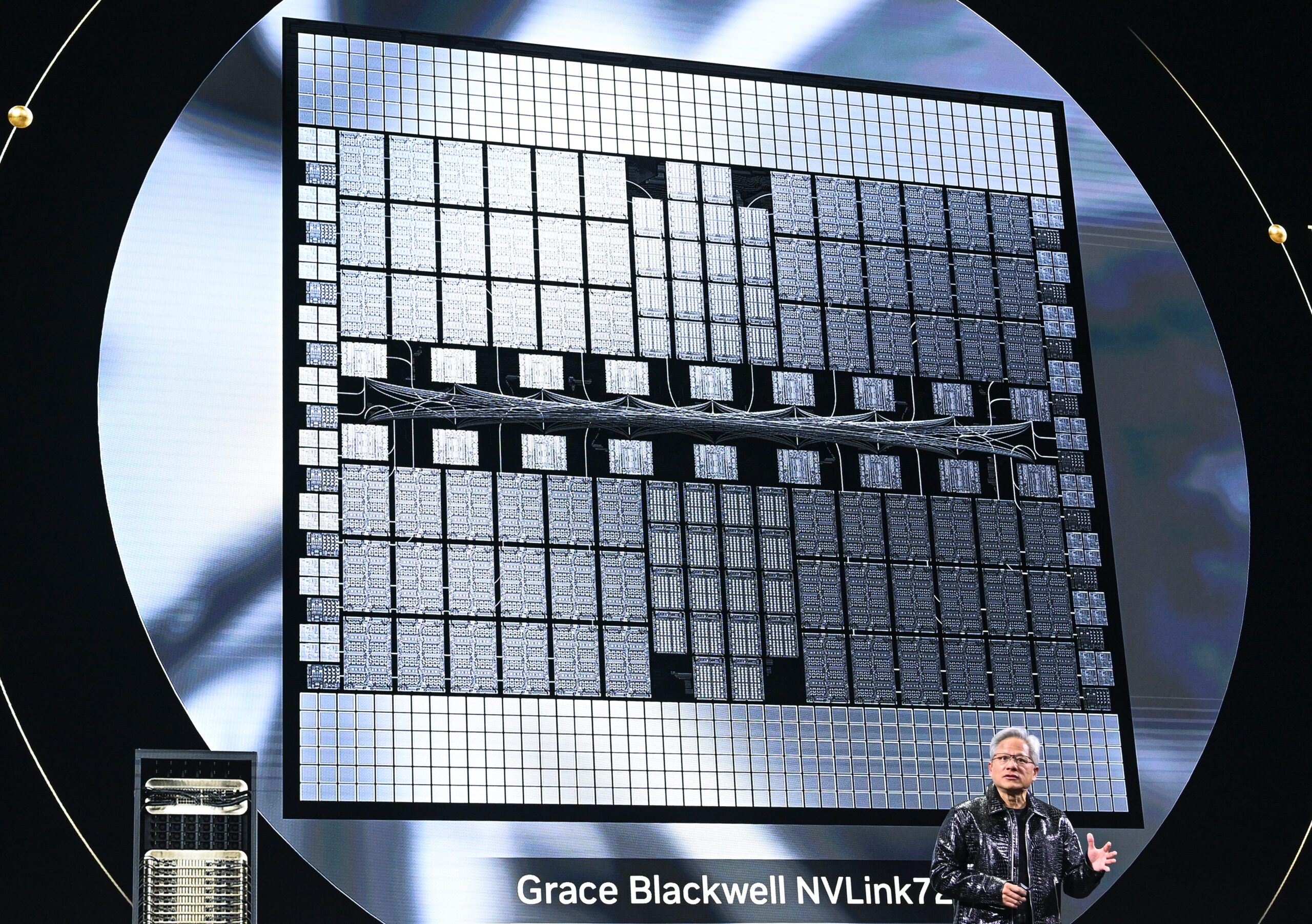
“China is going to win the AI race,” Nvidia CEO Jensen Huang recently told the Financial Times, citing China’s flexible regulations, energy subsidies, and centralized coordination.
The Path Forward
To maintain its edge, the US must move beyond simply restricting exports or protecting intellectual property. It needs a comprehensive strategy that mobilizes stakeholders, accelerates innovation, and implements effective governance models.
Winning the AI race requires integrated thinking—across development, deployment, and ethical considerations. The Atlantic Council’s GeoTech Commission aims to facilitate this strategic shift by identifying how best to leverage democratic values and international cooperation in the age of AI.
The stakes are high. The outcome of this race will affect every individual and determine which values—democratic or autocratic—will define the digital age.
This article is inspired by content from Original Source. It has been rephrased for originality. Images are credited to the original source.