

White House Moves to Centralize AI Regulation Nationwide
The White House is reportedly developing an executive order aimed at unifying artificial intelligence (AI) regulation across the United States. This initiative follows former President Donald Trump’s recent remarks advocating for a single federal framework to govern AI, instead of a fragmented system enforced by individual states.
Sources close to the matter indicate that the executive order, still in draft form, seeks to limit states’ abilities to impose their own AI regulations — a move that could significantly reshape how AI is governed in America. The proposal is expected to reaffirm the federal government’s authority over AI policy, potentially overriding state-level legislation that may conflict with national standards.
Federal vs. State Jurisdiction in Emerging Technologies
The executive order attempts to streamline AI governance by removing what the administration sees as regulatory confusion caused by differing state laws. According to insiders, the order would declare federal oversight paramount in cases where state laws interfere with national interests in AI development, deployment, or commerce.
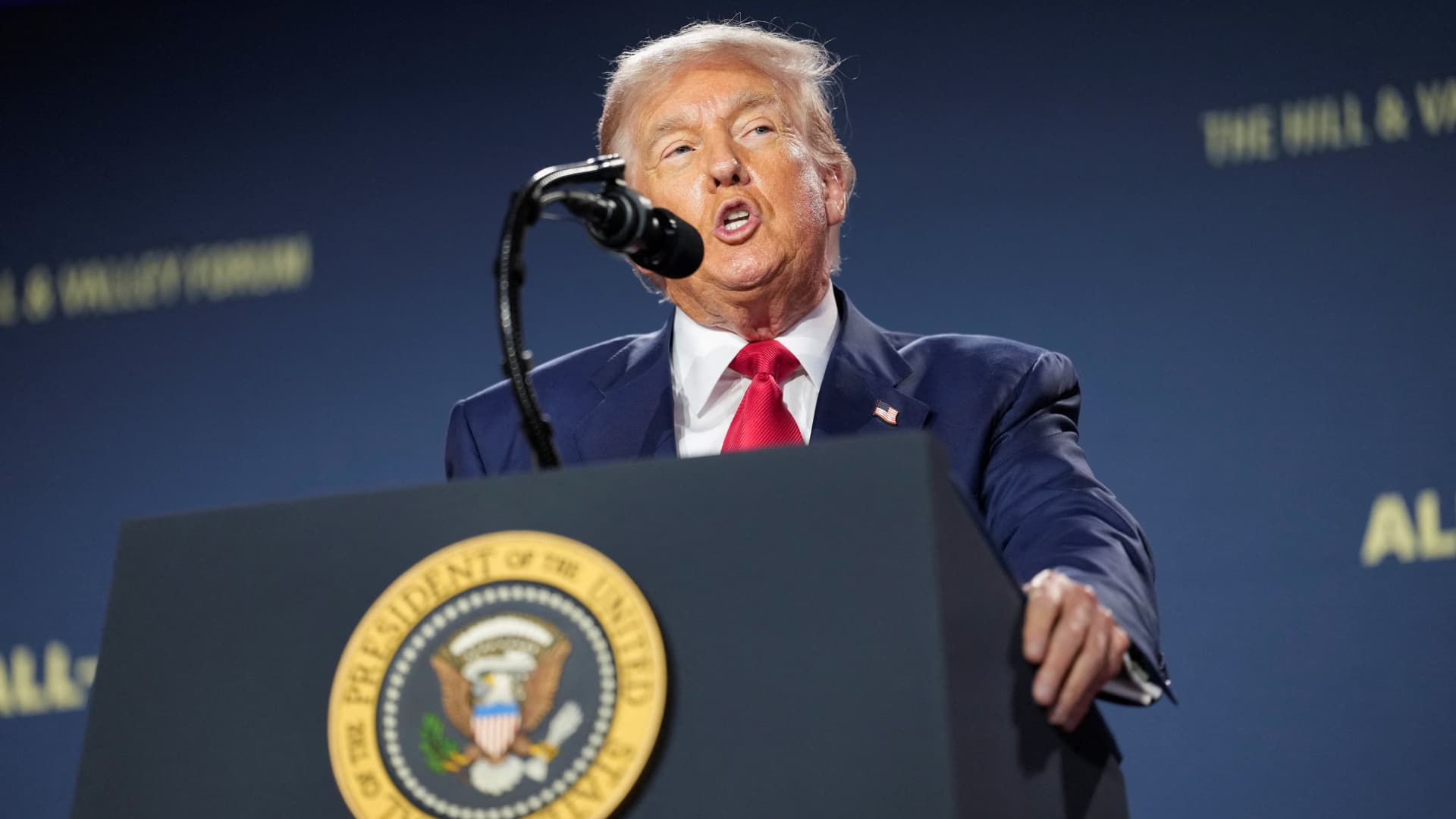
“We cannot allow a patchwork of 50 different approaches to disrupt innovation and delay progress,” Trump said in a recent speech. He added that a cohesive national policy is essential to maintaining the United States’ competitive edge in AI innovation and ensuring public safety.
While details are still being finalized, the order may include provisions that restrict state-level funding for AI initiatives that contradict federal guidelines. This could have a direct impact on states like California and New York, which have been at the forefront of establishing their own AI regulatory frameworks.
Industry Leaders Welcome Regulatory Clarity
Major tech firms and AI developers have long lobbied for a unified set of rules governing AI, arguing that disparate state regulations complicate compliance and stifle innovation. The proposed executive order is seen by many in the industry as a positive step toward regulatory certainty.
“A national standard would help us innovate responsibly without constantly adapting to varying legal requirements across jurisdictions,” said a spokesperson from a leading AI company. “We support a framework that ensures safety, transparency, and fairness, but it needs to be consistent.”
The U.S. Chamber of Commerce has also voiced its support, highlighting the economic benefits of a cohesive federal approach. “AI is a transformative technology with massive potential. A unified regulatory structure is essential to harness its benefits while mitigating risks,” the organization stated in a recent press release.
States Push Back Against Federal Preemption
Despite industry support, the executive order is expected to face opposition from state officials and lawmakers who view it as an encroachment on states’ rights. Several states have already passed or proposed laws addressing AI ethics, data privacy, and algorithmic bias — issues they believe are not being adequately addressed at the federal level.
California Governor Gavin Newsom criticized the move, saying, “States have a responsibility to protect their residents. A federal one-size-fits-all policy risks overlooking the unique needs and values of our communities.”
Similarly, Massachusetts Senator Elizabeth Warren argued that federal preemption could weaken consumer protections. “We need strong, localized oversight to ensure AI is used ethically and responsibly,” she said.
Legal and Constitutional Hurdles Ahead
Legal experts suggest that the proposed order could face constitutional challenges, especially if it undermines states’ traditional powers in consumer protection and public safety. While the federal government has authority over interstate commerce, courts may scrutinize any attempt to completely nullify state laws.
“It’s a delicate balance,” said a law professor at Georgetown University. “The federal government can set standards, but it must also respect the states’ role in enforcing protections tailored to their populations.”
If enacted, the executive order may trigger a wave of legal disputes, with states challenging its constitutionality in federal courts. The outcome could set a precedent for how emerging technologies are regulated in the future.
Next Steps and Broader Implications
For now, the draft executive order has not been officially released, and it remains unclear when it will be finalized or signed. However, the White House has confirmed its commitment to establishing a comprehensive national AI policy.
As AI continues to evolve and permeate various sectors, from healthcare to law enforcement, the debate over who should regulate it — states or the federal government — is expected to intensify. The proposed executive order marks a significant step in that ongoing policy battle.
Observers believe that how this executive order unfolds could influence future legislation on AI both domestically and internationally. Policymakers around the world are closely watching the U.S. to see how it balances innovation with ethical considerations and public safety.
This article is inspired by content from Original Source. It has been rephrased for originality. Images are credited to the original source.