

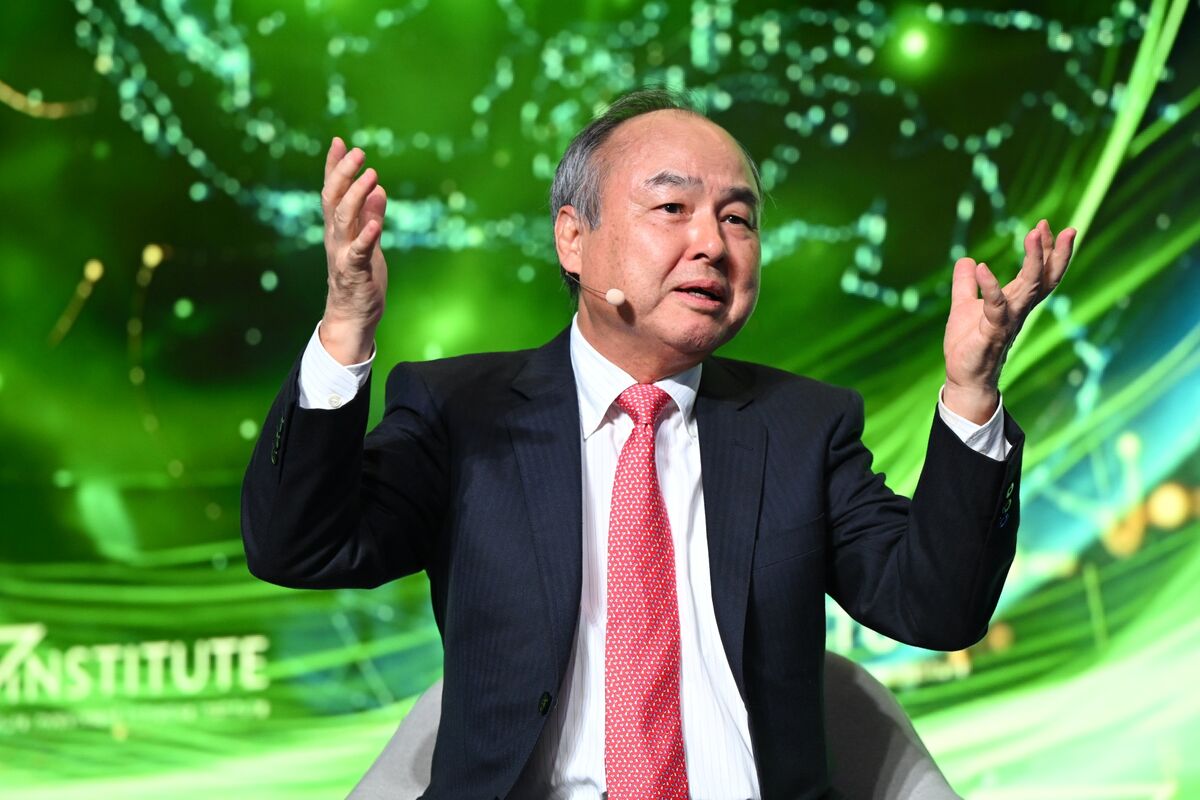
Masayoshi Son Reflects on Nvidia Stake Sale
Masayoshi Son, the visionary founder of SoftBank Group Corp., recently expressed deep regret over selling the company’s entire stake in Nvidia Corp., the world’s most valuable chipmaker. Speaking at the Future Investment Initiative Institute’s Priority Asia Conference in Tokyo, Son admitted that the decision was emotionally difficult and driven purely by financial necessity.
“If we had unlimited financial resources, I would never have sold those shares,” Son said. “I cried when we made the decision.”
The unexpected sale, disclosed in November, surprised investors and industry watchers alike. Nvidia has been a central player in the booming artificial intelligence (AI) sector, fueling breakthroughs with its powerful graphics processing units (GPUs). SoftBank had previously championed the company as a cornerstone of its tech-focused investment strategy.
Raising Capital for AI Ambitions
Son explained that SoftBank needed to raise substantial capital to fund its next wave of AI projects, including a significant investment in OpenAI, the company behind ChatGPT. These initiatives also involve the construction of high-capacity data centers designed to support large-scale AI models.
“Our vision is to lead the world into the AI revolution,” Son emphasized. “But vision without funding is just a dream. We had to make a tough choice.”
The SoftBank founder reiterated his belief in AI as the defining technology of the future, asserting that humanity is on the verge of a transformation akin to the Industrial Revolution. He dismissed concerns that the current surge in AI investments could be indicative of a speculative bubble.
Addressing Bubble Concerns
Son was direct in his rebuttal to critics who warn about an overheating AI market. “People said we were in a bubble during the internet boom too,” he said. “But look at what the internet has become. AI will be even bigger.”
He acknowledged that while some companies may not survive the wave of AI development, the sector as a whole will yield transformative results. “Yes, some will fail,” Son admitted. “But the impact of those that succeed will change everything.”
SoftBank has a long history of making bold bets in the tech industry. The company’s Vision Fund made headlines for investing heavily in startups like Uber, WeWork, and DoorDash. While not all of these investments have paid off, Son remains undeterred in his belief in AI’s potential.
SoftBank’s Strategic Shift
The sale of Nvidia shares marks a significant pivot in SoftBank’s investment strategy. Rather than holding onto high-performing stocks, the company is reallocating capital toward building infrastructure that can support the next generation of AI innovation.
“We are not just investing in companies,” Son explained. “We are building the foundation for an AI-powered world. That requires vision, and it requires capital.”
SoftBank has already begun construction on several data centers in Asia, aimed at supporting advanced AI applications. These facilities will host AI training models and serve as computing hubs for emerging technologies.
Industry analysts say the strategy is risky but consistent with Son’s long-term vision. “Masayoshi Son has always played the long game,” said tech analyst Hiroshi Tanaka. “Selling Nvidia may seem counterintuitive now, but if his AI bets succeed, it could be another masterstroke.”
Continued Commitment to OpenAI
One of the cornerstone investments of SoftBank’s AI push is its backing of OpenAI. The startup has rapidly evolved into one of the most influential players in the AI landscape, thanks to its development of advanced language models. Son sees OpenAI as a key partner in realizing his vision for the future.
“OpenAI is not just a company,” Son said. “It’s a movement. And we are proud to be a part of it.”
SoftBank’s financial commitment to OpenAI is reportedly among the largest from a private firm, underscoring the seriousness of its ambitions. Son believes that by aligning with OpenAI, SoftBank can help shape the ethical and technological frameworks for the next era of computing.
Looking Ahead
Despite the emotional toll of parting with Nvidia, Son remains optimistic about the road ahead. He stressed that SoftBank’s mission is not just to profit from AI, but to catalyze its responsible development and deployment on a global scale.
“We are betting our future on AI,” Son concluded. “It’s not just about returns. It’s about legacy.”
As SoftBank reinvests its capital into ambitious AI ventures, the tech world will be watching closely to see if Son’s instincts once again place him ahead of the curve.
This article is inspired by content from Original Source. It has been rephrased for originality. Images are credited to the original source.