

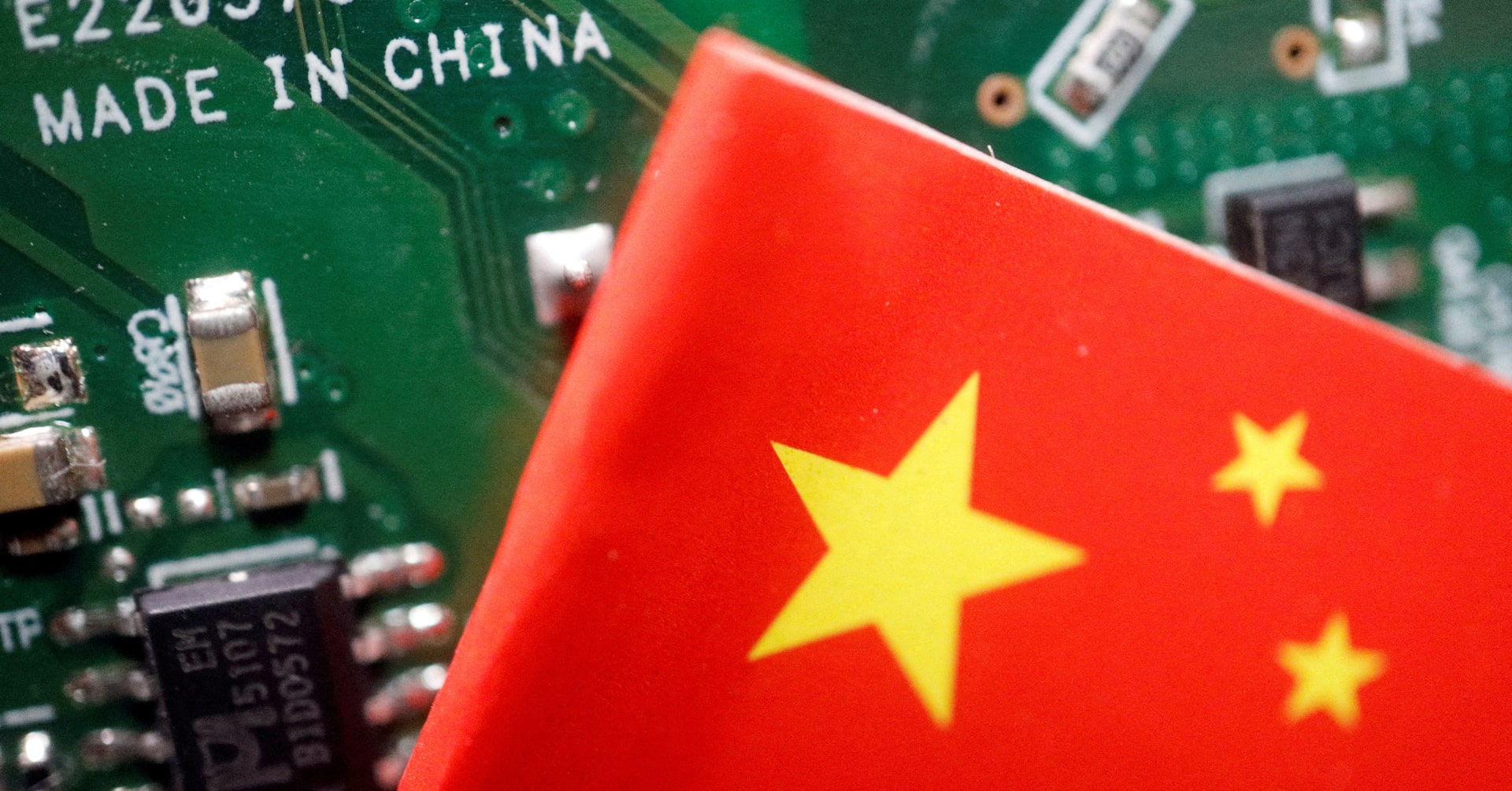
China Advances in AI Despite Chipmaking Challenges
China is making significant strides in narrowing the technology gap with the United States, according to leading artificial intelligence (AI) researchers. Driven by a wave of innovation and greater risk-taking among younger entrepreneurs, the country is rapidly expanding its AI capabilities. However, the lack of advanced chipmaking tools remains a major obstacle to achieving global leadership in the sector.
This momentum was underscored by the strong debut of Chinese AI startups MiniMax and Zhipu AI on the Hong Kong Stock Exchange earlier this week. The listings reflect growing investor confidence, as Beijing accelerates support for AI and semiconductor companies to strengthen domestic alternatives to U.S. technologies.
Infrastructure Strengths Meet Production Limitations
Yao Shunyu, a former senior researcher at OpenAI and now Tencent’s chief AI scientist, expressed optimism about China’s potential to become a global AI leader within the next three to five years. Speaking at an AI conference in Beijing, he emphasized that while China enjoys advantages in electricity supply and infrastructure, the main bottlenecks lie in production capacity and software ecosystems.
“The key hurdles are the lack of lithography machines and a mature software ecosystem,” Yao explained. These advanced lithography machines are essential for producing high-end semiconductor chips used in cutting-edge AI models.
China has reportedly developed a prototype of an extreme-ultraviolet (EUV) lithography machine, a crucial step toward producing chips that rival those made in the West. However, sources familiar with the project told Reuters that the machine has yet to produce functioning chips and may not do so until as late as 2030.
Investment Gap Widens the Divide
Despite these advancements, Chinese AI leaders acknowledge that the United States maintains a substantial lead in computing infrastructure. Lin Junyang, technical lead for Alibaba’s Qwen large language model, pointed out that U.S. infrastructure is vastly superior due to massive investments.
“The U.S. computing power is likely an order of magnitude larger than ours,” Lin noted during a panel discussion at the AGI-Next Frontier Summit hosted by Tsinghua University. “While OpenAI and similar platforms are investing heavily in next-generation research, we are limited by resources, with most of our computing infrastructure used just for delivery.”
Nonetheless, Lin emphasized that these constraints have sparked innovation among Chinese researchers. Techniques such as algorithm-hardware co-design are being used to enable large AI models to run on smaller, more affordable hardware.
Risk-Taking Culture Gains Ground
Another notable shift in China’s AI landscape is the growing appetite for risk among young entrepreneurs. Tang Jie, founder of Zhipu AI—which recently raised HK$4.35 billion in an initial public offering—highlighted this trend as a positive development that mirrors Silicon Valley’s approach to innovation.
“If we can foster an environment that gives these intelligent, risk-taking individuals the time and space to innovate, it will significantly benefit our industry,” Tang said. He urged policymakers to support this cultural shift, suggesting that government backing could help sustain the momentum.
This change in mindset is particularly important as China seeks to overcome the technological barriers imposed by U.S. export restrictions and limited access to critical chipmaking technologies.
Looking Ahead
While challenges remain, China’s AI sector continues to gather speed. Experts believe that with sustained investment, improved infrastructure, and a supportive regulatory environment, the country could produce a world-leading AI firm within the next several years.
As the global AI race intensifies, China’s strategy of combining innovation, infrastructure development, and risk-taking entrepreneurship may well position it as a formidable contender against the U.S. in the realm of advanced technology.
This article is inspired by content from Original Source. It has been rephrased for originality. Images are credited to the original source.