

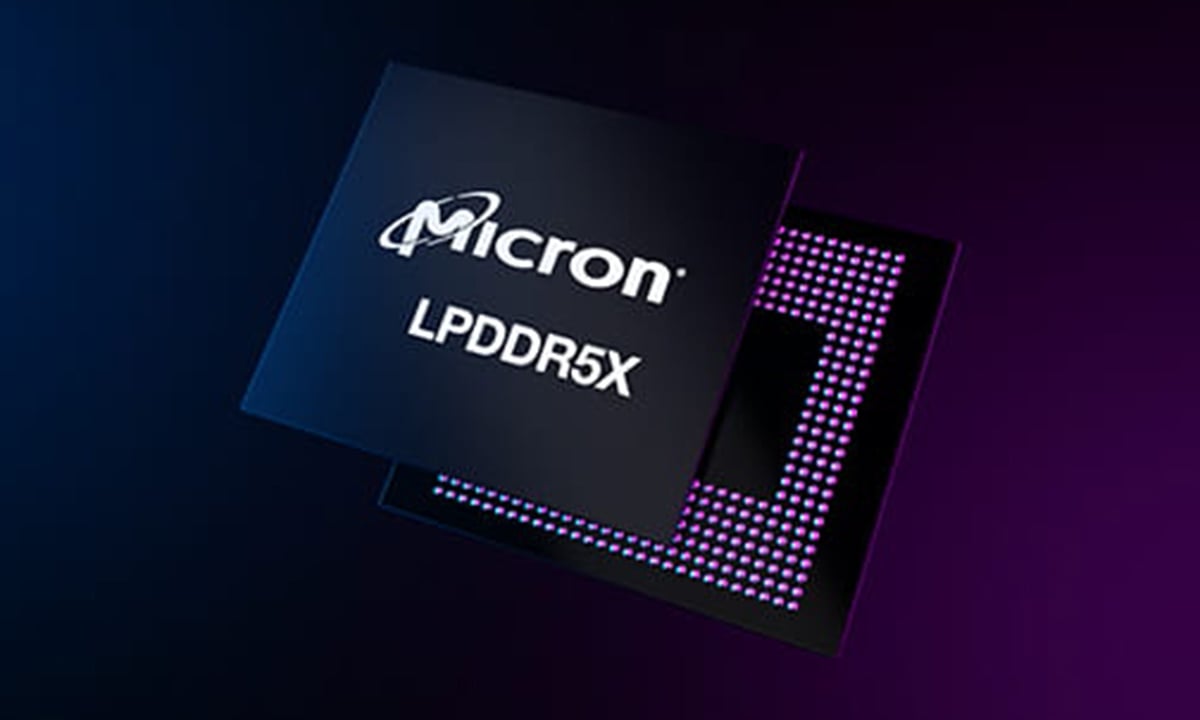
Micron’s Emergence in the AI Chip Space
Over the last few years, demand for artificial intelligence (AI) chips has surged, transforming the semiconductor industry. Companies like Nvidia, Taiwan Semiconductor Manufacturing Company (TSMC), and Broadcom have already crossed the trillion-dollar market capitalization threshold, thanks to their pivotal roles in powering the AI revolution. Now, another contender is positioned to join their ranks: Micron Technology.
Micron’s strength lies in its production of high-bandwidth memory (HBM), dynamic random access memory (DRAM), and NAND flash—all crucial components for AI infrastructure. As AI applications become more complex, the need for efficient data processing and storage becomes more urgent, and Micron is at the forefront of meeting this demand.
The Expanding Role of Memory in AI
The rise of large language models (LLMs) like ChatGPT has marked a new era in generative AI. But this is just the beginning. Tech giants such as Microsoft, Alphabet, Amazon, and Meta Platforms are pushing the boundaries with next-generation AI applications, including agentic AI, autonomous systems, and robotics.
These advancements require enormous computing power, particularly for inference tasks—essentially, when AI models make decisions based on learned data. As a result, hyperscalers are racing to build out infrastructure that can handle these intensive workloads. This is where memory chips come in. Micron’s memory solutions help eliminate data bottlenecks, enabling smoother and faster AI operations.
Surging Demand and Financial Momentum
Micron is benefiting from a rapidly tightening supply of memory chips, which has driven up prices significantly. According to market research firm TrendForce, DRAM prices are expected to rise by as much as 60% in the first quarter of 2026, while NAND chip prices could jump 38%.
The company’s financials reflect this momentum. In the first quarter of fiscal 2026, Micron generated $13.6 billion in revenue—a 57% year-over-year increase. Revenue growth was seen across all major segments, including cloud memory, mobile, core data, and embedded automotive devices. Gross margins exceeded 40%, and operating margins topped 30% in each division, highlighting Micron’s ability to scale profitably alongside demand.
Market Potential and Strategic Positioning
The market for high-bandwidth memory is poised for explosive growth. Analysts project the total addressable market to reach $100 billion by 2028, nearly triple its current size. This positions Micron to become an indispensable part of the AI infrastructure ecosystem, especially as capital investment begins to flow beyond GPUs and toward memory and storage solutions.
Micron’s trajectory mirrors Nvidia’s rise during the early days of the AI revolution. As infrastructure spending increases and the need for memory capabilities becomes more apparent, Micron could experience a similar breakout moment in the years ahead.
Valuation and Growth Outlook
Despite its strong performance, Micron’s stock remains relatively undervalued. The company trades at a forward price-to-earnings (P/E) ratio of just 12.3, a significant discount compared to peers like Nvidia, TSMC, and Broadcom, whose forward P/Es range between 30 and 60.
Wall Street analysts are optimistic about Micron’s future. Over the next two years, revenue is expected to more than double, and earnings per share could grow nearly fourfold. If Micron’s forward P/E multiple expands to 23—a still conservative estimate—its market cap could soar to $850 billion. At a forward P/E of 30, Micron could very well eclipse the $1 trillion valuation mark.
Why Investors Should Pay Attention
AI infrastructure is a multi-year, multi-trillion-dollar opportunity that is just beginning to unfold. With its strong positioning in memory and storage technologies, Micron is poised to become a cornerstone of this growth.
Investors looking for long-term exposure to the AI boom should keep a close eye on Micron. The company’s combination of robust financial performance, strategic market positioning, and compelling valuation makes it a strong candidate to join the elite club of trillion-dollar tech stocks.
This article is inspired by content from Original Source. It has been rephrased for originality. Images are credited to the original source.