

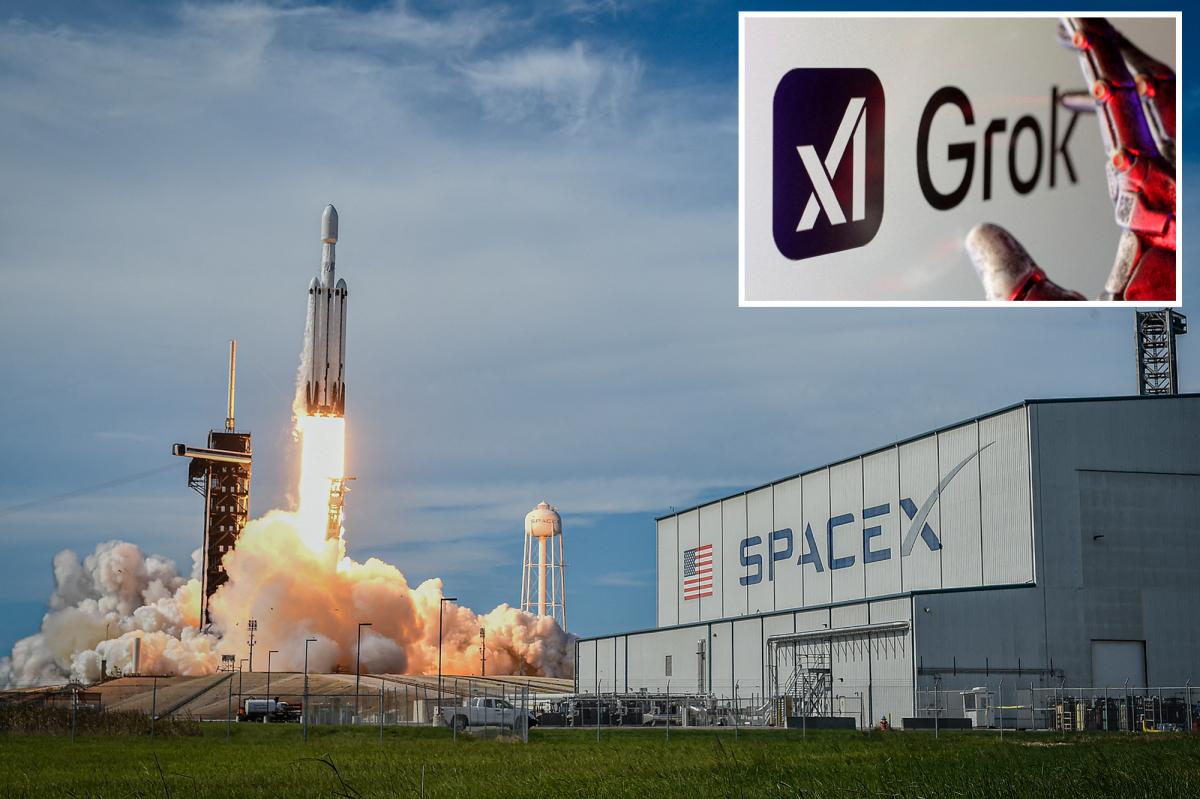
Elon Musk Combines SpaceX and xAI in Groundbreaking Merger
Elon Musk has officially merged his aerospace company SpaceX with his artificial intelligence startup xAI, forming a new technological powerhouse. According to reports, this strategic union gives the combined entity a staggering valuation of $1.25 trillion, signaling a transformative shift in the tech and space industries.
In a statement, SpaceX described the merger as an effort to “form the most ambitious, vertically-integrated innovation engine on (and off) Earth”. The company emphasized that the synergy between AI, satellites, space-based internet, mobile communications, and real-time information platforms would redefine technological boundaries.
Ambitious Vision for the Future
SpaceX, already a giant in the aerospace sector with major NASA contracts and its Starlink satellite internet service, is now poised to expand its reach. The company recently allowed employees to sell shares at a price valuing SpaceX around $800 billion, according to The New York Times.
xAI, on the other hand, had previously raised $20 billion in funding, achieving a valuation of $230 billion. The firm owns the social media platform X (formerly Twitter) and operates the AI-driven chatbot Grok, both of which play pivotal roles in Musk’s broader vision for connected technologies.
Potential Impacts on IPO Plans
The merger may affect SpaceX’s reported plans to go public. Just last week, The Financial Times reported that Musk was considering a mid-June IPO to coincide with a rare planetary alignment and his 55th birthday. Now, the integration with xAI could reshape those plans, potentially delaying or altering the IPO timeline.
One of the most ambitious aspects of Musk’s vision includes launching AI data centers into orbit. This initiative would capitalize on SpaceX’s aerospace capabilities and require significant investment. By hosting data centers in space, Musk aims to achieve more efficient energy usage and reduce the environmental footprint of traditional ground-based data centers.
FCC Filing Hints at Massive Satellite Expansion
In a recent filing with the Federal Communications Commission (FCC), SpaceX requested permission to launch up to 1 million new satellites into orbit. The company cited the “explosive growth of data demands driven by AI” as the primary reason for the request.
SpaceX’s filing highlighted that these satellites could directly harness near-constant solar power, dramatically cutting operational and maintenance costs. “These satellites will achieve transformative cost and energy efficiency while significantly reducing the environmental impact associated with terrestrial data centers,” the company stated.
The proposed satellite fleet would not only support AI data processing but also expand Starlink’s global internet coverage, potentially enabling direct-to-mobile communications and enhancing real-time information exchange across the globe.
Musk’s Expanding Empire
Elon Musk continues to maintain leadership roles across multiple high-profile ventures. In addition to serving as CEO of both SpaceX and xAI, he also leads electric vehicle manufacturer Tesla, brain-interface company Neuralink, and tunnel construction firm The Boring Company. This latest merger further consolidates his influence across technology, transportation, and communications sectors.
According to Bloomberg, some investors in xAI and Grok were informed about the merger plans ahead of time, suggesting that stakeholders were aligned with Musk’s long-term vision. The integration is expected to streamline operations and accelerate progress on several advanced technology fronts.
Industry Reactions and Future Outlook
Industry analysts are watching the development closely, noting that the merger could set a new standard for innovation by combining AI with space technology. The potential for creating AI-powered satellites and orbital data centers could revolutionize both industries.
While some skeptics question the feasibility of launching large-scale data centers into orbit, Musk’s track record of defying conventional limitations lends credibility to the plan. If successful, the combined efforts of SpaceX and xAI could pave the way for a new era of sustainable, decentralized, and space-based computing.
As the newly merged entity begins its operations, the tech world will be watching closely. The implications for internet infrastructure, artificial intelligence capabilities, and global connectivity are vast and could redefine how humans interact with both technology and the universe.
This article is inspired by content from Original Source. It has been rephrased for originality. Images are credited to the original source.