

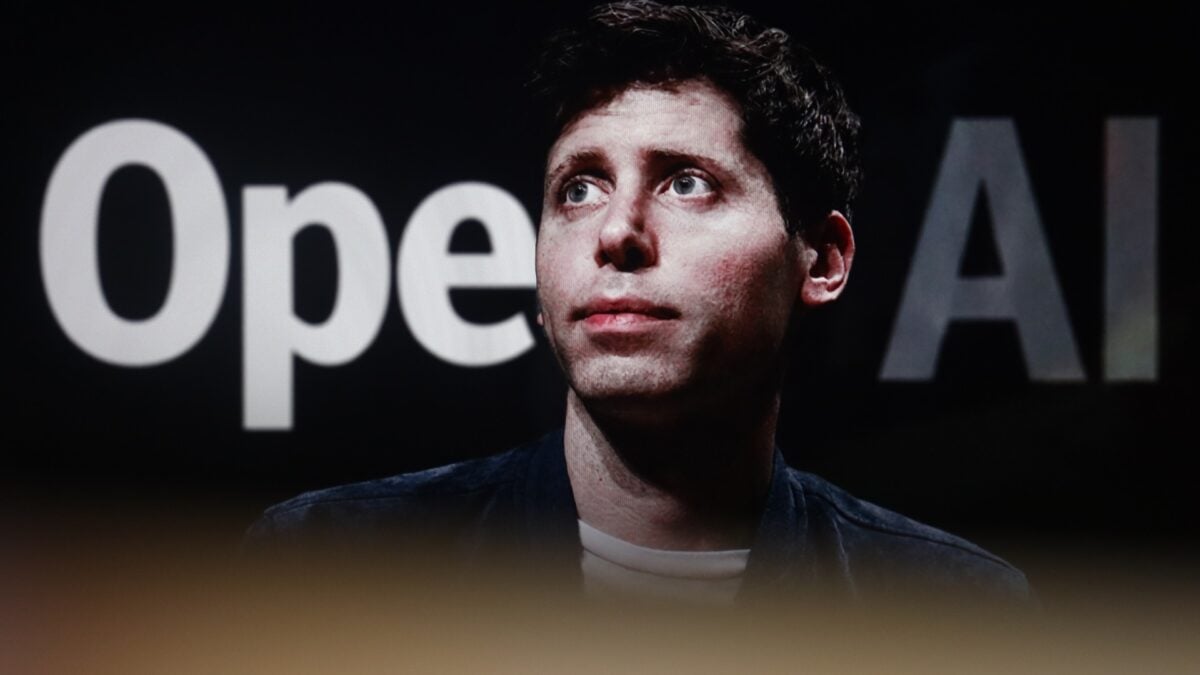
Sam Altman’s Influence and the AI Revolution
Sam Altman, CEO of OpenAI, has long been seen as one of the most influential figures in the artificial intelligence industry. Known for his assertiveness and ability to secure massive investments, Altman has helped shape OpenAI into a dominant force in the tech sector. His bold moves, including the early launch of ChatGPT in 2022, have catapulted AI into everyday discourse and positioned OpenAI at the forefront of the generative AI movement.
Altman’s approach has often been characterized by a relentless drive to innovate, even if it means pushing boundaries and ruffling feathers. According to a recent Forbes profile, Altman is a visionary who believes deeply in his capacity to foresee technological futures. “I think I am unusually good at projecting multiple things—years or a couple of decades into the future,” he told the publication.
Fractures in the AI Ecosystem
Yet, the sheen of inevitability around Altman’s success may be starting to wear thin. Recent tensions between OpenAI and Nvidia—sparked by a Reuters report that OpenAI is dissatisfied with Nvidia’s chips—highlight growing cracks in key partnerships. Nvidia CEO Jensen Huang’s public hesitation to continue deep investments in OpenAI prompted a defensive tweet from Altman: “I don’t get where all this insanity is coming from.”
This public dispute is notable because Altman is used to getting his way, a point made clear by Paul Graham, founder of Y Combinator and Altman’s former mentor. “Sam gets what he wants,” Graham said, explaining why he entrusted Altman with the startup accelerator back in 2014. But as OpenAI’s ambitions grow, so do the challenges.
OpenAI’s Rapid Expansion and Internal Concerns
Since the debut of ChatGPT, OpenAI has secured billions in funding from tech giants like Microsoft, Oracle, and Nvidia. The company’s economic entanglement is so deep that some analysts worry a failure could require a government bailout. However, insiders say this rapid expansion may be happening too fast.
According to Forbes, OpenAI employees are increasingly concerned that the company is spreading itself too thin. Projects like a wearable device developed with former Apple designer Jony Ive aim to embed AI deeply into users’ lives, but the concepts—such as gadgets that track eye movement and personal data—have raised eyebrows for their invasiveness and feasibility. Altman previously backed Humane, a company that released an AI pin that ultimately flopped, raising questions about his judgment.
Altman’s Diversified Interests
Altman’s involvement in more than 400 companies further complicates the picture. While some of these businesses, such as energy firm Helion and identity verification startup Worldcoin, align with an AI-driven future, critics argue that he lacks a cohesive vision. OpenAI’s recent efforts appear more reactive than strategic, and the company risks missing out on key opportunities. For example, Apple opted to collaborate with Google over OpenAI for its next-generation Siri integration, despite an existing relationship with Altman’s company.
These developments suggest that Altman may be chasing trends rather than setting them. His sprawling portfolio and ambitious projects may reflect a visionary mindset, but they also indicate a potential lack of focus at a critical time for the company and the industry.
Debating the Arrival of AGI
One of Altman’s boldest claims in his Forbes interview was that OpenAI has “basically built AGI, or very close to it.” He later clarified that the statement was meant “spiritually” rather than literally. Still, the assertion drew skepticism from Microsoft CEO Satya Nadella, whose company has invested heavily in OpenAI. “I don’t think we are anywhere close to [AGI],” Nadella stated, emphasizing that such milestones are about technological progress, not declarations from executives.
This public disagreement underscores the growing divergence between Altman’s vision and the more cautious outlook of OpenAI’s major stakeholders. Microsoft recently reported a $3.1 billion loss tied to its OpenAI investments. Oracle, another major backer, is also facing financial strain from its involvement with the company.
Financial Pressures and Future Outlook
Despite the mounting financial pressures, Altman continues to seek additional funding from partners like Nvidia and Amazon. However, the company is projected to run out of cash by 2027 if it doesn’t become profitable—a milestone that analysts believe is at least five years away.
For perhaps the first time, Altman may face significant resistance in his quest to reshape the world with AI. “No” may become a more common answer than he’s used to hearing. How he navigates these challenges could define not only the future of OpenAI but also the trajectory of artificial intelligence as a whole.
This article is inspired by content from Original Source. It has been rephrased for originality. Images are credited to the original source.