

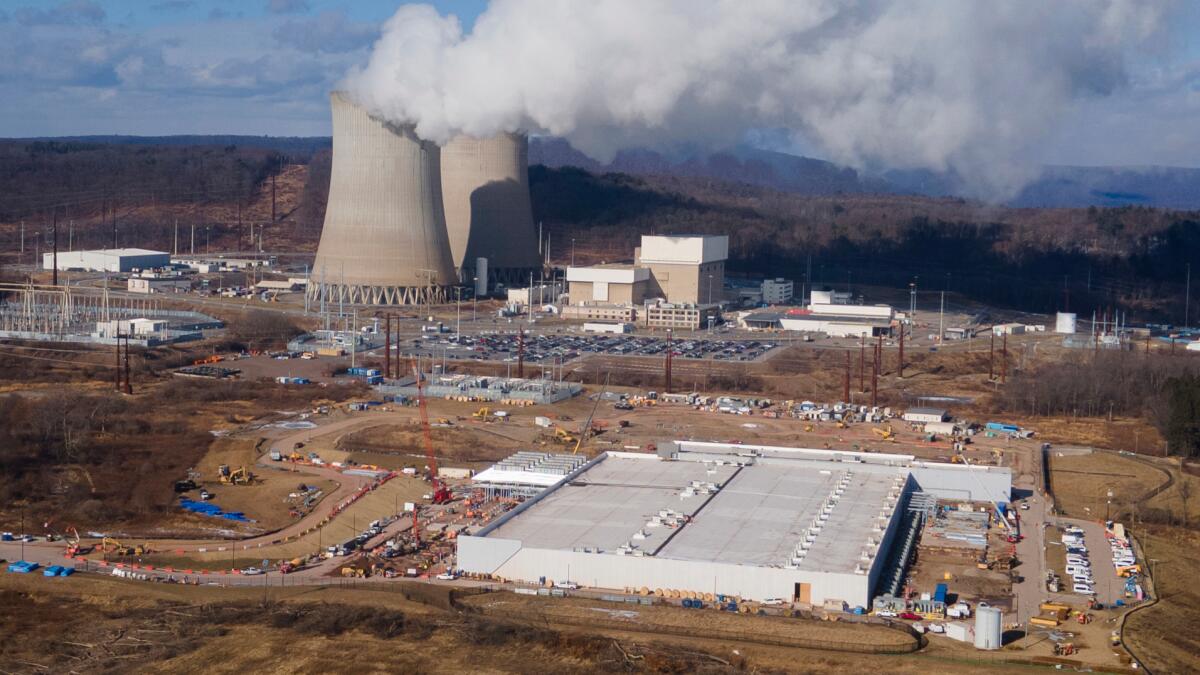
Data Centers Under Fire as Energy Bills Surge
As electricity costs continue to rise, a rare bipartisan consensus is emerging across the political spectrum: tech companies operating energy-intensive data centers must shoulder more of the financial burden. From President Trump to local officials, leaders are increasingly calling on the tech industry to pay its “fair share” for the massive power consumption required to support artificial intelligence and digital infrastructure.
However, while agreement exists on the principle, the path forward remains murky. The term “fair share” remains ambiguous, with interpretations varying widely. Ari Peskoe, director of Harvard University’s Electricity Law Initiative, noted, “‘Fair share’ is a pretty squishy term, and something the industry likes to say because it can mean different things to different people.”
From Incentives to Opposition
Just a year ago, states were actively courting data center projects, offering incentives and prioritizing power access. President Trump even instructed his administration to facilitate electricity access for these facilities. Today, the tide has turned. Communities are pushing back against new data center developments, and voters are holding public officials accountable.
In Georgia, for instance, Democrats unseated two Republican members of the state’s utility commission, driven by public frustration over rising utility bills attributed to data center demand. “Voters are connecting the dots between these facilities and their soaring electricity costs,” said Christopher Borick, director of the Muhlenberg College Institute of Public Opinion.
Data Centers Fueling Electricity Demand
Across the United States, data centers are being built at a rapid pace to support the explosion of generative AI technologies and cloud computing. These warehouse-sized structures, often larger than factories or stadiums, require staggering amounts of energy—sometimes more than a small city. Their energy needs are so great that utilities are racing to build new power plants to keep up.
The ripple effects are far-reaching. When utilities expand infrastructure to serve data centers, the costs are often passed on to all ratepayers. This has sharpened public concern about the broader cost-of-living crisis and the unchecked influence of Big Tech.
Despite the backlash, Trump continues to champion AI as a national priority, although he recently acknowledged growing concerns, stating on social media that data centers “must pay their own way.” Energy Secretary Chris Wright, however, dismisses claims that data centers are inflating power bills, contradicting analyses from consumer advocates.
States Seek Solutions
In response, some states and utilities are implementing policies to ensure tech companies bear the financial burden of their energy use. These include requiring long-term electricity purchase contracts, upfront payments for infrastructure upgrades, and safeguards against defaults if future energy needs diminish.
Still, these measures may not address the immediate problem: the explosive demand for power is outpacing the construction of new energy sources. “Big Tech can outbid Grandma for power,” warned Abe Silverman, a former utility regulatory lawyer now at Johns Hopkins University. “That’s going to be the real challenge.”
Consumer advocates argue that tech firms should also cover the secondary costs they induce, such as rising prices for natural gas and grid enhancements. In Oregon, new laws aim to protect smaller ratepayers from data center-driven rate hikes, while groups in Indiana, Georgia, and Missouri are warning of potential cost-sharing burdens on everyday consumers.
Political Pushback Intensifies
Some governors who once championed data center development are now reversing course. Arizona Gov. Katie Hobbs, a Democrat seeking re-election, has proposed eliminating a sales tax exemption for data centers and introducing a water usage fee. She labeled the current incentives a “$38-million corporate handout.” In her state-of-the-state address, she asserted, “It’s time we make the booming data center industry work for the people of our state, rather than the other way around.”
In Congress, Democrats have introduced legislation to regulate data centers, though they await Republican co-sponsors. State lawmakers are also considering moratoriums, ratepayer protections, and revisions to tax and utility incentive structures.
The Blame Game Over Energy Prices
As 2026 progresses, energy prices are projected to continue climbing. Republicans blame liberal energy policies favoring renewables, arguing they have increased transmission costs and restricted fossil fuel use. “Americans aren’t paying more because of data centers. It’s a perception, not reality,” said Energy Secretary Wright during a recent press conference.
But not everyone agrees. During a four-hour U.S. House subcommittee hearing, Democrats defended renewable energy and urged federal regulators to limit utility profits and shield consumers from data center-related costs. FERC Chair Laura Swett expressed optimism that data center operators are willing to pay their way. However, Rep. Greg Landsman (D-Ohio) was skeptical, citing tax breaks and community opposition as proof that companies aren’t doing enough. “They need to pay everything,” he insisted.
This article is inspired by content from Original Source. It has been rephrased for originality. Images are credited to the original source.