

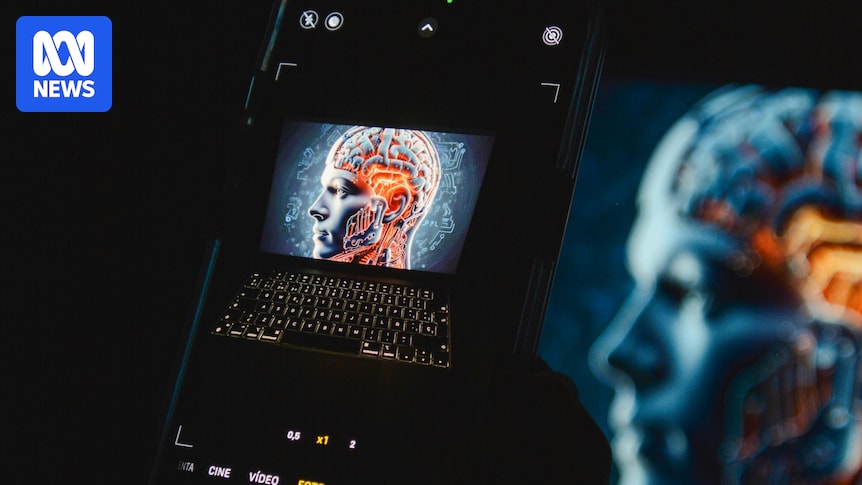
The Dawn of Agentic AI: Transforming Workplaces
The landscape of artificial intelligence (AI) is evolving at an unprecedented rate, leading to fundamental changes in the way businesses operate and the roles people play within them. Over the past year, the pace of AI adoption has accelerated dramatically, catching many by surprise. As agentic AI—AI systems capable of independently executing complex tasks—becomes more sophisticated and affordable, its impact on employment is being felt across industries.
Major Companies Announce AI-Driven Staff Reductions
In a landmark moment for Australian business, logistics software firm WiseTech Global recently announced the reduction of 2,000 employees as part of a broad AI transformation initiative. This marked one of the first major public acknowledgments of mass job losses directly attributed to AI in Australia.
Shortly after, Jack Dorsey, CEO of Block Inc., an ASX-listed fintech giant that acquired Afterpay in 2022, disclosed to his 10,000-strong workforce that approximately 4,000 jobs would be cut. Dorsey was clear that financial troubles were not the cause; rather, he highlighted the profound shift occurring within the company: “Something has changed. The intelligence tools we’re creating, paired with smaller and flatter teams, are enabling a new way of working which fundamentally changes what it means to build and run a company. And that’s accelerating rapidly.”
Agentic AI: The New Digital Workforce
Agentic AI is rapidly moving beyond simply answering user queries. Today, businesses are effectively “hiring” AI agents—software entities designed to apply AI reasoning and vast data stores to specific business tasks. These agents can handle customer service queries, develop marketing strategies, process legal documents, and more, either through off-the-shelf solutions or custom-built systems tailored to a company’s unique needs.
At telecommunications provider Superloop, CEO Paul Tyler revealed that almost all customer interactions are now managed via AI. “Our philosophy is, if you need to ring us, then we’ve done something wrong,” Tyler explained. While human operators still answer phones, Superloop has achieved workforce reductions through natural attrition, leveraging AI to handle increased workloads without expanding its staff.
The Collapsing Cost of Intelligence
One of the key factors driving the rapid adoption of AI is the sharp decline in the cost of machine intelligence. AI agents rely on large language models (LLMs) such as ChatGPT, Gemini, Claude, and Grok. These models process “tokens,” the basic units of AI computation—about 750 words per 1,000 tokens. The price per token has plummeted in recent years, falling from $30 to just a few cents for moderate complexity tasks.
This price drop has been fueled by intense competition among AI providers. OpenAI’s ChatGPT initially held a dominant market position, but rivals like Anthropic’s Claude and Google’s Gemini have forced prices down. As a result, LLM tokens are becoming a commodity, and the companies producing them are facing lower profit margins, despite soaring revenues from both retail and wholesale customers.
Subscription models now offer a range of pricing, from free basic tiers to premium “power user” packages costing up to $300 per month. These higher-end subscriptions provide agentic AI capabilities, allowing the AI to perform tasks autonomously rather than merely providing information.
Global Competition and the Commoditization of AI
As in manufacturing, China is emerging as a significant disruptor in the AI sector. Chinese developer DeepSeek provides high-level AI reasoning at a fraction of the cost, sometimes offering services for free. While their models may not always match the quality of top U.S. competitors, they are often “good enough” for many business applications. DeepSeek’s aggressive pricing is putting downward pressure on the entire industry, threatening the viability of standard subscription tiers offered by American firms and shifting the focus towards more advanced, agentic services.
A New Economic Paradigm: Intelligence as a Utility
An entire ecosystem for buying and selling AI-generated intelligence has sprung up almost overnight. For the first time, intelligence itself is being commoditized and traded as a product. Unlike human intelligence—which takes decades of life experience and evolution to develop—artificial intelligence can now be accessed instantly and at low cost. As AI systems become more capable, the distinction between human and machine intelligence is narrowing, with profound implications for the workforce and society at large.
Some experts, like economics writer Noah Smith, have speculated that we may soon reach a point where humans are no longer the most intelligent entities on the planet in a functional sense. The implications of this shift are both exciting and unsettling, as humanity finds itself “sleeping next to a tiger”—coexisting with powerful, rapidly evolving AI that is reshaping the world as we know it.
This article is inspired by content from Original Source. It has been rephrased for originality. Images are credited to the original source.