

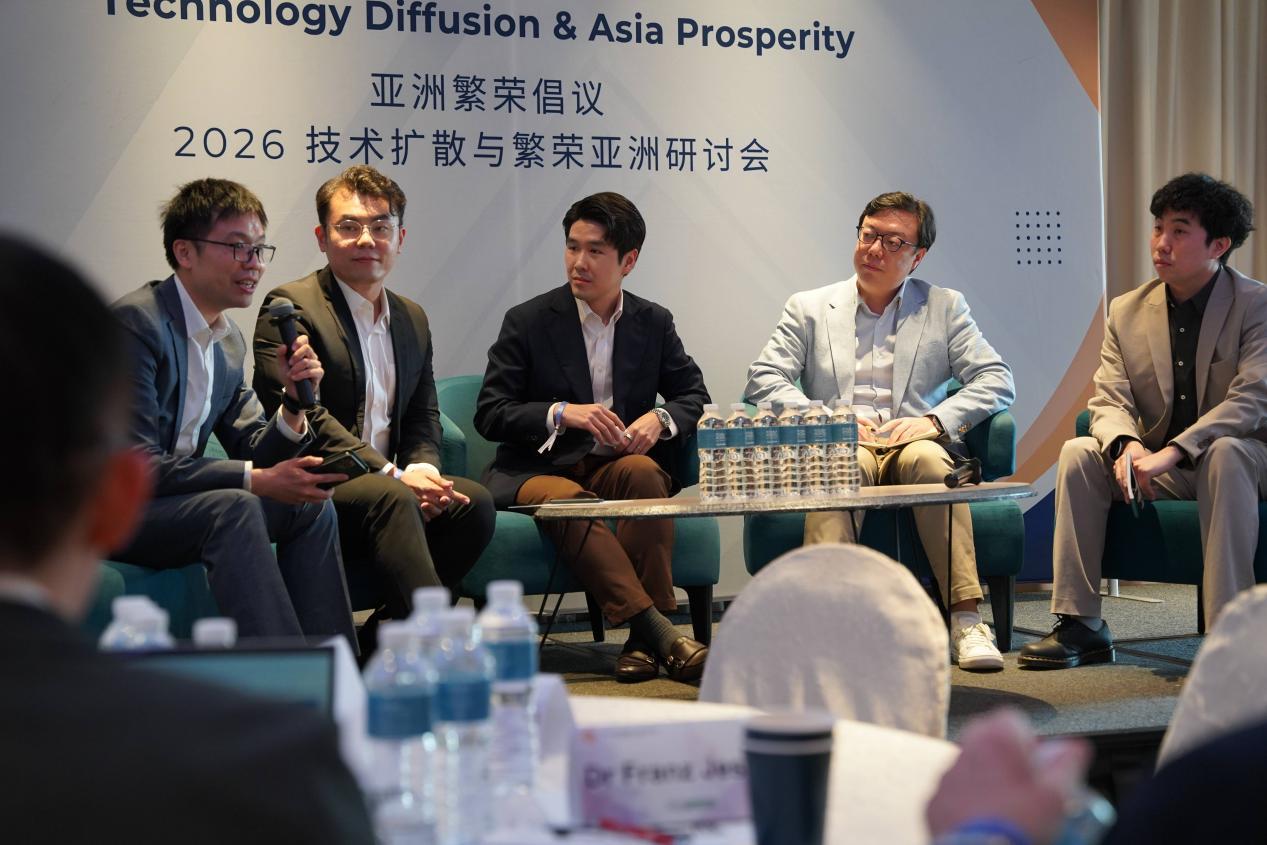
Singapore hosted the “Technology Diffusion and Asia Prosperity” seminar on February 27, an event organized by Edge Research to launch its Asia Prosperity Initiative. Experts from academia, finance and public policy gathered to discuss how AI diffusion is reshaping employment structures, agent deployment and governance frameworks across Asia.
Corporate-Led Innovation Changes the Talent Equation
Professor Lawrence Loh noted that the center of AI innovation has increasingly migrated from universities to corporations. Companies including Google, Alibaba and Tencent now drive much of the frontier development.
This shift carries implications for the labor market. Entry-level roles are experiencing growing displacement pressure, raising questions about how education systems should respond.
Zhang Fan cited research indicating generative AI affects junior positions more significantly than senior ones. In this context, companies may expand their role in workforce training. He pointed to Palantir’s recruitment of high school graduates as an example of evolving talent pathways.
AI Agents: Efficiency Meets Governance Tension
Alvin Chia described the growing presence of AI agents in financial services, noting gains in automation and decision support. However, he warned that each new integrated function expands potential cybersecurity exposure.
Huang Jingyang discussed technical mechanisms enabling cross-application interaction, including screen-reading and simulated clicks. While originally developed for accessibility, such methods may introduce privacy vulnerabilities. Protocol-based collaboration mechanisms such as A2A and MCP were presented as more sustainable alternatives.
Wang Yin highlighted the accountability gap created by AI agents’ opaque decision-making processes. Clear authorization boundaries and traceable mechanisms remain under development. Zhang Fan compared AI agents to digital “butlers,” cautioning against excessive delegation of access.
Southeast Asia’s Position in the Diffusion Cycle
Benjamin Goh noted that the EU AI Act has influenced governance debates globally. At the regional level, Singapore’s IMDA introduced its Model AI Governance Framework for Agentic AI, and India’s AI Impact Summit addressed data management considerations.
While Southeast Asia may follow global leaders in foundational model development, participants suggested that its strengths in application-layer innovation and localization provide a foundation for inclusive growth.