

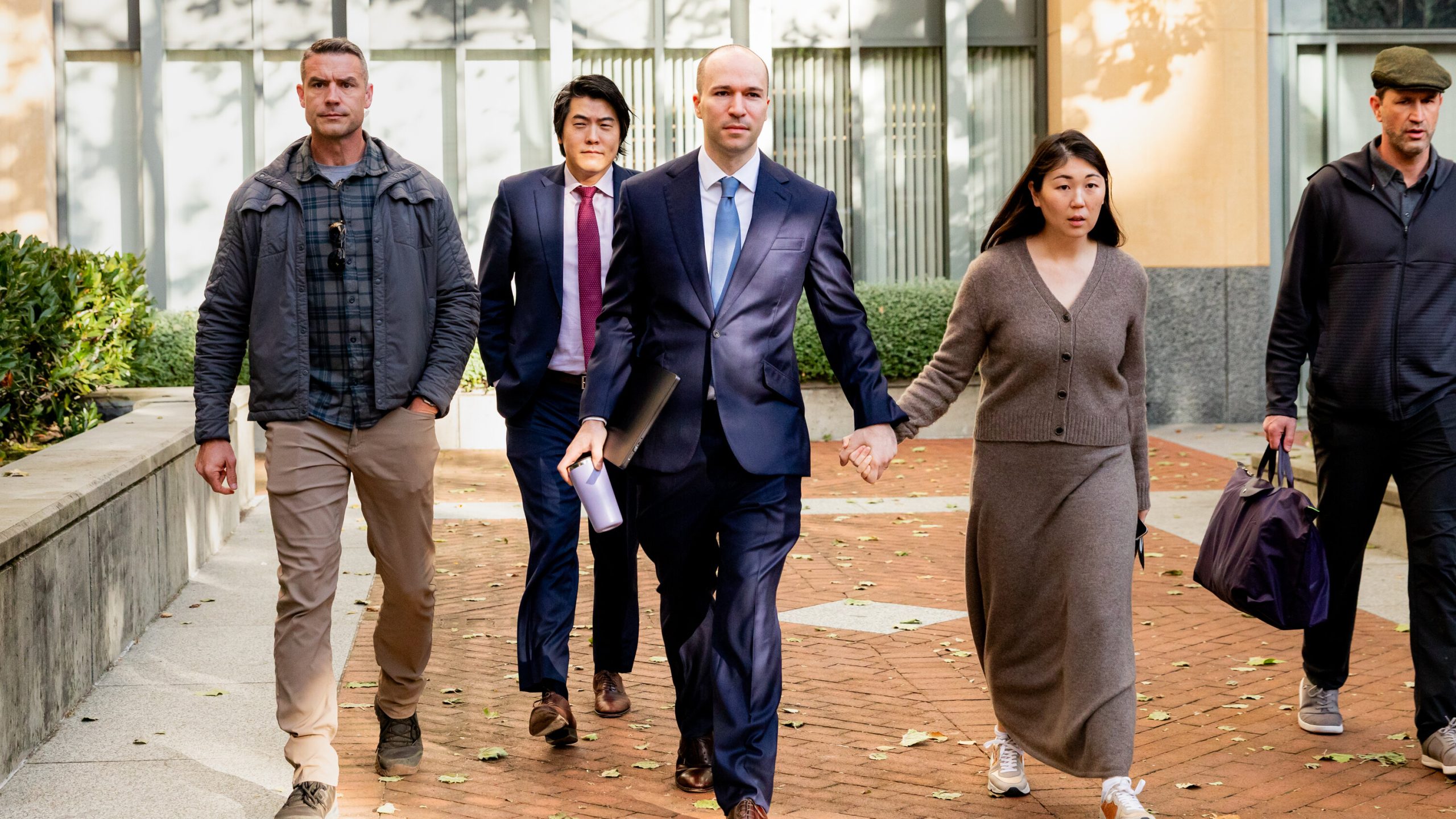
Elon Musk’s Legal Battle With OpenAI: The Stakes and Allegations
Elon Musk’s lawsuit against OpenAI has captured the tech industry’s attention, as courtroom drama and high financial stakes converge on the future of artificial intelligence. The trial, held in Oakland, California, revolves around Musk’s accusations that OpenAI’s leadership, including President Greg Brockman and CEO Sam Altman, betrayed the company’s founding ideals and prioritized profit over the safe development of AI for humanity’s benefit.
Just two days before the highly anticipated trial began, Musk reached out to Brockman, proposing a settlement. When Brockman suggested both parties drop their claims, Musk sharply retorted, warning that by week’s end, Brockman and Altman would become “the most hated men in America.” This exchange set a confrontational tone for the legal proceedings.
OpenAI’s Founding Mission Under Scrutiny
Central to Elon Musk’s lawsuit against OpenAI is the question of whether the company has deviated from its foundational promise. When Musk, Brockman, Altman, and other researchers established OpenAI as a nonprofit in 2015, they pledged to openly share their technology to benefit all of humanity. However, Musk alleges that OpenAI’s shift to a for-profit structure and subsequent focus on commercial success violated this agreement.
Musk is seeking $150 billion in damages, the removal of Sam Altman from the OpenAI board, and the dissolution of the for-profit entity. During the trial, Musk’s lawyer, Steven Molo, zeroed in on Brockman’s financial gains, highlighting that while Brockman never invested personal funds in OpenAI, his stake is now worth an estimated $30 billion. Molo questioned whether OpenAI could claim the moral high ground while its executives stood to profit so handsomely.
Brockman, remaining composed on the witness stand, maintained that his primary motivation has always been the company’s mission. He argued that OpenAI’s goals have not shifted and denied that personal gain was his driving force. “Solving for the mission has always been my primary motivation. It remains so today,” Brockman stated firmly.
Financial Motives and Ethical Questions
The trial delved into Brockman’s past communications, including a 2015 email to then-Yahoo CEO Marissa Mayer in which Brockman claimed he would donate $100,000 to OpenAI—a donation he ultimately did not make. When questioned about the ethics of this, Brockman denied any wrongdoing. The jury also heard excerpts from a journal Brockman kept as the company transitioned from nonprofit to for-profit, with Musk’s involvement a significant point of contention.
In his journal, Brockman described the internal dilemma over whether to accept Musk’s terms or steer OpenAI in a new direction. He openly pondered the potential financial rewards, asking, “Financially, what will take me to $1B?” Under cross-examination, Brockman insisted these musings reflected the difficult choices facing OpenAI’s leadership at the time, not a singular focus on personal wealth.
Artificial General Intelligence and Industry Implications
The trial also spotlighted broader concerns about the race to develop artificial general intelligence (AGI)—AI systems capable of performing any intellectual task a human can do. Stuart Russell, a prominent AI safety researcher from UC Berkeley, testified that whichever company first achieves AGI could dominate the global economy and potentially wield power surpassing governments. This testimony underscored why Elon Musk’s lawsuit against OpenAI resonates beyond individual grievances and touches on the future trajectory of AI technology.
Musk’s own ambitions in the AI space were revealed during the proceedings. According to Brockman, Musk departed OpenAI after a power struggle and soon founded his own AI company, xAI. Musk purportedly told Brockman that OpenAI would not be able to compete with tech giants like Google and that he intended to pursue AGI development at Tesla—an assertion that further complicates the narrative around motivations and competition.
Setbacks and Legal Maneuvers
On the legal front, Musk’s case suffered a setback when Judge Yvonne Gonzalez Rogers struck portions of testimony from Jared Birchall, who manages Musk’s family office. Birchall’s account of a $97.4 billion bid to purchase OpenAI’s assets was deemed inadmissible due to lack of personal knowledge about Altman’s involvement. Nonetheless, the incident highlighted the immense sums and high-profile personalities entangled in the dispute.
As the trial continues, the outcome could have lasting implications for how AI companies are structured, governed, and held accountable. The proceedings lay bare the tensions between idealism and profit in the rapidly evolving world of artificial intelligence.
Conclusion: What’s Next for OpenAI and the AI Industry?
The Elon Musk lawsuit against OpenAI is more than a personal vendetta—it raises critical questions about ethics, governance, and the future of AI development. As testimony continues, the tech world watches closely, aware that the verdict may set precedents for both the industry’s business practices and its societal responsibilities.
This article is inspired by content from Original Source. It has been rephrased for originality. Images are credited to the original source.