

Quantum Mechanics Meets Artificial Intelligence in Cancer Care
Quantum AI in healthcare is opening up exciting new pathways for improving cancer outcomes. Recent research is leveraging the mathematical principles of quantum mechanics—specifically superposition and entanglement—to transform how cancer treatments are matched to individual patients. This approach could mean more personalized therapies and better survival rates, especially for complex cancers like neuroblastoma.
The Challenge of Personalizing Cancer Treatment
For children diagnosed with neuroblastoma, the journey to treatment is rarely straightforward. While some cases resolve without intensive intervention, others demand aggressive therapies. Historically, doctors have attempted to tailor treatments based on single-gene mutations. However, patient outcomes often depend on the broader molecular landscape—an intricate web of millions of features in DNA, RNA, and other molecular data from tissues and blood. Traditional artificial intelligence and machine learning approaches require massive datasets to accurately predict treatment responses, but clinical trial data sets are often limited to just 20-100 patient samples.
Introducing Quantum AI for Healthcare Data
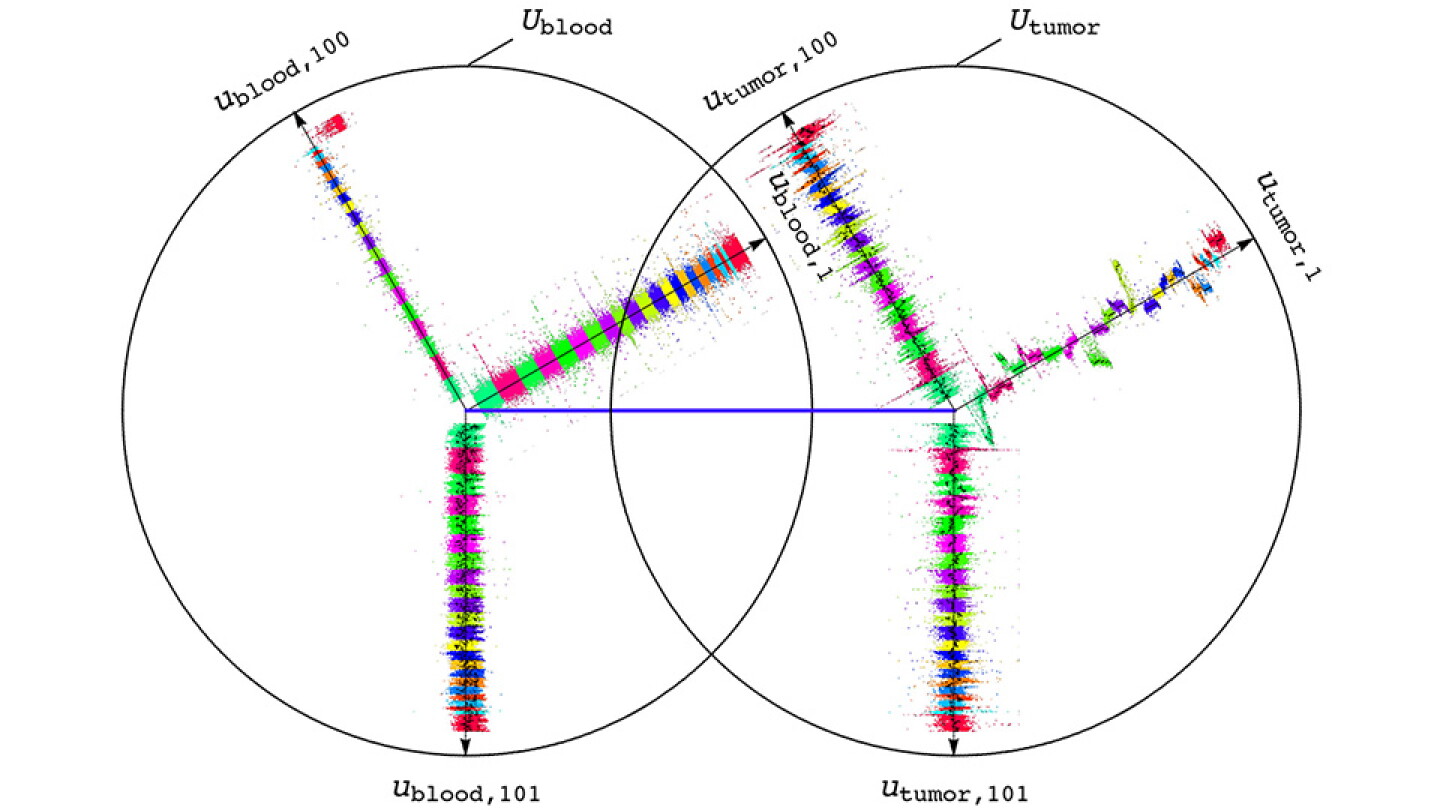
To address these limitations, a team of researchers led by Orly Alter has turned to quantum mechanics as inspiration. They developed an AI/ML framework that uses multitensor comparative spectral decompositions—algorithms grounded in quantum concepts like entanglement and superposition. This method enables the separation of complex molecular data into distinct outcome components, much like how a prism disperses light into its constituent colors. This process helps reveal hidden patterns in patient data that could predict how individuals will respond to specific cancer treatments.
Breakthrough Results in Neuroblastoma Research
The research team demonstrated the effectiveness of quantum AI in healthcare by analyzing open-source neuroblastoma case data. Their algorithms uncovered two novel predictors—present in both tumor and blood genomes, as well as the tumor transcriptome—that standard methods had missed entirely. Remarkably, these predictors outperformed existing biomarkers across all datasets, offering more reliable forecasts of patient survival and treatment response.
Unlike conventional neural network models, which often function as “black boxes,” the predictors identified through this quantum-inspired approach are fully interpretable. According to Orly Alter, this means the results not only offer improved predictive power but also point directly to disease mechanisms and potential gene targets. This opens the door to developing therapies that sensitize tumors to treatment, a promising advance for patients with challenging cancer types.
Real-World Validation and Future Prospects
The credibility of the quantum AI approach in healthcare has been bolstered by recent experimental validations. The research team successfully confirmed their predictions regarding adult glioblastoma patient outcomes and drug targets through both clinical trials and CRISPR-Cas9 gene editing studies. This real-world evidence demonstrates the potential of quantum AI to revolutionize the field of precision medicine, especially when dealing with noisy, high-dimensional, and small-cohort datasets that have traditionally stymied classical AI methods.
Unlocking New Possibilities for Cancer Patients
As precision medicine continues to advance, the integration of quantum AI in healthcare could redefine how clinicians approach cancer treatment. By providing deeper insights into the molecular factors influencing patient outcomes, this technology promises to make personalized cancer care more effective and widely accessible. The application of quantum principles allows researchers to uncover patterns and predictors that were previously hidden, offering hope to patients who may not have benefited from earlier, less nuanced AI techniques.
Conclusion: The Future of Quantum AI in Healthcare
The convergence of quantum mechanics and artificial intelligence is ushering in a new era for cancer treatment. With quantum AI in healthcare, researchers and clinicians can better interpret complex molecular data, discover new biomarkers, and tailor therapies to the unique genetic makeup of each patient. As this technology matures, it is expected to play a pivotal role in improving survival rates and quality of life for cancer patients around the world.
This article is inspired by content from Original Source. It has been rephrased for originality. Images are credited to the original source.