

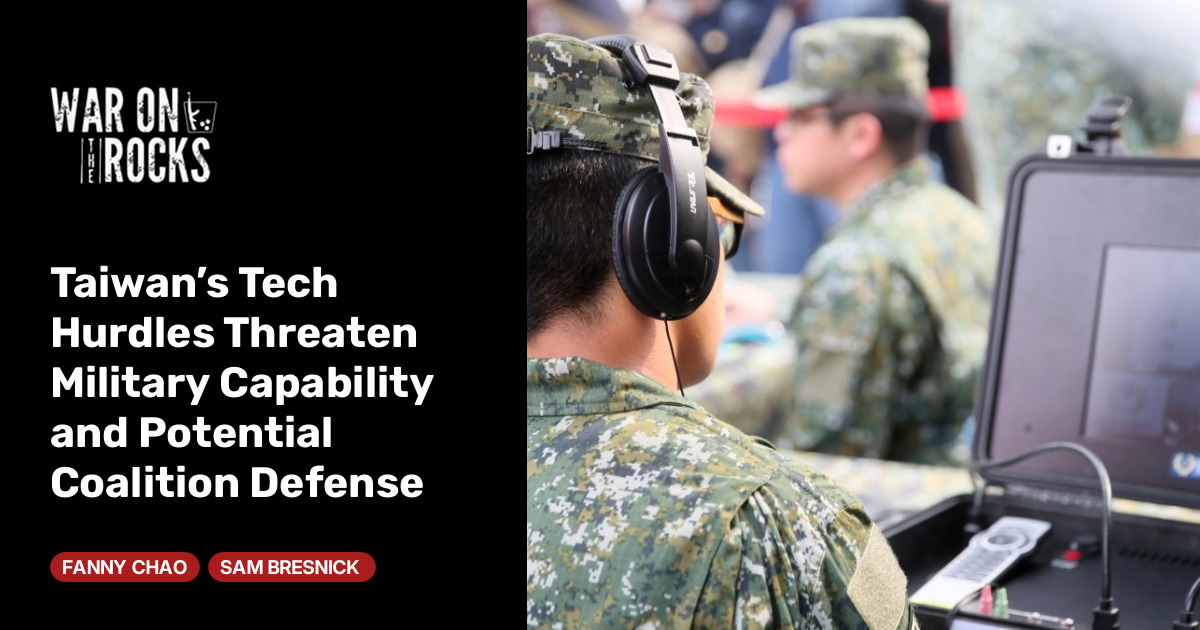
Taiwan’s Struggle with Military Technology Adoption
Taiwan has long been recognized for its leadership in semiconductor manufacturing, playing a vital role in the global electronics supply chain. Yet, when it comes to adopting advanced military technology, particularly defense technology, Taiwan faces significant challenges. Despite being a key player in the tech industry, the island nation’s military is only just beginning to embrace new digital tools and innovations that are increasingly essential for modern warfare.
Semiconductor Strength vs. Defense Technology Gaps
Taiwan’s world-class semiconductor sector provides the backbone for many cutting-edge applications globally, from smartphones to advanced computing systems. However, these strengths have not been fully leveraged within Taiwan’s own defense sector. The slow pace of defense technology integration leaves the military at risk of falling behind potential adversaries who are rapidly advancing in areas such as artificial intelligence, autonomous systems, and cyber defense.
Military analysts point out that while Taiwan excels at producing the hardware that powers modern innovations, it has not matched this prowess with equal advancements in deploying these technologies for its own security needs. This disconnect poses a serious threat, particularly as regional tensions rise and the threat landscape evolves.
Obstacles to Modernization
Several factors contribute to Taiwan’s lag in defense technology adoption. First, institutional inertia and bureaucratic processes have slowed the integration of digital tools into the armed forces. There are also concerns about the security of supply chains, as reliance on foreign technologies can create vulnerabilities. Moreover, the military’s procurement processes often prioritize traditional hardware over investment in software, cybersecurity, and emerging digital capabilities.
Another key barrier is talent acquisition. While Taiwan’s civilian tech sector attracts top engineers and innovators, the military has struggled to compete for this talent. The private sector typically offers more attractive salaries and career growth opportunities, making it difficult for the armed forces to recruit and retain the expertise needed for advanced defense technology projects.
Coalition Defense and International Collaboration
Taiwan’s challenges in adopting defense technology have implications that extend beyond its borders. In the event of a regional conflict, the ability to seamlessly integrate with coalition partners—such as the United States and other allies—will depend on compatible systems and shared operational standards. Slow technology adoption could hamper joint operations, reducing overall effectiveness and increasing risks.
International partners have expressed willingness to support Taiwan’s defense modernization, but meaningful progress depends on the island’s ability to accelerate its digital transformation. Collaborative exercises, joint research initiatives, and technology transfers can only yield results if Taiwan’s military infrastructure is ready to absorb and deploy these innovations.
Opportunities for Improvement
Despite the current hurdles, Taiwan has opportunities to strengthen its defense technology capabilities. Strategic investments in research and development, combined with reforms to procurement and talent management, could help bridge the gap between commercial and military innovation. Partnerships with local tech companies and universities offer a path to rapidly prototype and deploy new solutions tailored to the island’s unique defense needs.
Additionally, fostering a culture of innovation within the armed forces will be crucial. This involves not only adopting new tools but also rethinking operational doctrines to fully exploit the potential of digital technologies. For example, leveraging artificial intelligence for surveillance, logistics, and decision-making could provide a significant edge in future contingencies.
The Road Ahead for Taiwan’s Defense Technology
The evolving security environment in the Indo-Pacific region underscores the urgency for Taiwan to overcome its tech adoption challenges. While the island’s semiconductor industry remains a global leader, translating this technological strength into effective defense technology solutions is essential for safeguarding national security and ensuring interoperability with allies.
Ultimately, Taiwan’s ability to defend itself and contribute meaningfully to coalition operations will depend on its success in modernizing its military. By embracing change and investing in the future, Taiwan can turn its technological prowess into a formidable force for defense.
This article is inspired by content from Original Source. It has been rephrased for originality. Images are credited to the original source.