

The Rise of AI in Modern Warfare
Artificial intelligence is rapidly transforming the battlefield in Ukraine, ushering in a new era of warfare that includes autonomous drones and high-tech surveillance tools. As Ukraine and Russia compete in this technological arms race, the implications for the future of global conflicts are becoming increasingly profound.
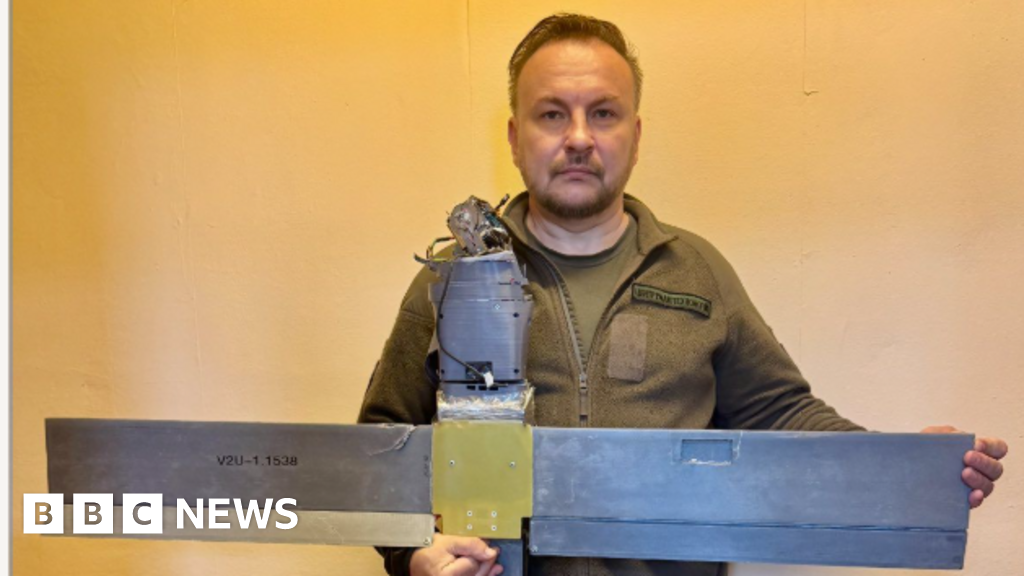
Serhiy Beskrestnov, a consultant for the Ukrainian defense forces, recently examined a captured Russian drone and was struck by its capabilities. This was no ordinary unmanned aerial vehicle. Equipped with AI, it could independently identify and strike targets without transmitting or receiving signals—making it immune to traditional jamming techniques.
AI Enhancing Military Capabilities
Yuriy Myronenko, Ukraine’s Deputy Defense Minister, emphasizes the growing importance of AI across the military. “Our forces receive over 50,000 video streams from the front lines every month,” he explains. “Artificial intelligence helps us process this immense data volume, pinpoint targets, and map them efficiently.”
These technologies are revolutionizing strategic planning, resource allocation, and operational safety. AI-driven tools are already being used for reconnaissance, de-mining, and targeting, playing a critical role in Ukraine’s defensive and offensive capabilities.
Autonomous Drones: A Game Changer
Ukrainian troops have started deploying AI-powered drones capable of autonomous targeting. Once a drone locks onto its target, it can maneuver the final stages of its mission without human intervention. These drones are particularly difficult to counter due to their small size and radio silence.
Yaroslav Azhnyuk, CEO of Ukrainian tech firm The Fourth Law, outlines the future potential of these systems. “A soldier may only need to press a button on a smartphone app,” he says. “The drone will do everything else—locate the target, drop explosives, assess the damage, and return to base.”
Such automation could significantly enhance Ukraine’s air defense capabilities, particularly against Russian long-range drones like the Shaheds.
Balancing Innovation with Caution
Despite the advantages of AI-driven weapons, Ukrainian developers are wary of giving machines full control. Vadym, whose company DevDroid creates AI-assisted remote-controlled machine guns, expresses concern about friendly fire. “AI might not differentiate between a Ukrainian and Russian soldier if they wear similar uniforms,” he warns.
Because of these risks, DevDroid has not enabled automatic firing in its systems. “We need more data and feedback from ground operations before making that leap,” Vadym explains. The company’s current focus is on detection and tracking rather than autonomous engagement.
Ethical and Legal Concerns
The deployment of AI in warfare raises serious ethical and legal questions. How will autonomous systems avoid civilian casualties or recognize surrendering soldiers? Myronenko insists that humans should make the final call in such scenarios, though AI can assist in decision-making.
However, there are no assurances that all actors in the conflict will adhere to international humanitarian laws. This unpredictability makes the development of countermeasures even more critical. Ukraine’s use of AI-enabled drone swarms—like the “Spider Web” operation that targeted Russian air bases with 100 drones—illustrates both the potential and the peril of this new warfare paradigm.
Global Implications and Call for Regulation
The rapid advancement of AI in military applications has caught the attention of global leaders. Ukrainian President Volodymyr Zelensky recently addressed the United Nations, describing AI’s role in warfare as part of “the most destructive arms race in human history.”
Zelensky called for international regulations on AI-powered weapons, comparing the urgency to that of nuclear non-proliferation efforts.
As both sides in the Ukraine conflict continue to innovate, the world watches closely. The integration of AI into military systems offers tactical advantages but also introduces risks that could escalate conflicts and endanger civilians.
The next few years may see thousands of AI-assisted defense systems deployed, according to Azhnyuk. But the debate around their ethical use, accountability, and compliance with international law is just beginning.
This article is inspired by content from Original Source. It has been rephrased for originality. Images are credited to the original source.