

The Rise of AI in Commercial Real Estate
AI in commercial real estate is rapidly transforming how the industry operates, creating both opportunities and disruptions. Traditionally marked by its reliance on face-to-face negotiations and human expertise, commercial real estate is now experiencing a wave of innovation driven by artificial intelligence. From smarter investment strategies to the growing demand for data centers, the sector is being reshaped in ways that were previously unimaginable.
AI’s Impact on Real Estate Service Firms
Recent developments have shown that AI is affecting not just the physical aspects of real estate, but also the business models of firms that provide commercial real estate services. In early 2025, stocks of major companies like CBRE, Jones Lang LaSalle, and Cushman & Wakefield faced a significant downturn, largely due to investor concerns about the disruptive potential of AI. The fear was not so much that AI in commercial real estate would reduce the intrinsic value of office space, but that it could replace the brokers and advisors who traditionally guide investment decisions.
According to Joe Dickstein, an equity research analyst at Jefferies, the primary concern is for labor-intensive, intermediary businesses. “The fear is that these firms are ripe for disruption,” he explains. “While there’s a secondary concern about office worker redundancy, the key issue is the long-term durability of advisory businesses in the face of AI advancements.”
Smarter Investing Through AI
The integration of AI into investment decision-making is one of the most profound changes unfolding in this sector. Francis Huang, co-founder of Apers AI, was inspired to create an AI-powered investment platform after researching autonomous private equity systems at Harvard. The platform now enables institutional investors to evaluate thousands of potential deals rapidly, automating more than 90% of the decision-making process that once required a large team of brokers and analysts. “It’s essentially their investment committee,” Huang notes, highlighting how AI in commercial real estate is streamlining complex workflows and reducing costs.
Opportunities and Threats for the Industry
However, experts caution against assuming that AI will fully replace human expertise in commercial real estate. Yuehan Wang, global research director for real estate technologies at Jones Lang LaSalle, says the industry views AI as an opportunity to gain a competitive edge. “The threat lies in failing to adopt and adapt,” she explains. AI is seen as a tool for market trend analysis, risk modeling, portfolio optimization, and automated valuation – all crucial tasks for investors and firms seeking to stay ahead in a rapidly evolving market.
Wang adds that rather than being defensive, investors are embracing AI as a competitive weapon, using its analytic power to refine their strategies. This widespread adoption is accelerating a paradigm shift in how the sector functions, but insiders agree that the most successful firms will be those that blend technology with human insight.
The Data Center Boom and Office Space Demand
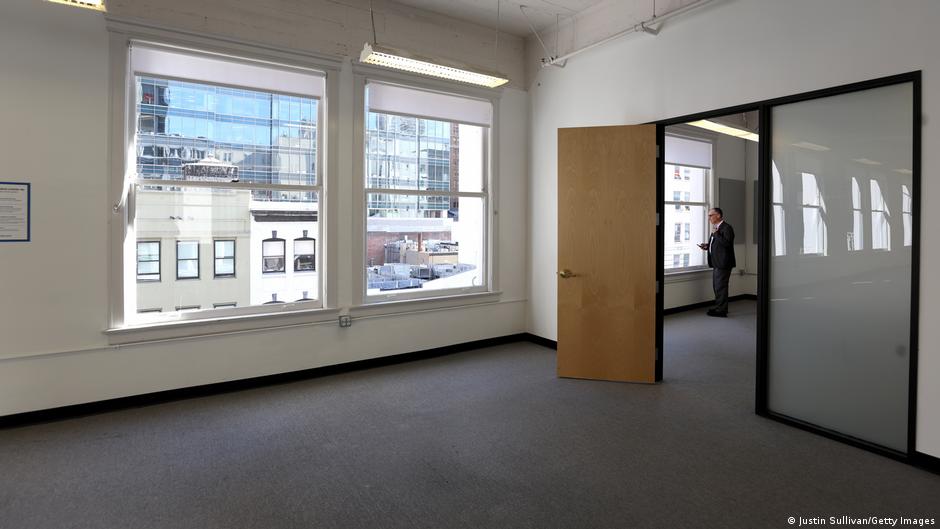
The influence of AI in commercial real estate is not limited to investment algorithms. The surge in demand for computing power, fueled by AI, has triggered a construction boom in data centers. This trend is offsetting concerns about empty office buildings as remote work persists. In fact, AI and technology companies have become major renters of office space, accounting for about 20% of U.S. office leasing in the first half of 2025, up from 10% in 2022. This uptick has helped reverse high vacancy rates in key markets like New York and San Francisco.
Adapting Human Roles in a Changing Industry
Despite the transformative power of AI, industry leaders stress the enduring value of human relationships in real estate. Francis Huang views AI not as a replacement, but as an upgrade that allocates capital more efficiently. “The value of real estate comes from the highest and best use of land,” he says, noting how demand shifts as economic needs evolve. The example of Kendall Square in Cambridge, Massachusetts – once industrial, now a hub for biotech and research – illustrates this dynamic evolution.
Wang believes that the sector is only at the beginning of an AI-driven cycle that will culminate in significant changes by 2030 and beyond. However, both she and Dickstein agree that human expertise and proprietary data give established firms a crucial advantage. “It remains a deeply interpersonal business,” Dickstein asserts, suggesting that human relationships and insights will continue to play a vital role even as AI in commercial real estate matures.
The Future Outlook
As the industry adapts to technological advancements, the integration of AI in commercial real estate is likely to accelerate. While some fear a future of empty offices, evidence suggests that AI is sparking new demand and transforming how space is used rather than eliminating it. For investors and professionals alike, staying ahead means embracing both the opportunities and challenges that technology brings.
This article is inspired by content from Original Source. It has been rephrased for originality. Images are credited to the original source.