

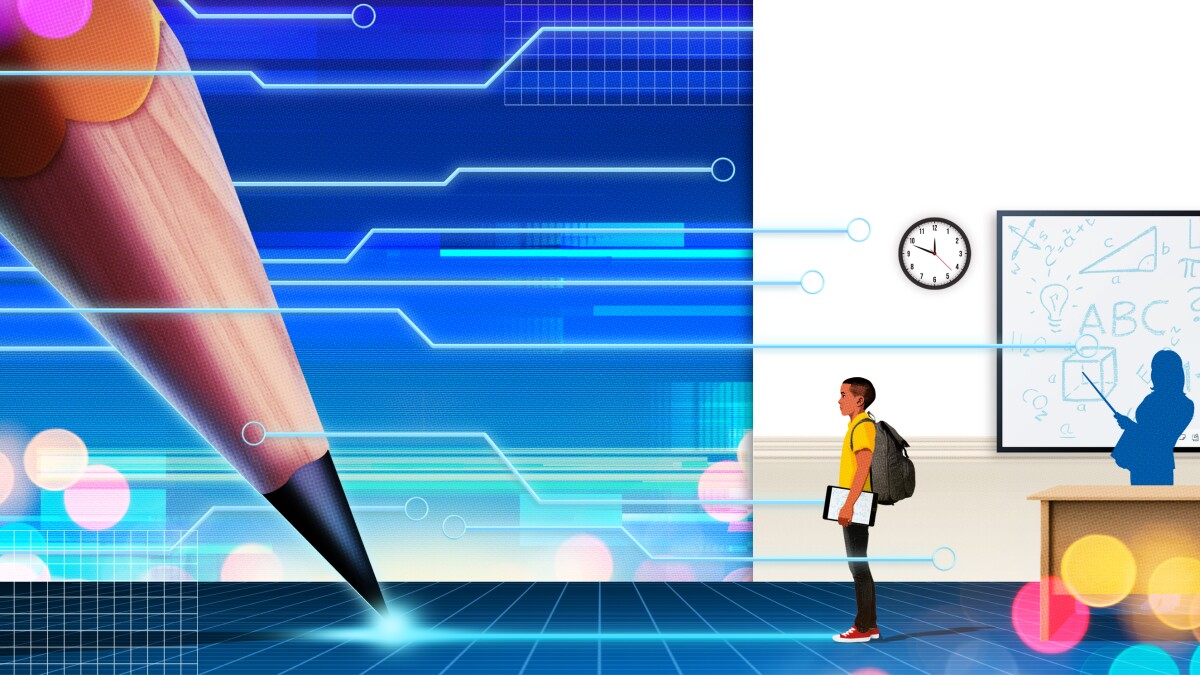
The Rise of AI in Parenting and Education
With the advent of technology, AI in education has rapidly expanded into homes and classrooms, changing how children experience learning and care. Today, some children drift to sleep listening to a smart speaker narrate bedtime stories or singing lullabies, rather than their parents’ voices. Artificial intelligence now offers soothing sounds, storytelling, and answers to children’s endless questions with remarkable precision. Many apps and voice assistants promise unparalleled convenience and consistency, while educational technology platforms advertise personalized tutoring accessible at any time. These advances are remarkable, yet they prompt an important question: what is lost when we start outsourcing fundamental acts of caregiving and teaching to machines?
The Lullaby Crisis: Outsourcing Human Acts
Across K-12 schools, AI in education has become increasingly prevalent. AI-powered tools now tutor students, generate feedback, and even simulate conversations, challenging us to consider what should remain uniquely human in teaching and learning. This transformation is more than a technological evolution—it signals a cultural shift, a so-called “lullaby crisis,” where machines begin to perform the intimate acts of care that once defined parenting and education.
Research in developmental neuroscience consistently shows that children grow through relationships, not just by receiving information. During early childhood, the brain develops rapidly, and responsive interactions with caregivers are essential in shaping the neural architecture that underpins language, learning, and emotional growth. Everyday rituals like singing to a child or reading a story together stimulate language pathways, foster emotional bonds, and enhance memory formation.
The Irreplaceable Value of Human Relationships
Within schools, the same principle applies. Studies of AI in education, especially in early childhood, highlight that while digital tools can complement learning, they cannot substitute the vital human relationships children need for healthy development. The Harvard Center on the Developing Child points to “serve-and-return” interactions—moments when adults respond meaningfully to a child’s cues—as critical for building brain architecture and supporting skills like emotional regulation, language, and social interaction.
When a parent sings a lullaby, even imperfectly, or a teacher patiently answers a child’s question, something deeper occurs than just instruction. These moments create attachment, trust, and lifelong memories. While artificial intelligence can mimic warmth and attentiveness, it cannot truly experience or reciprocate them. Technology may generate a soothing voice, but it cannot build a genuine bond. What appears to be connection can be little more than a carefully engineered illusion.
AI Tutoring: Promise and Pitfalls in the Classroom
AI tutoring systems have evolved to provide instant feedback, adjust difficulty levels, and deliver personalized explanations. For overstretched classrooms, these tools offer real potential. When integrated thoughtfully, AI in education can help teachers tailor instruction and support students who may otherwise be left behind. Many school districts across the country are quickly adopting AI tutoring systems and classroom assistants, often outpacing the development of relevant policies or research.
However, an important shift is underway: in some classrooms, students now turn to AI tools for explanations before approaching their teachers, altering not just how they learn but also whom they rely on. Teaching, after all, is more than the mere transfer of information. Great educators recognize when a student is nervous before a test, curious about a new concept, or quietly disengaged. They interpret facial expressions, body language, and social cues, motivating students through encouragement, trust, and mentorship. These relational elements are fundamental to effective learning.
Ethical Concerns and the Need for Human-Centered Education
As AI in education proliferates, it raises urgent ethical questions. Efficiency must not come at the expense of human presence. International organizations like UNESCO have warned that educational systems must safeguard the human relationships and values at the core of learning. Researchers caution about the “empathy gap”—the difference between responses that sound caring but lack genuine emotional understanding and the ability to attune to a child’s needs in real time.
If society normalizes machines reading bedtime stories, answering questions, and soothing fears, we risk redefining what it means to care. While children may receive impeccable narration and swift answers, they could lose out on patience, human attention, and the opportunity to form real relationships. The true danger is not the capability of artificial intelligence, but rather the possibility that we may expect less of ourselves as caregivers and educators.
Striking a Balance: The Role of AI as Support, Not Substitute
Rejecting AI in education outright is neither realistic nor necessary. Used responsibly, AI can be a valuable support for families and teachers—it can translate stories, suggest activities, assist in grading, and offer personalized practice. However, the integration of AI must be guided by clear boundaries. School leaders and policymakers should ensure that human relationships remain at the heart of education, even as they embrace technological innovation.
Experts recommend three guiding principles: human-centered design that encourages interaction between children and adults; human-in-the-loop systems that keep parents and educators central to decision-making; and ongoing investment in teachers, caregivers, and early-childhood programs. As artificial intelligence reshapes education, we must remember that children require more than perfectly generated responses. They need eye contact, encouragement, patience, and the reassuring presence of adults who care. No algorithm can replace this, and no child should be expected to grow up without it.
This article is inspired by content from Original Source. It has been rephrased for originality. Images are credited to the original source.