

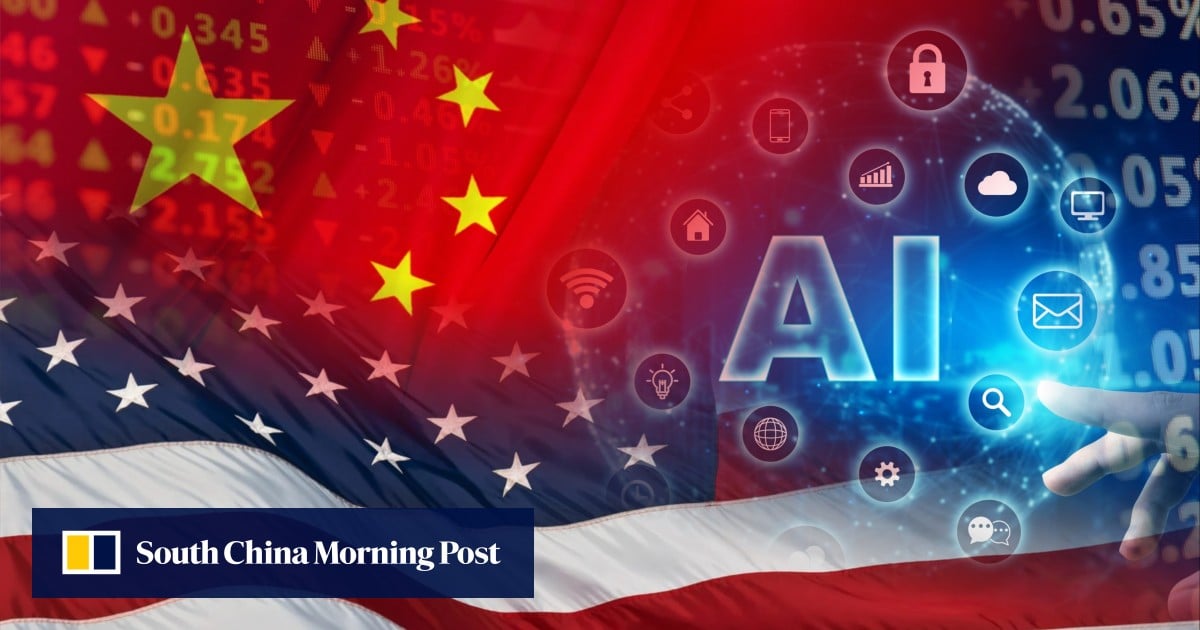
US Lawmakers Emphasize AI Innovation Leadership
AI innovation leadership has become a critical issue as US lawmakers intensify calls for America to remain at the forefront of artificial intelligence development. During a recent congressional hearing, both Democratic and Republican representatives expressed growing concern over China’s rapid advancements in AI, framing the competition as a defining factor for economic and national security in the coming decades.
US-China Rivalry Drives Urgency
The rivalry between the United States and China in the AI sector was at the center of discussions in Washington. Lawmakers argued that the stakes could not be higher, emphasizing that the nation which leads in AI innovation leadership will shape the future of the global economy and military power. Senator Tim Scott, chairman of the US Committee on Banking, Housing, and Urban Affairs, highlighted the urgency: “Cyber security and national security must be taken seriously. The United States cannot afford to let China or any other adversary gain a technological edge in artificial intelligence.”
Senator Jim Banks, a Republican from Indiana, reinforced this sentiment, stating, “No contest matters more for America’s future than to beat China in artificial intelligence. The nation that leads in AI will set the terms of the world’s economy and command the high ground in military power.”
Bipartisan Consensus on Innovation
The congressional hearing, titled “AI and the American Dream: Promoting Innovation, Affordability, and American Dominance”, revealed bipartisan consensus on the need for the US to retain its leadership in AI innovation. Lawmakers from both sides of the aisle echoed concerns that falling behind could have far-reaching consequences for both technological progress and national interests.
Witnesses at the hearing urged Congress to proactively support responsible innovation and ensure that the next chapter of AI development is written in America. This includes investing in research, fostering public-private partnerships, and establishing clear regulations that encourage ethical and secure AI growth. “America cannot afford to be complacent,” one expert testified. “We need policies that foster AI innovation leadership, ensuring our values and interests are embedded in this transformative technology.”
Different Approaches to AI Development
The US and China have historically taken divergent paths in their approach to AI. China’s state-driven model prioritizes central planning and massive investment, aiming for rapid scalability and deployment across sectors. In contrast, the US model relies heavily on private sector innovation, academic research, and open competition. Lawmakers noted that while the American approach has driven significant breakthroughs, it also faces challenges from China’s coordinated and well-funded AI ambitions.
These differences underscore the need for a comprehensive national strategy that leverages America’s strengths while addressing vulnerabilities. “We must double down on our competitive advantages,” Senator Scott stated, “by empowering our innovators, protecting intellectual property, and ensuring that our workforce has the skills needed for the AI era.”
National Security and Economic Implications
Beyond economic competition, lawmakers emphasized the national security implications of AI innovation leadership. Advanced AI technologies are increasingly seen as essential for military applications, cybersecurity, and infrastructure protection. If the US were to fall behind, officials warned, it could compromise not only economic prosperity but also the nation’s ability to defend itself and project influence globally.
“The next AI revolution will determine who sets the rules for the digital age,” one lawmaker said. “It is imperative that AI innovation leadership remains in America’s hands, safeguarding our values and interests.”
Steps Toward Securing America’s AI Future
To maintain AI innovation leadership, lawmakers and experts recommended a multi-pronged approach: increasing federal investment in AI research and development, incentivizing private sector breakthroughs, and cultivating a talent pipeline through STEM education. Additionally, they called for international collaboration with allies to create standards that reflect democratic values and to counterbalance China’s growing influence in global AI governance.
“This is not just a technological competition—it is a contest of values and vision,” concluded Senator Banks. “America must lead the next AI revolution to ensure a future that is secure, prosperous, and aligned with our principles.”
Conclusion: The Road Ahead
The congressional hearing made it clear that AI innovation leadership is a top priority for US policymakers. As the race with China intensifies, America’s ability to lead in responsible AI development will shape its economic and security prospects for generations. Continued investment, bipartisan cooperation, and a focus on ethical innovation will be essential to maintaining America’s edge in this transformative field.
This article is inspired by content from Original Source. It has been rephrased for originality. Images are credited to the original source.