

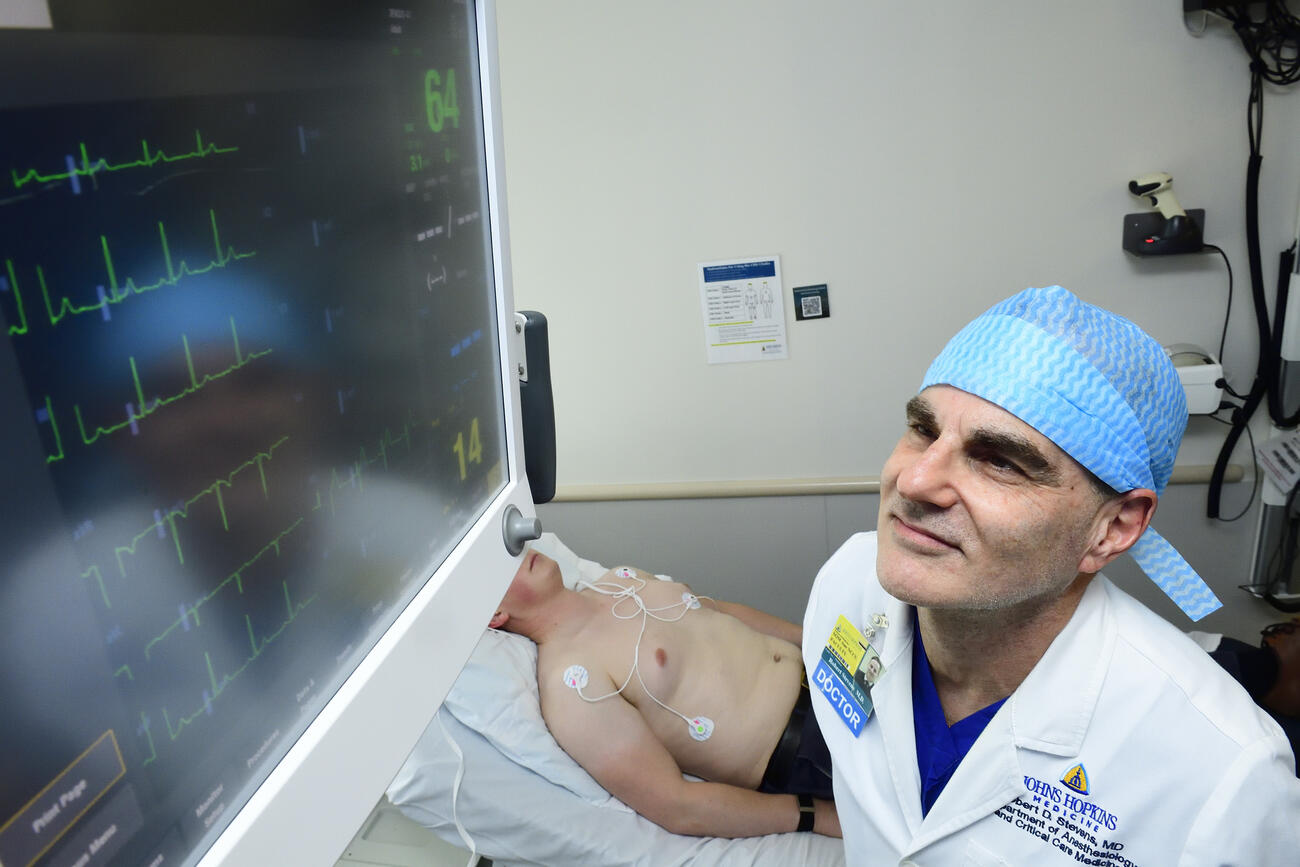
Artificial Intelligence Enhances Post-Surgical Risk Prediction
Researchers at Johns Hopkins University have developed an advanced artificial intelligence (AI) model that significantly outperforms human doctors in predicting potentially fatal complications after surgery. This breakthrough could mark a pivotal shift in how medical practitioners assess and manage postoperative risk.
The AI tool was trained on a vast dataset of routine electrocardiogram (ECG) tests, allowing it to mine rich, predictive data that often goes unnoticed during standard clinical evaluations. The model identifies subtle patterns within ECG readings that correlate with dangerous postoperative complications, such as heart failure, arrhythmias, and even mortality.
Improving Patient Outcomes Through Early Detection
Every year, millions of patients undergo surgery, and while most recover without issue, a significant number experience complications that can be life-threatening. Early detection of such risks is crucial to improving survival rates and reducing healthcare costs. The AI model offers clinicians a new tool for identifying which patients are at higher risk before complications occur.
Using ECG data collected during routine preoperative evaluations, the AI system evaluates patients’ heart activity to predict the likelihood of adverse events following surgery. These predictions allow medical teams to tailor treatment plans, monitor patients more closely, and intervene sooner if necessary.
“This is about empowering physicians with more accurate, timely information,” said Dr. Tushar Patel, a lead researcher on the project. “By catching risks early, we can take proactive steps to prevent serious outcomes.”
How the AI Model Works
The AI model, built using deep learning techniques, was trained on thousands of anonymized ECG records linked with patient outcomes. It learned to identify complex patterns and relationships within the data that even experienced clinicians might miss. The model was then tested against real-world cases and consistently demonstrated higher accuracy than human doctors in forecasting complications.
Unlike traditional risk prediction tools that rely on a limited set of variables, this AI tool can analyze a wide range of data points simultaneously. This holistic approach enables it to detect nuanced signals that might indicate a patient’s vulnerability to specific complications.
“We’re not replacing doctors—we’re augmenting their capabilities,” said Dr. Sarah Kim, a data scientist on the team. “AI can process more data than any human can and pick up on patterns that are invisible to the naked eye.”
Clinical Integration and Future Applications
The researchers envision integrating the AI model into electronic health record systems, allowing it to analyze ECGs as they are uploaded and provide instant risk assessments. This real-time feedback could become a vital component of surgical planning and postoperative care.
In addition to surgery, the AI model has potential applications in other areas of medicine. For instance, it could be used in emergency rooms to quickly triage patients based on ECG readings or in primary care settings to flag individuals at risk for cardiac events.
The team is currently collaborating with several hospitals to conduct larger-scale trials and validate the AI model’s effectiveness across diverse patient populations. They aim to ensure the tool is robust, reliable, and equitable in its predictions.
“We want to build a model that works for everyone, regardless of age, gender, or ethnicity,” said Dr. Patel. “Bias in AI is a real concern, and we’re taking steps to make sure this technology benefits all patients.”
Challenges and Ethical Considerations
While the results so far are promising, the implementation of AI in clinical settings also raises important ethical questions. Issues such as data privacy, algorithmic bias, and the need for transparency in decision-making processes must be addressed.
The researchers are working closely with ethicists and regulatory bodies to ensure that the AI model complies with all necessary standards. They also stress that the technology is intended to support—not replace—clinical judgment.
“Doctors will always be central to patient care,” said Dr. Kim. “AI is a tool to help them make better, more informed decisions.”
As the healthcare industry continues to explore the integration of AI technologies, the Johns Hopkins model represents a significant step forward. By leveraging data that is already routinely collected, this innovation has the potential to save lives and transform postoperative care.
This article is inspired by content from Original Source. It has been rephrased for originality. Images are credited to the original source.