

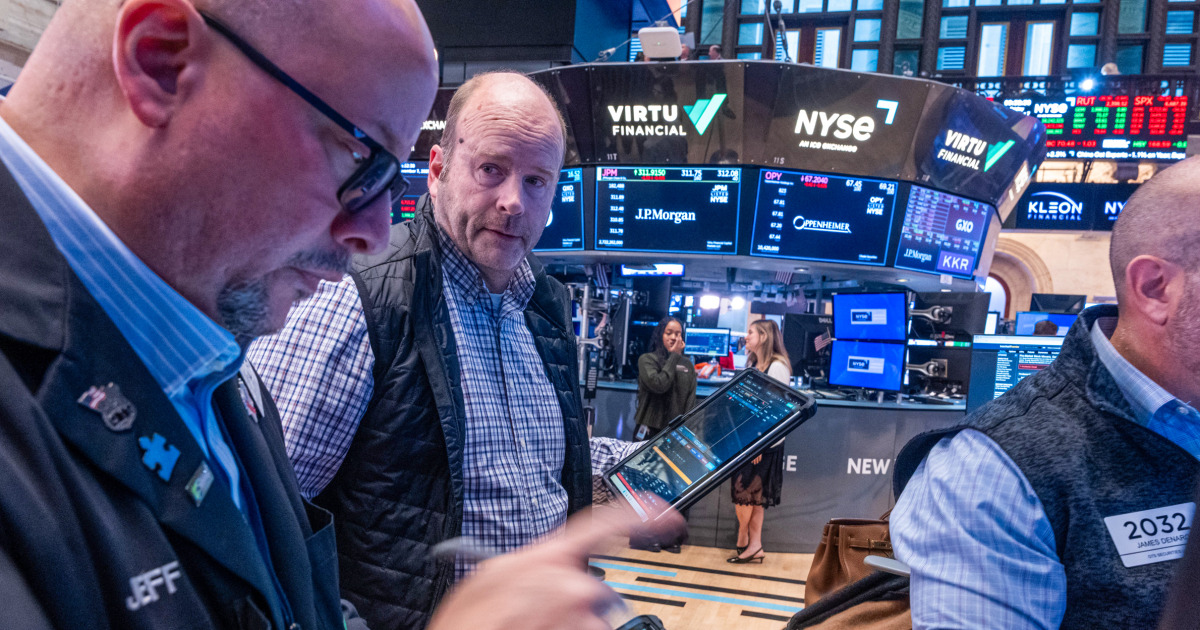
AI-Driven Tech Stocks Trigger Market Downturn
This week marked the first decline in U.S. stocks in three weeks, with artificial intelligence (AI) companies driving significant losses. Investors reacted to concerns about the soaring valuations in the AI sector, causing a broad retreat across major indices.
The Nasdaq Composite, heavily weighted with technology stocks, fell 3%, making it the worst-performing week since April. That previous downturn was largely due to President Donald Trump’s implementation of “Liberation Day” tariffs. Meanwhile, the S&P 500 dropped 1.6%, ending its three-week winning streak. Despite this week’s turbulence, both indexes are still up significantly year-to-date.
Massive Losses Across Major AI Players
Companies leading the AI boom bore the brunt of this week’s sell-off. The combined market capitalization losses from tech giants such as Microsoft, Nvidia, AMD, Palantir, Oracle, and Meta Platforms surpassed $820 billion.
Nvidia dropped 7%, while Oracle and AMD each declined by 8.8%, reflecting investor unease about their valuations. Meta and Microsoft also fell around 4% each. The steepest drop came from Super Micro Computer, a key supplier of servers for AI applications, which plunged 23%—the worst performance in the S&P 500 this week. As a result, the S&P 500’s technology sector fell 4.2%, marking it as the weakest among all sectors.
Mixed Results Among Other Tech Giants
Not all tech companies were dragged down equally. Apple and Alphabet, despite their heavy presence in the market, each saw only a modest decline of 0.7% for the week. Amazon even managed a slight gain, highlighting a selective investor pullback focused on AI-heavy stocks.
Palantir Earnings Spark Selling Wave
The downturn began Tuesday after Palantir, a government contractor and AI software developer, posted its earnings. The results raised alarms about the company’s valuation, triggering a sharp sell-off that quickly spread to other AI stocks.
Adding to the anxiety, two prominent Wall Street CEOs cautioned that the market could be due for a correction. These warnings further rattled investors already concerned about inflated tech stock prices.
CEO Comments Add to Volatility
On Thursday, Nvidia CEO Jensen Huang told the Financial Times that China could potentially “win the AI race,” a statement that added fuel to investor fears. Huang later clarified his remarks, saying that China was only “nanoseconds behind America in AI.”
Meanwhile, former President Donald Trump dismissed concerns about a potential AI bubble. When asked about the issue on Friday, he responded, “No, I love AI. We’re leading China, we’re leading the world.”
Economic Uncertainty Deepens Market Worries
Beyond AI, broader economic concerns played a role in the market’s downtrend. The University of Michigan’s consumer sentiment index fell sharply, nearing record lows. Survey director Joanne Hsu noted that the ongoing government shutdown, now in its 37th day, is contributing to consumer anxiety.
“With the federal government shutdown dragging on for over a month, consumers are now expressing worries about potential negative consequences for the economy,” Hsu said.
The shutdown has hindered the release of critical economic data. The monthly jobs report, for example, was not published this week, nor was last month’s. This data vacuum has forced investors to rely more heavily on corporate earnings and private data sources.
Alternative Job Data Paints Gloomy Picture
One such source, ADP’s private employment report, revealed that only 42,000 jobs were added last month, suggesting a cooling labor market. Additionally, a study by Challenger, Gray & Christmas reported that job cuts in October reached their highest level for the month in 22 years.
Taken together, the grim employment data, falling consumer sentiment, and uncertainty surrounding AI valuations have contributed to a volatile and uncertain market environment.
This article is inspired by content from Original Source. It has been rephrased for originality. Images are credited to the original source.