

The Role of AI in Modern Medical Billing
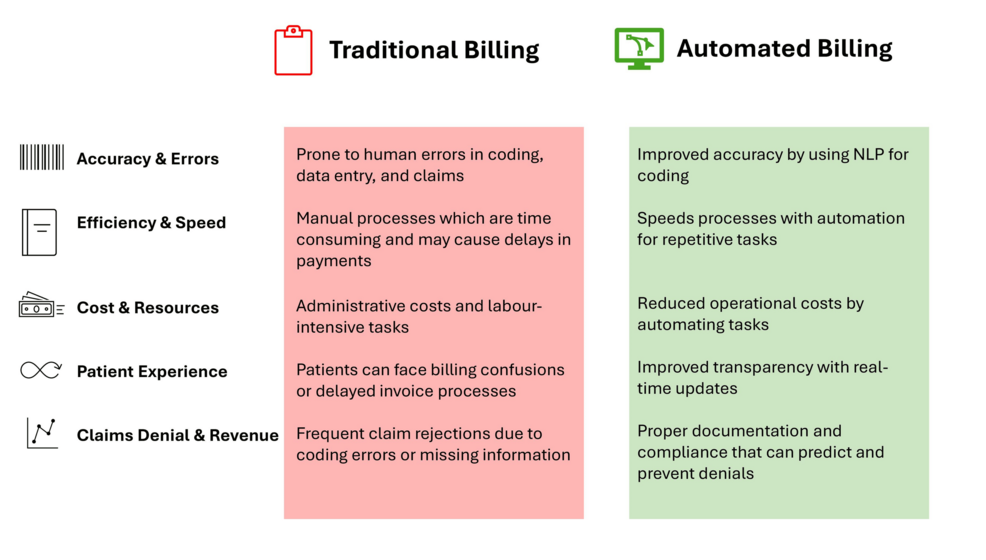
Medical billing has historically been one of the most complex and error-prone aspects of healthcare administration. As healthcare systems around the world strive for greater efficiency and financial sustainability, artificial intelligence (AI) is emerging as a transformative force in this domain. Through intelligent automation and advanced data processing, AI is reshaping how billing is managed, offering improvements in accuracy, speed, and fraud prevention.
Global Adoption of AI in Billing Systems
Across various countries, healthcare institutions are increasingly integrating AI-based platforms into their billing processes. These platforms use machine learning algorithms trained on vast datasets to automate coding tasks, process claims, and identify billing discrepancies. AI has shown remarkable capability in reducing human errors, which are common in traditional manual billing systems.
Automated coding systems are one of the most impactful innovations. They convert clinical documentation into standardized codes that correspond to specific medical procedures and services. This global coding framework helps eliminate inconsistencies and ensures the proper categorization of services rendered, leading to more accurate billing and reimbursement.
Enhancing Efficiency and Compliance
AI streamlines the entire billing cycle by minimizing the need for human intervention. For example, claims processing—once a labor-intensive task—can now be expedited through intelligent automation. AI tools instantly check claims for compliance with insurance requirements and flag incomplete or contradictory information before submission.
Moreover, AI enhances transparency and compliance by identifying potentially fraudulent claims. Algorithms can detect unusual patterns in billing data, such as duplicate charges or inflated service entries, and recommend corrective actions. This not only reduces risks associated with fraud but also contributes to building a more trustworthy healthcare system.
Saudi Arabia’s Embrace of AI in Healthcare
Saudi Arabia is among the nations taking proactive steps to integrate AI into their healthcare infrastructure. As part of its Vision 2030 initiative, the country aims to modernize its healthcare sector by adopting cutting-edge technologies, including AI for medical billing and administrative functions.
Hospitals and medical centers in Saudi Arabia are piloting AI-based billing systems that align with international coding standards. These systems not only support accurate documentation but also help in optimizing revenue cycles by reducing delays in claims processing. By adopting such technologies, Saudi Arabia is positioning itself as a tech-forward healthcare hub in the Middle East.
Challenges in Implementing AI Solutions
Despite the numerous benefits, the integration of AI in medical billing is not without challenges. Data privacy remains a significant concern, especially when sensitive patient information is involved. Ensuring compliance with global data protection regulations, such as HIPAA and GDPR, is essential for the ethical use of AI in healthcare.
Additionally, algorithmic bias can impact the accuracy and fairness of AI tools. If the datasets used to train these algorithms are not diverse or sufficiently comprehensive, the resulting models may produce skewed outcomes. Infrastructure limitations, particularly in low-resource settings, can also hinder the successful deployment of AI solutions.
The Future of AI-Driven Medical Billing
The future of medical billing lies in continued innovation and the responsible use of AI. As more healthcare providers adopt AI tools, we can expect greater standardization in billing practices, improved financial management, and enhanced patient satisfaction due to faster and more accurate billing processes.
The global shift toward AI in billing signifies a broader trend of digital transformation in healthcare. From the reduction of administrative burdens to the prevention of billing fraud, AI’s role in this sector is set to expand. As countries like Saudi Arabia lead by example, the potential for global collaboration and knowledge sharing becomes increasingly promising.
To fully realize these benefits, stakeholders must invest in infrastructure, workforce training, and robust regulatory frameworks. Only then can AI truly revolutionize medical billing on a global scale, making healthcare systems more efficient, transparent, and financially sustainable.
This article is inspired by content from Original Source. It has been rephrased for originality. Images are credited to the original source.