

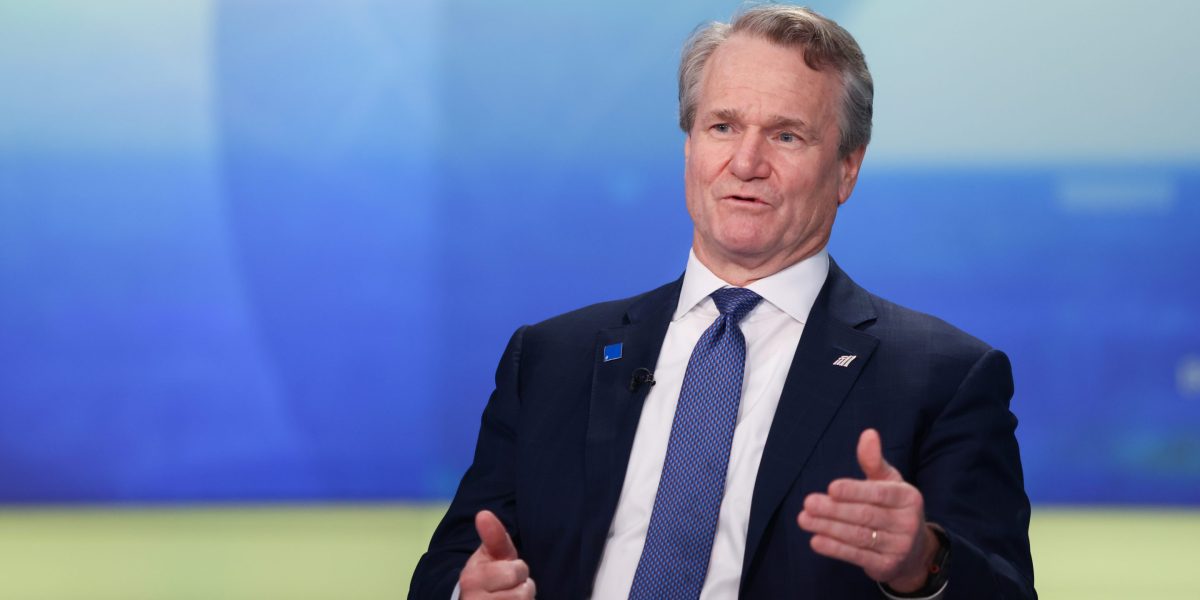
Bank of America CEO Highlights Growing Economic Impact of AI
Brian Moynihan, Chief Executive Officer of Bank of America Corp., has emphasized that artificial intelligence (AI) is beginning to play a more significant role in the U.S. economy. Speaking in a recent interview on Bloomberg Television, Moynihan noted that AI investments made throughout the year are increasingly contributing to national economic performance.
“AI is kicking in more and more,” Moynihan stated. “While not the sole driver, it’s having a strong marginal impact.”
Forecasting a Strong Economic Year Ahead
Moynihan, who has been at the helm of Bank of America for nearly 15 years, is optimistic about the nation’s economic prospects. According to the bank’s projections, the U.S. economy is expected to grow by 2.4% in the coming year, an increase from the estimated 2% growth in 2025.
He noted that while the labor market is experiencing some softening, this appears to be a normalization rather than a downturn. “The job market is adjusting, but it doesn’t signal a weak economy,” he explained.
AI Investments Surge Despite Industry Concerns
Interest in AI has surged, with companies like OpenAI attracting billions in funding as investors seek to capitalize on the technology’s potential. However, not everyone is convinced of its immediate benefits. Some tech leaders, including Amazon founder Jeff Bezos, have warned of an “industrial bubble” forming around AI – a phase of inflated investment that could eventually settle but leave valuable infrastructure and innovations behind.
Despite such warnings, Moynihan downplayed the risks of an overheated AI market significantly impacting the broader economy. He pointed out that the sector remains relatively narrow, limiting its systemic influence.
“As a lender, we evaluate the leverage tied to these projects carefully,” Moynihan said. “We assess the length of the contracts and the financial commitment of those using the data centers.”
Bank of America’s Own Use of AI
Bank of America is not just observing AI from a distance—it’s actively integrating it into its operations. Since launching its digital assistant, Erica, in 2018, the bank has expanded the AI tool’s capabilities significantly. Initially able to answer 200 questions, Erica now handles over 700 distinct queries, assisting millions of customers with everyday banking needs.
“We’ll continue to apply what we call augmented intelligence,” Moynihan explained. “That means people using AI to enhance their work, making them more effective across every area of the business.”
Preparing for the Future of AI and Work
The growing role of AI in the economy and the workplace is a key topic for future-focused business leaders. Bank of America’s strategies reflect a broader trend of integrating AI to improve efficiency and customer service while maintaining a human touch.
Executives and thought leaders will explore these trends further at events like the upcoming Fortune Workplace Innovation Summit, scheduled for May 19–20, 2026, in Atlanta. The summit will examine how AI, human ingenuity, and strategic planning are reshaping the modern workplace.
The event promises to bring together some of the most innovative minds to discuss the evolving intersection of technology and humanity in business.
Conclusion: A Cautious Yet Optimistic Outlook
Moynihan’s insights reflect a cautious optimism about the role of AI in the economy. While acknowledging potential risks, he remains confident that AI will continue to offer tangible benefits for businesses and consumers alike.
As AI advances, its influence on productivity, decision-making, and customer engagement is expected to grow. Bank of America’s approach—measured investment, practical application, and a focus on long-term value—offers a model for how financial institutions can embrace innovation responsibly.
This article is inspired by content from Original Source. It has been rephrased for originality. Images are credited to the original source.