

The Hidden Thirst of Artificial Intelligence
While artificial intelligence (AI) uses significantly less water than agriculture, its rapid expansion is raising alarms about its growing water footprint. The data centers powering AI models require vast amounts of water to cool servers, and this demand is accelerating. Though currently smaller in scale than other industries, the sector’s consumption equals that of countries like Norway and Sweden combined.
Researchers at Cornell University predict that AI-related water withdrawals could reach over 6 billion cubic meters annually by 2027, matching the total water consumption of New Zealand. Despite being dwarfed by agriculture’s 3 trillion cubic meters annually, the rate at which AI’s demands are increasing presents urgent concerns.
Opacity and Underestimation in the AI Sector
Water usage data in the AI industry is often proprietary, making it difficult to assess the full environmental impact. Cooling needs depend on factors like location, data center design, and operational practices, leading experts to believe that current estimates underrepresent the real toll.
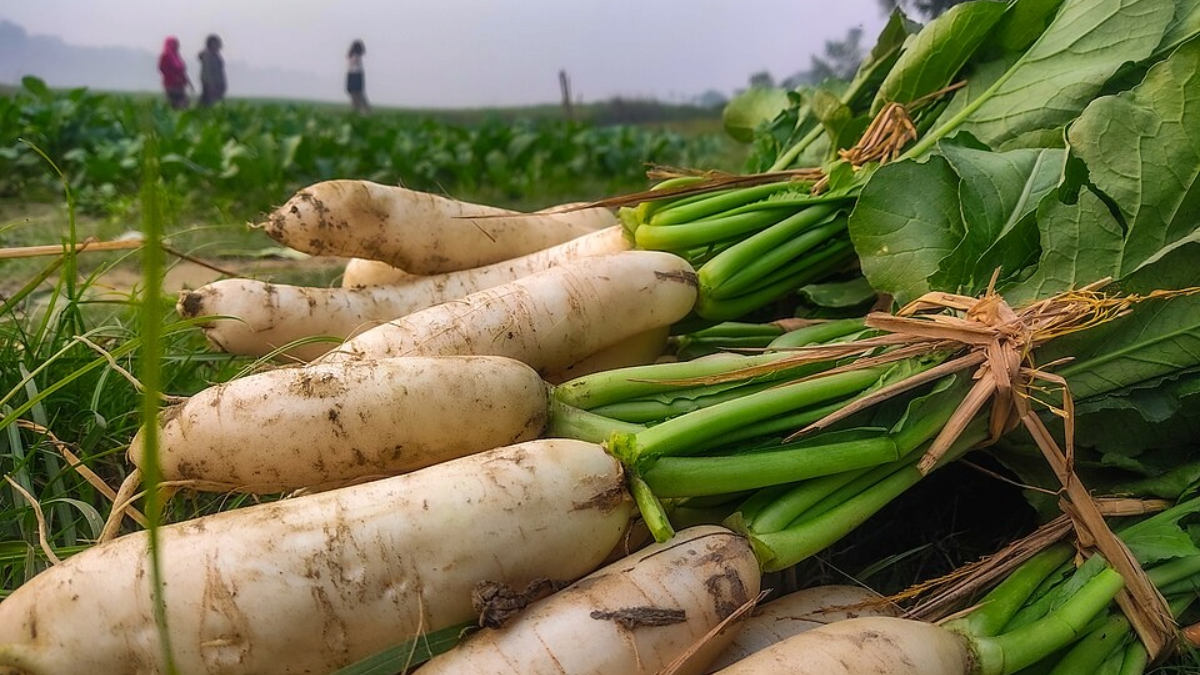
Some companies are beginning to disclose details. In July, French LLM startup Mistral AI reported that 91% of its water usage is dedicated to training and inference — the process of executing tasks using trained models. The company drew attention when it noted that generating a single page of text with its AI model consumes as much water as growing a small pink radish. Applied to OpenAI’s ChatGPT, that could equate to the water needed to grow a trillion radishes.
Why AI’s Impact Is Disproportionate
Despite being overshadowed by agricultural consumption, AI poses unique threats to water security for three key reasons: availability, location, and politics.
By 2030, global freshwater demand is expected to outpace supply by 40%. AI data centers, already reliant on non-renewable or inconsistent water sources, are exacerbating this shortage. Some proponents argue that new technologies like closed-loop and non-evaporative cooling systems can mitigate the issue. The World Economic Forum estimates water efficiency improvements of up to 70% with these systems. However, these solutions are not yet widespread or sufficient to offset the sector’s growth.
Location: Dry Places, Thirsty Machines
To prevent equipment corrosion, many tech firms place data centers in dry, inland regions. Unfortunately, these same areas often face high water stress. A Bloomberg analysis found that two-thirds of U.S. data centers built or planned since 2022 are in water-scarce states like Arizona, California, Illinois, and Virginia.
Meta, for instance, has announced a new AI lab in Louisiana, the size of Manhattan. Such facilities often require deep wells to tap groundwater, potentially disrupting local ecosystems and reducing access to clean water for nearby communities. Unlike agriculture, which provides local employment, AI infrastructure tends to offer limited economic benefits to the regions it inhabits.
Environmental and Political Consequences
Over-extraction of water for AI can have global consequences. Diminishing water tables have contributed more to sea level rise than melting polar ice. While tech giants pledge to become “water positive,” it’s unclear if they can replenish resources in the same locations where they’re extracted.
The implications extend to politics. In Bolivia, the Cochabamba Water War is a cautionary tale about the unrest that can follow restricted access to water. In today’s globalized AI economy, political accountability is murky. Even international agreements like the Council of Europe’s AI treaty fail to address environmental impacts such as water use or carbon emissions.
Governments Lag Behind the AI Boom
In the United States, regulatory support for AI often comes at the expense of environmental safeguards. The White House’s “Winning the Race” AI Action Plan mentions water only three times — each in the context of the Clean Water Act being a barrier to AI development. The tension between economic ambitions and environmental stewardship is stark.
Countries with severe water shortages are also investing heavily in AI. Microsoft’s $3.3 billion “Chile Central” data center arrives amid a 15-year drought in Chile. Saudi Arabia, facing extreme water stress, is pouring over $40 billion into AI through initiatives like HumAIn, launched during a visit from former President Trump. The Kingdom plans to invest an additional $80 billion in desalination over the next decade to support this digital expansion.
Local Resistance and Future Outlook
As governments chase digital dominance, there’s concern they may be trading long-term resilience for short-term gains. Even traditionally conservative politicians are voicing skepticism. Representative Marjorie Taylor Greene (R-GA) expressed concern over a 150-acre AI data center in her district, citing threats to jobs, human rights, and water resources.
States like California are already pushing back. New legislation will require tech firms to disclose their greenhouse gas emissions, a move that could extend to water usage. As AI continues to grow, local water scarcity will likely intensify before any improvements are realized.
Ultimately, unless companies and governments take decisive action, the world could face a new kind of water crisis — one driven not by farms or factories, but by algorithms and data centers. A trillion-radish metaphor might be humorous, but the challenge it represents is deadly serious.
This article is inspired by content from Original Source. It has been rephrased for originality. Images are credited to the original source.