

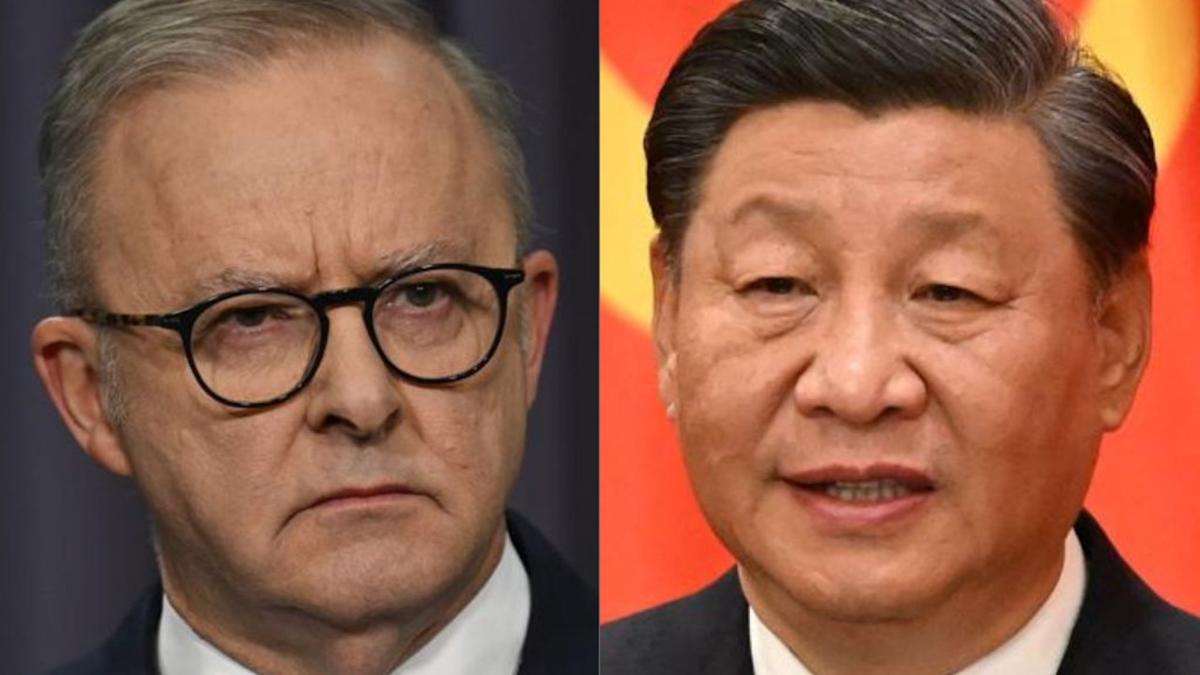
Albanese Hesitant on Chinese AI Collaboration
Prime Minister Anthony Albanese has refrained from taking a definitive stance on a recent Chinese proposal to collaborate on artificial intelligence (AI), as diplomatic tensions between Canberra and Washington continue to simmer. The offer comes at a time of heightened global competition in AI, particularly between China and the United States.
Chinese Ambassador Xiao Qian recently penned an op-ed expressing Beijing’s interest in broadening its economic relationship with Australia. He emphasized China’s commitment to not only strengthening traditional trade relationships, such as in agriculture and mining, but also expanding into future-facing sectors like AI.
China Pushes for Future-Focused Trade
In his op-ed, Ambassador Xiao highlighted China’s intention to take a “more open attitude” toward the existing China-Australia Free Trade Agreement. He proposed increased cooperation in emerging technologies as a strategic move to elevate bilateral trade, positioning AI as a key area of mutual interest.
This overture coincides with a period of strained relations between Australia and its long-standing ally, the United States. The alliance has been tested by disagreements over defense spending and the imposition of US tariffs, creating a complicated diplomatic backdrop for Australia’s international negotiations.
Prime Minister Avoids Direct Commitment
When questioned during a press conference in Hobart, Mr. Albanese avoided giving a clear response to China’s AI proposal. “We will determine our policy,” he told reporters, sidestepping the specific question of whether AI cooperation would be included under the free trade agreement.
Nonetheless, the Prime Minister was quick to praise the benefits of the existing free trade agreement with China, originally brokered by the Coalition government. “What we have done is to get rid of the more than $20 billion of impediments of goods that were stopped from going to China,” he said. “It’s made an enormous difference and we have, indeed, products like wine and barley have not just bounced back – they’re back higher than they were before.”
Economic Ties Remain a Priority
Albanese also emphasized the importance of China as a trading partner, citing that 25 per cent of Australian exports are destined for the Chinese market. “What that means is jobs, and one of the things that my government prioritises is jobs,” he said.
He also noted that he would soon be traveling to China for a fourth meeting with President Xi Jinping, further underlining the importance of maintaining strong economic ties. However, he repeatedly deflected questions about whether AI should be formally included in the China-Australia Free Trade Agreement, instead reiterating that his government’s chief concern is employment.
Global AI Race Heats Up
The proposal from China comes amid a fierce global race for dominance in artificial intelligence. In January, the launch of China’s DeepSeek AI platform marked a significant challenge to US supremacy in the field. The platform’s capabilities rival those of American firm OpenAI, and its free availability triggered a sharp tech sell-off, resulting in a $US1 trillion loss in market value for companies like Nvidia.
In response, the Trump administration announced a massive $US500 billion investment in AI development earlier this year, far outpacing other nations in funding. Meanwhile, China has initiated its own AI investment fund, starting with $8.2 billion. Despite the disparity in financial investment, experts argue that the AI race may not be won by the biggest spenders, but rather by those who can deliver accessible and high-performing technology.
Australia Caught in the Middle
Australia’s strategic dilemma lies in balancing its economic dependency on China with its defense and intelligence alliance with the United States. The offer to collaborate on AI puts Canberra in a delicate position, especially as AI becomes increasingly critical to both economic growth and national security.
As the global AI landscape continues to evolve, the Albanese government will be pressured to define its stance. Whether Australia chooses to align with China on AI development or maintain a cautious distance will have significant implications for its foreign policy and economic future.
This article is inspired by content from Original Source. It has been rephrased for originality. Images are credited to the original source.