

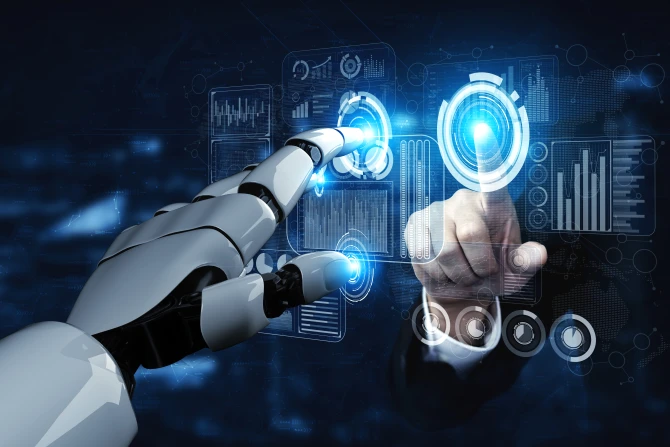
Catholic bishops from Maryland, Delaware, and Washington, D.C., have released a pastoral letter addressing the rapid rise of artificial intelligence (AI) and its implications for the Church. The document, titled “The Face of Christ in a Digital Age,” is a collaborative effort signed by Baltimore Archbishop William Lori, Cardinal Robert McElroy of Washington, Wilmington Bishop William Koenig, and Maryland’s four auxiliary bishops. It urges Christians to discern “how to speak and live the Gospel amid the new language and powers emerging through artificial intelligence.”
The letter, issued just before the solemnity of Pentecost, emphasizes that Christians should not fear technological advancement. It states that technology “is not foreign to the Spirit’s work, for God’s Spirit moves through history, culture, and human creativity.” However, the bishops pose a crucial question: “Will we allow technology to form us in its image — or will we shape it according to the Gospel?”
A Prophetic Voice
The pastoral letter calls for the Catholic Church to be a prophetic voice, urging the world to prioritize the human person, made in the image of God, in the midst of technological transformations. “No matter how advanced machines become, they can never replicate the soul, the conscience, or the eternal destiny that belongs to each human being,” the bishops argue.
AI’s Potential and Risks
The letter outlines AI’s potential benefits in fields such as healthcare, education, evangelization, and humanitarian efforts. However, it also warns of risks, including job displacement, the use of lethal autonomous weapons, and the manipulation of truth. The bishops emphasize the importance of teaching discernment in an era where digitally fabricated content blurs the line between truth and falsehood and reality and fantasy.
Formation of Conscience
“It is essential that we form consciences capable of discernment — especially among young people — so that they may not be manipulated by algorithms but by truth and grace,” the prelates write. They stress that while digital tools can inform, they cannot form the heart.
Parishes and families are encouraged to ground digital engagement and media literacy in Scripture and the sacramental life. The bishops also admonish the faithful to cultivate real empathy and authentic relationships.
Expert Insights
Michael Hanby, a professor at the Pontifical John Paul II Institute for Studies on Marriage and Family, shares his thoughts on the letter. He acknowledges that the document identifies some obvious dangers and potential benefits of AI but believes it doesn’t go far enough. Hanby points out that the reduction of human intelligence to “functional intelligence without thinking or understanding” is a danger not fully addressed in the letter.
Hanby further warns of unforeseen dangers inherent in powerful technologies like AI, which might not be fully comprehended yet.
Dicastery’s Concerns
The Dicastery for the Doctrine of the Faith and the Dicastery for Culture and Education have addressed similar concerns in a note titled “Antique et Nova: Note on the Relationship Between Artificial Intelligence and Human Intelligence.” They emphasize the Christian view of intelligence as a divine gift and express caution over AI possibly achieving superintelligence that could eclipse the human person.
Open-Ended Challenge
Hanby suggests that the letter could have emphasized the need for philosophical reflection on AI and distinguished between the mystery of the Spirit and technological progress. However, he recognizes that the letter presents an open-ended challenge rather than a definitive conclusion.
Drawing parallels to historical technological shifts like the printing press and the internet, the bishops encourage Catholics to approach AI with courage and hope, invoking the Holy Spirit to “renew the face of the earth” (Ps 104:30).
Note: This article is inspired by content from https://www.catholicnewsagency.com/news/264579/bishops-warn-artificial-intelligence-can-never-replicate-the-soul. It has been rephrased for originality. Images are credited to the original source.