

ChatGPT’s Retro-Inspired Ad Campaign Aims to Humanize AI
OpenAI’s ChatGPT, a leading virtual assistant, has launched a sweeping advertising campaign designed to shift public perception and address concerns about artificial intelligence. Amidst growing debates about AI’s impact on society, these ChatGPT ads aim to make the technology seem relatable, safe, and even charming. The focus_keyword, ChatGPT ads, is at the heart of this new marketing narrative, as OpenAI strives to ease anxieties and boost adoption across younger generations.
A Nostalgic Approach: Cinema-Style Storytelling
The ChatGPT ads, crafted by the creative agency Isle of Any, evoke a distinct retro aesthetic. Each 30-second spot transports viewers to a world reminiscent of decades past, before the omnipresence of smartphones. In “Dish,” for example, the scene is set in a cozy, book-filled apartment, complete with a vintage stove and midcentury lighting. The soundtrack, “Fool” by Perfume Genius, adds to the nostalgic feel. The narrative follows a young man who asks ChatGPT for a recipe that subtly expresses romantic interest. The chatbot replies with a playful, supportive message: “Above all, don’t sweat it. You got this.”
Textual prompts and film-credit-style responses reinforce the idea that ChatGPT is not an intimidating technology, but rather a helpful companion. The ads emphasize human experience, focusing on everyday moments—cooking, traveling, bonding—rather than high-tech wizardry. This emotional storytelling is a deliberate move to make ChatGPT ads resonate with viewers of all ages, especially those uncertain about artificial intelligence.
Targeting the Next Generation of Users
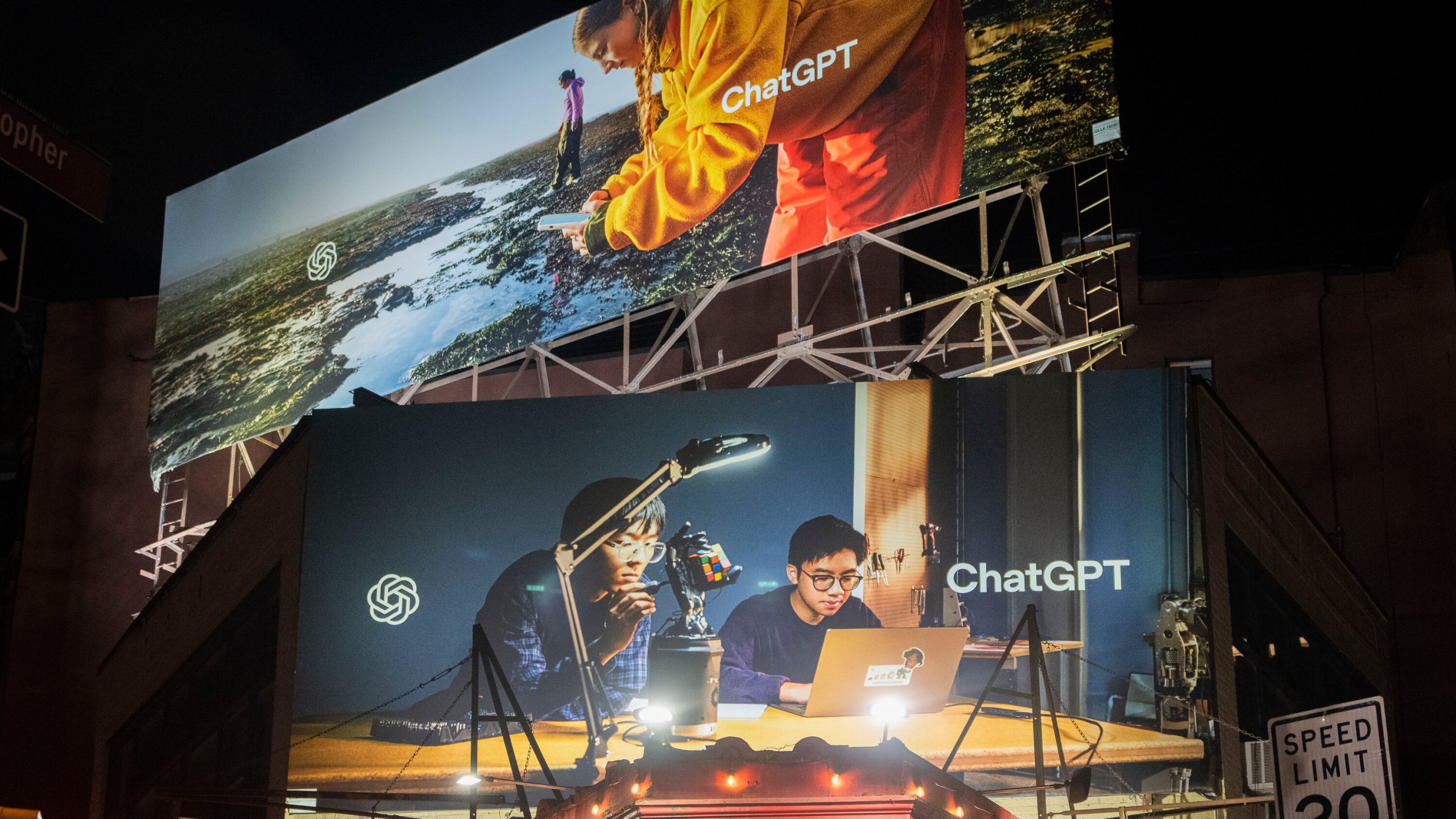
OpenAI and Isle of Any have tailored their ChatGPT ads to appeal directly to younger people. Every commercial features young adults navigating life’s challenges with the help of ChatGPT. According to the campaign’s creators, this casting choice was intentional, aiming to reach the “young cohort of people who were beginning to use it in their everyday lives.” Billboards in major cities echo this message, portraying relaxed, creative scenes that downplay the disruptive nature of AI.
Laurie Howell and Toby Treyer-Evans, Isle of Any’s founders, explain that their goal was to “find a cinematic, emotional way to celebrate the positive, enabling powers of ChatGPT.” They stress that the campaign was made entirely by humans, not AI. By showing ChatGPT as a tool that works “with us, not for us,” the ads seek to counteract the fear and skepticism surrounding artificial intelligence.
Addressing Public Concerns About AI
The timing of the ChatGPT ads is notable, as surveys reveal widespread apprehension about AI. NBC News found that 57% of U.S. voters believe AI could do more harm than good, while Pew Research reports concerns over AI’s effect on creativity and relationships. By presenting ChatGPT as a friendly helper, OpenAI hopes to foster trust and reduce resistance to adoption.
Experts in marketing and technology see clear parallels with legendary campaigns like Apple’s “Get a Mac,” which used humor and relatability to demystify computers. Robert Cornish, CEO of Richter, notes that “confusion blocks sales and adoption.” The simplicity and warmth of the ChatGPT ads help counteract the “scary, scary cultural backdrop” often associated with AI.
Competition in the AI Virtual Assistant Market
The competitive landscape for virtual assistants is fierce. OpenAI’s long-term rival, Anthropic, has taken a different approach with its Claude model, poking fun at AI advertising in its own Super Bowl commercial. Meanwhile, OpenAI faces both negative publicity and business challenges, including reports of financial struggles and lawsuits from high-profile figures like Elon Musk.
With Google’s Gemini entering the market and Anthropic gaining traction, the stakes for OpenAI are high. The ChatGPT ads represent a strategic effort to maintain market share by reassuring users that ChatGPT is not a threat, but an ally. As Randall Rothenberg, a marketing executive, observes, OpenAI “created the market and is most in danger of losing the market it created.”
Redefining the Virtual Assistant
The ChatGPT ads ultimately seek to reframe the virtual assistant as an extension of the user’s own humanity. By focusing on everyday support—offering recipes, travel advice, and encouragement—ChatGPT is positioned as a digital companion rather than an impersonal machine. This approach may prove essential as OpenAI prepares for a possible public offering and attempts to convert new users in a crowded field.
In conclusion, the ChatGPT ads are more than just a marketing campaign; they are a cultural statement about how AI can fit into our lives. By emphasizing nostalgia, emotion, and accessibility, OpenAI hopes to make ChatGPT a trusted virtual assistant for the next generation. Whether this strategy will secure its place in the evolving AI landscape remains to be seen, but the campaign has certainly started a new conversation about the role of artificial intelligence in daily life.
This article is inspired by content from Original Source. It has been rephrased for originality. Images are credited to the original source.