

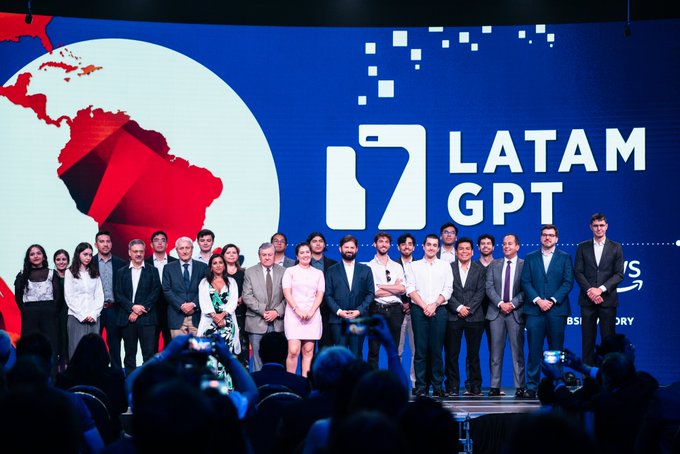
Chile Takes the Lead in Latin America’s AI Revolution
In a groundbreaking move, Chile has positioned itself at the forefront of artificial intelligence (AI) development in Latin America with the launch of Latam GPT, the region’s first homegrown AI system. This historic achievement marks a significant milestone for Latin America, reflecting its growing ambition and capability in the global tech arena.
Latam GPT, modeled after OpenAI’s GPT architecture, represents years of collaborative effort among Chilean scientists, government agencies, and regional tech partners. It stands as a bold step toward regional AI independence, enabling Latin America to develop AI solutions tailored to its unique linguistic, cultural, and societal needs.
What Sets Latam GPT Apart
The Latam GPT system is designed not only to process information in Spanish and Portuguese effectively but also to understand the cultural nuances of Latin America. This localization gives it a distinct edge over other large language models (LLMs) developed in the United States, Europe, or Asia. By accurately interpreting regional dialects, idioms, and context, Latam GPT can serve as a more relevant and effective tool for users across the continent.
According to developers, the model has been trained on a vast dataset containing regional literature, news, academic texts, and social media content. This comprehensive approach ensures that the AI can respond in ways that resonate with Latin American users, making it ideal for applications in education, customer service, journalism, and more.
Government and Private Sector Collaboration
The creation of Latam GPT would not have been possible without a strong public-private partnership. Chile’s Ministry of Science and Technology played a critical role, offering funding and strategic direction, while local universities and tech firms contributed technical expertise and infrastructure.
“This project reflects our vision of a digitally sovereign Latin America, where AI tools are developed by and for our people,” said María Fernanda Guzmán, Chile’s Minister of Science. She emphasized that Latam GPT represents a major leap forward in digital inclusion and technological equity for the region.
Private companies also played a key role in the project’s success. Startups and established firms alike collaborated to refine the model, test its capabilities, and prepare it for public deployment. Their involvement underscores the growing maturity of Latin America’s tech ecosystem.
Implications for the Region
Experts believe that Latam GPT could serve as a catalyst for innovation throughout Latin America. By providing a powerful, localized AI platform, the system opens new opportunities for startups, researchers, and public institutions.
In education, for example, the model can be used to create custom learning tools that reflect regional curricula and languages. In the healthcare sector, it can assist in patient communication and data analysis. Government agencies can also utilize the AI to improve public services and citizen engagement.
“Latam GPT is more than just a technological achievement; it’s a symbol of what we can accomplish when we unite across borders and sectors,” said Diego Martínez, a lead engineer on the project. He added that the model’s open-access nature would allow other Latin American countries to adapt and build upon the technology for their own needs.
A Strategic Step in the Global AI Race
Latin America’s entry into the AI development race is not just symbolic—it’s strategic. Global powers like the U.S., China, and the EU have been vying for dominance in AI, recognizing its potential to reshape economies, societies, and geopolitics. By launching Latam GPT, Chile and its partners are asserting the region’s intention to be an active participant in this transformation.
The project also signals a shift in how emerging markets approach technology. Rather than being passive consumers of foreign-developed tools, Latin American countries are increasingly investing in homegrown solutions that reflect their values and priorities.
As AI continues to evolve, the success of Latam GPT could encourage further regional collaborations and inspire other developing regions to pursue similar initiatives. Chile’s leadership in this area may well serve as a model for inclusive technological advancement worldwide.
The Road Ahead for Latam GPT
Despite its promising debut, the team behind Latam GPT acknowledges that challenges remain. Continuous updates, ethical oversight, and broader regional participation will be essential to ensure the model’s long-term success.
There are also plans to expand the model’s capabilities beyond text processing to include voice recognition, image analysis, and multilingual translation features. Such enhancements would further extend its utility across sectors and countries.
“We’re just getting started,” said Guzmán. “Latam GPT is the first step toward a smarter, more connected, and more empowered Latin America.”
With its launch, Chile has not only showcased its technological prowess but also ignited a new chapter in Latin America’s digital transformation journey.
This article is inspired by content from Original Source. It has been rephrased for originality. Images are credited to the original source.