

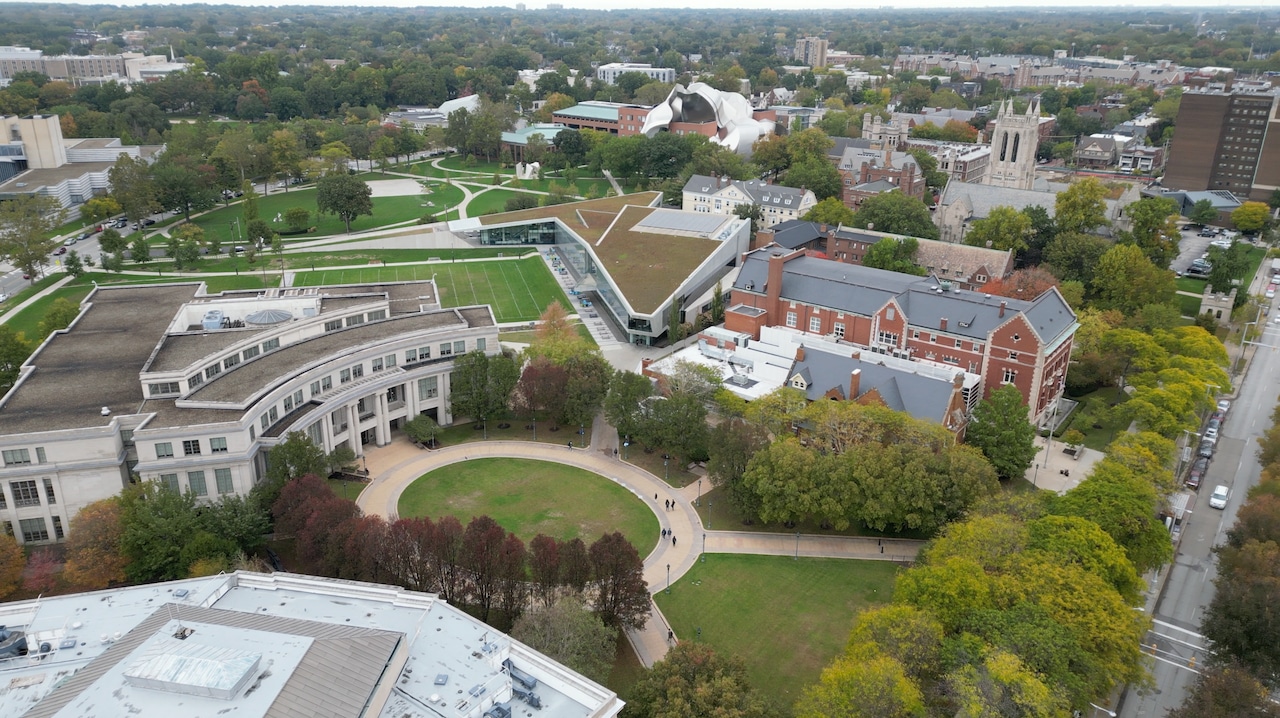
Case Western Reserve Spinout Secures Major Federal Funding
A Cleveland-based medical imaging company born out of Case Western Reserve University (CWRU) has earned a significant boost in funding. BioInVision Inc., a spinout from CWRU, has been awarded a $2.5 million research grant from the National Institutes of Health (NIH) to advance groundbreaking work in artificial intelligence (AI)-driven imaging technology.
The NIH grant will support collaborative research between BioInVision and CWRU researchers, particularly Susann Brady-Kalnay, a professor of molecular biology and microbiology at the university’s School of Medicine. The funding aims to accelerate the development of AI and machine learning software that can rapidly produce detailed images of biological systems, such as an entire mouse, within hours.
Innovation Rooted in Academic Research
BioInVision specializes in developing advanced microscopic imaging solutions. The company’s flagship technology, CryoViz, was originally invented at CWRU and is now licensed exclusively to the startup. CryoViz combines robotics, microscopy, imaging, and software to generate high-resolution, three-dimensional images of biological tissues at the single-cell level.
This powerful imaging capability is crucial for tracking elusive cells, such as migrating cancer cells or therapeutic T-cells used in immunotherapy. Understanding where these cells go in the body is essential for evaluating and improving treatments.
“Right now, we don’t know where all the cells go when tracking cancer cells or cell-based therapies, so we are not sure what type of processes to target or how therapies might be improved,” explained Brady-Kalnay. “If you wanted to do this with traditional methods, it might take millions of tissue sections.”
With BioInVision’s new AI algorithm, researchers may soon be able to image the entire anatomy of a mouse—including all of its organs—in just a few hours. This leap in efficiency could significantly streamline preclinical testing and research.
Team Behind the Technology
BioInVision was co-founded by Debashish Roy and David Wilson, both double alumni of CWRU. Roy serves as the company’s CEO, while Wilson, a professor of biomedical engineering and radiology, holds the role of chief technology officer. The research team also includes Madhu Gargesha, a former post-doctorate student in CWRU’s biomedical engineering department who now serves as the principal investigator for the grant. David Wald, a professor of pathology at CWRU, is a co-investigator on the project.
The company’s CryoViz system has already shown promise in producing detailed images that allow scientists to observe biological processes at an unprecedented level of detail. This technology could revolutionize how researchers evaluate the effectiveness of new therapies, particularly in the field of oncology and immunotherapy.
Economic and Scientific Impact
The NIH grant is part of the Small Business Innovation Research (SBIR) program, which supports small businesses that collaborate with academic institutions on research and commercialization. According to CWRU, such grants not only stimulate innovation but also help generate revenue for both the university and the company, contributing to regional economic growth.
BioInVision’s work exemplifies how university research can be translated into real-world applications that benefit both the scientific community and the healthcare industry. By integrating AI and machine learning with advanced imaging, the company is helping to pave the way for more precise and effective medical treatments.
“Using a new AI algorithm BioInVision is developing, imaging an entire mouse—including identifying all its organs—could take a matter of hours,” Brady-Kalnay noted. “This is a game-changer for researchers who need to understand how therapies interact with the body at the cellular level.”
Future Prospects
The successful deployment of this AI-enabled imaging technology could open new avenues for diagnosing and treating diseases. It may also improve our understanding of how cells behave in complex biological systems, potentially leading to breakthroughs in cancer research and regenerative medicine.
As BioInVision and CWRU continue to collaborate, their work stands as a testament to the power of academic-industry partnerships. Through the support of federal funding and innovative research, this Cleveland-based team is positioning itself at the forefront of medical imaging technology.
This article is inspired by content from Original Source. It has been rephrased for originality. Images are credited to the original source.