

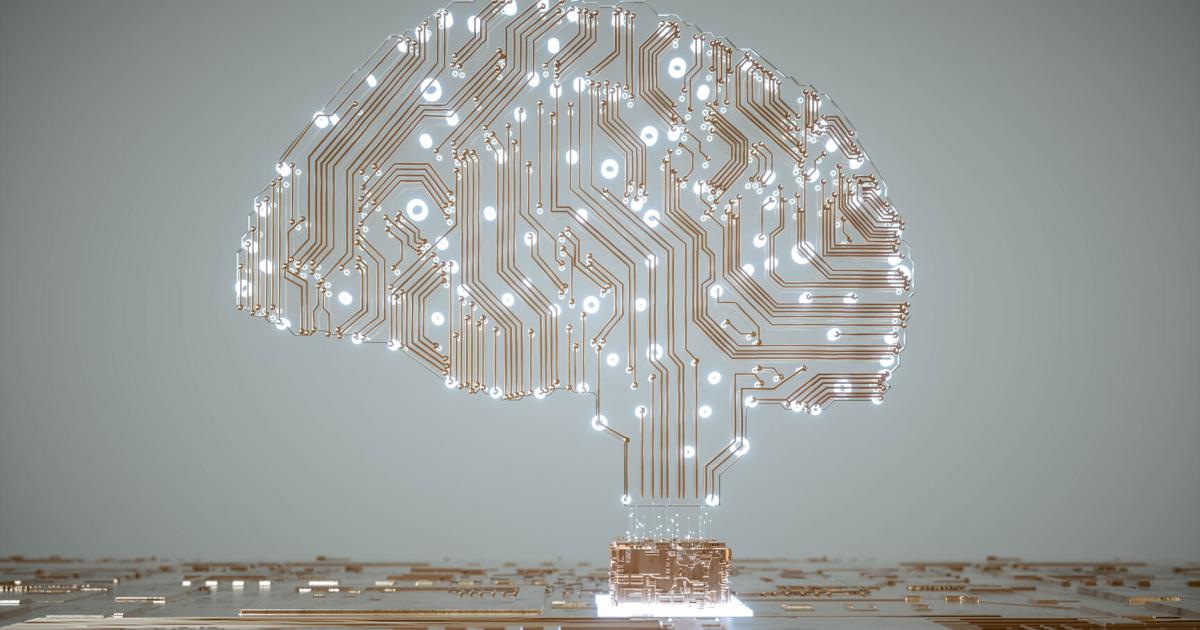
The Overload of Modern Information
In today’s sprawling digital age, the sheer volume of information available to us has become both a blessing and a curse. The global population has expanded so rapidly that understanding society in a holistic way has become exceedingly difficult. This growing complexity, many argue, provides a unique advantage to artificial intelligence (AI).
AI thrives where human comprehension struggles. As individuals, we can still grasp bits and pieces of our world, and some among us even manage to affect positive change. Yet, the overall picture is now so intricate that useful information often gets lost in a sea of noise, much like the static of old television broadcasts.
The Emergence of AI as a Filter
Artificial intelligence isn’t merely a tool for automation or convenience—it has become a crucial filter. With the help of advanced algorithms, AI can sift through vast amounts of data, identify patterns, and extract meaning in ways that would be impossible for a human mind to replicate at scale.
In the past, information was more localized and manageable. Today, we face a constant barrage of content, opinions, statistics, and misinformation. It is within this dense fog of complexity that AI finds its strength. Its ability to analyze and process enormous datasets quickly gives it a critical edge in navigating the modern world.
The Human Limitation
Despite technological advancements, the human brain has not evolved at the same rate as the information landscape. Our cognitive capacity has limits. We are wired to understand narratives, not networks of data points. As the world becomes increasingly interconnected and data-driven, our traditional methods of understanding fall short.
This limitation doesn’t mean we’re obsolete—it means our role is shifting. The challenge is learning how to work with AI as partners rather than seeing it as a threat. AI can complement our intuition and emotional intelligence with data-driven insights that were previously inaccessible.
AI’s Growing Influence on Society
From healthcare and finance to education and entertainment, AI is reshaping how we live and work. Its ability to detect patterns in massive datasets enables medical breakthroughs, financial forecasting, and personalized learning experiences. In each case, AI is solving problems that are too complex for humans to tackle alone.
A particularly striking example is in the realm of climate science. Predicting environmental changes involves tracking countless variables over time. AI models are now being used to simulate climate outcomes, offering insights that could help mitigate the worst effects of global warming.
Ethical Considerations and Challenges
With great power comes great responsibility. The rise of AI also brings ethical concerns. Who controls the data? How transparent are the algorithms? How do we prevent bias in AI systems? These are questions society must grapple with as AI continues to expand its influence.
Moreover, there’s a risk of over-reliance. If we allow AI to make decisions without human oversight, we may lose touch with important moral and cultural considerations. It’s essential to maintain a balance between technological efficiency and human judgment.
Embracing the AI Era
Rather than resisting the rise of AI, we should seek to understand and integrate it more thoughtfully into our lives. This means investing in digital literacy, developing ethical frameworks, and ensuring that AI systems are accessible and inclusive.
AI’s victory is not in replacing humanity but in augmenting it. It helps us navigate a world that has grown too complex for any single person to master. In doing so, AI becomes not just a tool, but a partner in the ongoing quest for knowledge and progress.
Ultimately, artificial intelligence wins not by overpowering us, but by helping us find clarity in an increasingly tangled world.
This article is inspired by content from Original Source. It has been rephrased for originality. Images are credited to the original source.