

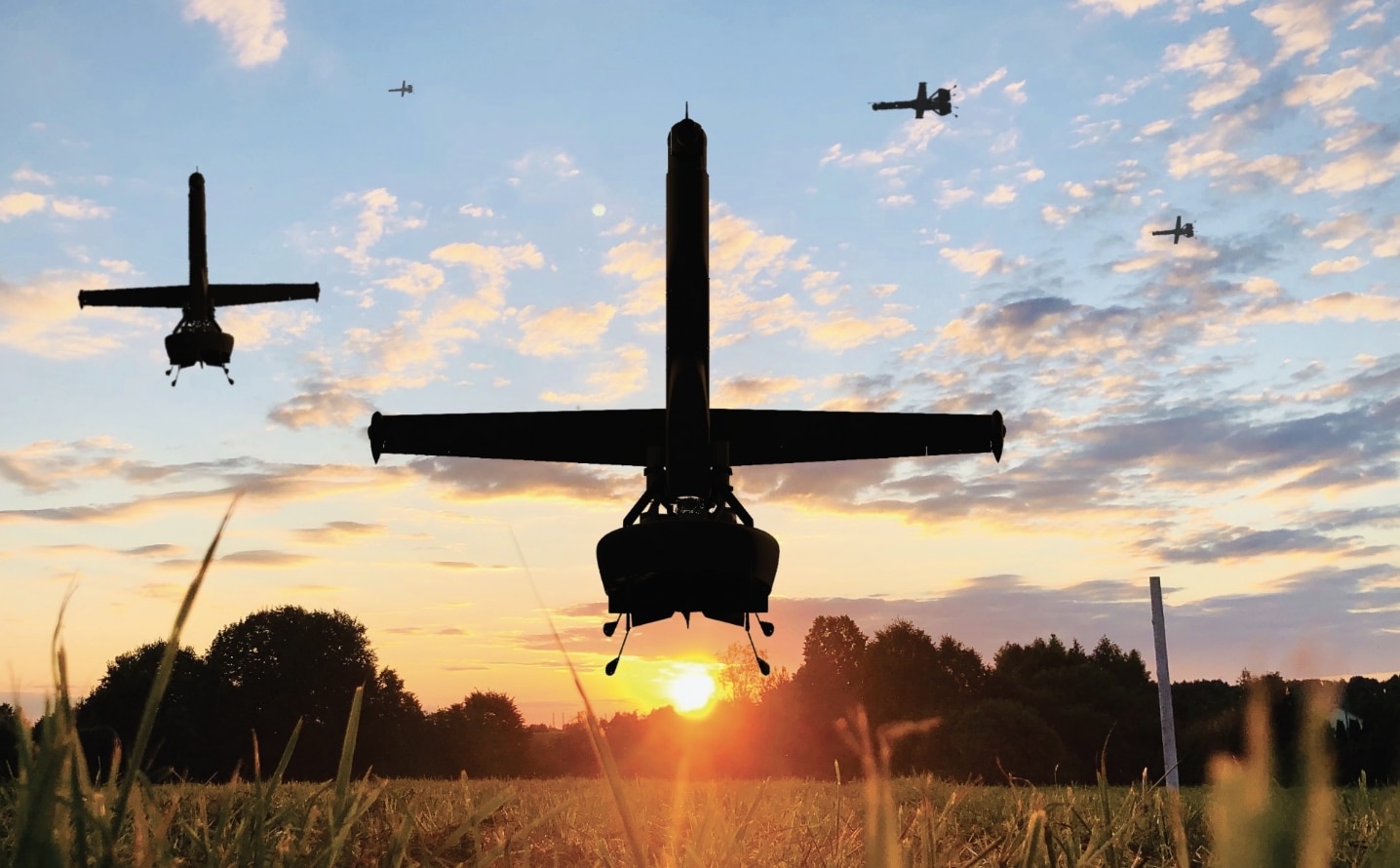
Indian Army Embraces AI with V-BAT Drone Acquisition
The Indian Army has entered a pivotal agreement with U.S. defense tech company Shield AI to procure the advanced V-BAT vertical take-off and landing (VTOL) unmanned aerial systems. This move represents a significant shift towards artificial intelligence-driven military operations and reflects a broader commitment to enhancing autonomous warfare capabilities.
The comprehensive deal includes the supply of V-BAT aircraft and access to Shield AI’s proprietary Hivemind autonomy software. This software equips drones with the capability to operate independently, even in denied communication or GPS environments. Also included is the Hivemind software development kit (SDK), empowering Indian developers to customize AI-driven mission systems tailored to regional operational demands.
Bridging Operational Gaps with Advanced ISR
For India, the introduction of the V-BAT platform fills a long-standing void in persistent intelligence, surveillance, and reconnaissance (ISR) operations, particularly in terrains where infrastructure is minimal or non-existent. The Indian Army’s choice underscores a strategic pivot towards autonomous systems that can function in high-altitude, maritime, and contested zones without reliance on traditional airfields or supply lines.
The V-BAT’s ability to launch and land vertically in a confined 12-by-12-foot space and its endurance of over 12 hours make it far more than just a surveillance tool—it’s a tactical ISR asset. Designed with a patented ducted-fan configuration and powered by a heavy-fuel engine, the Group 3 drone can operate from rooftops, ship decks, isolated clearings, and forward operating bases. Its enclosed rotor design enhances safety and reliability, especially in maritime and confined environments.
Hivemind: AI Autonomy at the Core
Central to the V-BAT’s capabilities is Hivemind, Shield AI’s artificial intelligence stack. This system enables drones to make decisions, process environmental data, and complete missions without human intervention, even when communications are jammed or unavailable. Such autonomy is increasingly crucial as electronic warfare capabilities intensify along India’s borders.
By offering access to the Hivemind SDK, Shield AI allows Indian developers to build mission-specific autonomy applications. This arrangement supports India’s broader goals of achieving technological sovereignty in artificial intelligence and unmanned systems development. According to Sarjan Shah, Shield AI’s managing director for India, the platform is suitable for use “from the Himalayas to India’s oceanic borders.”
Domestic Production Anchored by JSW Defence
The agreement also builds on Shield AI’s collaboration with JSW Defence, which will oversee the manufacturing of V-BAT systems in India. A state-of-the-art production facility is under construction in Hyderabad at EMC Maheshwaram, with a projected investment of approximately $90 million. This facility will support manufacturing, assembly, operator training, maintenance, and long-term innovation.
Production is expected to commence by late 2026, aiming not only to fulfill the Indian Armed Forces’ requirements but also to serve international markets. This initiative marks one of the most substantial transfers of advanced unmanned systems technology to India, positioning the country as a key player in the global unmanned aerial vehicle (UAV) supply chain.
Operational Validation from the Ukraine Conflict
The V-BAT’s selection by the Indian Army is partly informed by its performance in real-world combat scenarios, notably in Ukraine. Shield AI rapidly integrated Hivemind into the platform after early missions revealed vulnerabilities to Russian electronic warfare. The upgraded V-BAT has since demonstrated the ability to operate effectively in GPS-denied and communication-jammed environments.
According to Shield AI, V-BAT units deployed in Ukraine have completed dozens of missions, identifying key targets such as air defense systems and command nodes. This operational success has bolstered the platform’s credibility among international defense forces concerned with survivability in contested environments.
Global Adoption Reflects Growing Demand
Apart from India, the V-BAT is already in service with several armed forces worldwide. The United States Marine Corps employs the drone for expeditionary operations, while Japan’s Maritime Self-Defense Force has chosen it as its first shipborne ISR system. Frontex, the European border agency, uses the V-BAT for surveillance missions, and Brazil was an early international adopter.
Shield AI has also developed “V-BAT Teams,” a swarming capability that allows a single operator to control multiple drones simultaneously. This feature aligns with emerging military doctrines that prioritize mass deployment of attrition-tolerant autonomous systems.
Strategic Impact on India’s Defense Roadmap
The introduction of V-BAT and Hivemind comes at a transformative moment for India’s defense strategy. Developing similar capabilities indigenously would demand significant time and investment. The current approach—combining combat-proven systems with local production and software customization—offers an expedient path toward building a robust, adaptable unmanned ecosystem.
As demand for autonomous systems rises globally, India’s Hyderabad facility is expected to enhance the country’s role not just as a buyer but as a producer and exporter of advanced UAV technologies. The deal with Shield AI marks a cornerstone in India’s journey toward modern, AI-driven defense capabilities.
This article is inspired by content from Original Source. It has been rephrased for originality. Images are credited to the original source.