

AI’s Potential to Transform Minnesota’s Economy
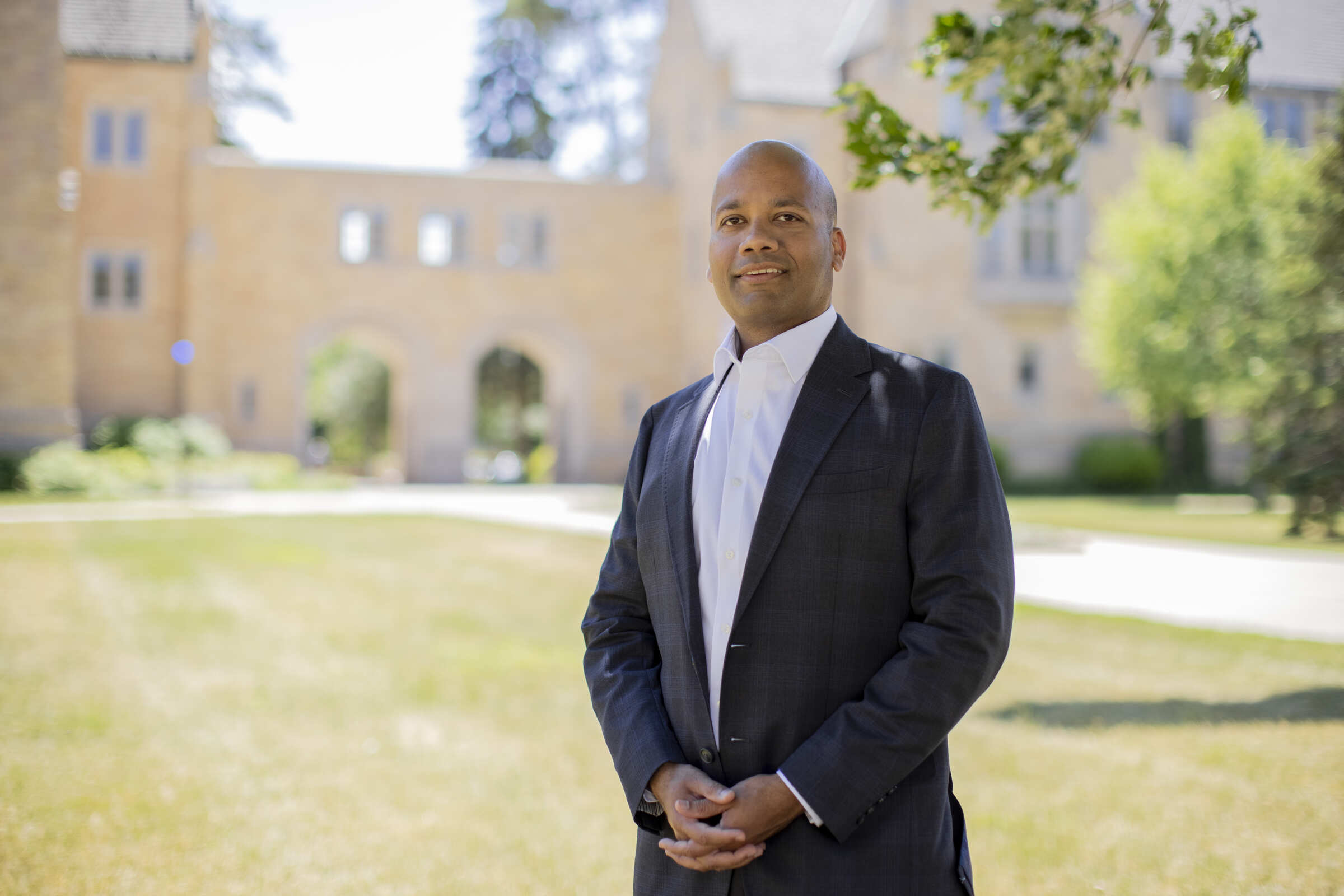
Manjeet Rege, professor and chair of the Department of Software Engineering and Data Science at the University of St. Thomas, recently addressed the Minnesota Senate Labor Committee to discuss the state’s role in the future of artificial intelligence (AI). As the director of the Center for Applied Artificial Intelligence, Rege shared insights into how Minnesota can become an AI-first state, leveraging its talent and infrastructure.
AI is already reshaping various sectors, from healthcare to logistics. According to the McKinsey Global Institute, over 60% of current work activities could be automated using existing technologies. This shift presents both challenges and opportunities, particularly for workers in lower-wage jobs, individuals with limited education, and women—groups that are overrepresented in administrative and customer service roles.
AI Skills Gap and Economic Mobility
Despite the rapid adoption of AI, a significant skills gap persists. An Amazon Web Services Skills study found that 94% of employers expect to utilize AI by 2028, yet 73% struggle to find qualified talent. This gap not only threatens job retention but also presents a chance for economic uplift. The same study revealed that acquiring AI skills could lead to a 19%-28% salary increase.
To establish itself as an AI-first state, Minnesota must prioritize reskilling and upskilling programs. These initiatives are vital for those in at-risk occupations and should be supported by employer incentives. Transition pathways into sectors like healthcare, STEM, and AI-adjacent fields—such as data services, insurance, and human resources—are essential for workforce adaptation.
Building an AI-Ready Infrastructure
Minnesota is already making strides toward an AI-driven future. The state is home to the Mayo Clinic, the largest AI patent holder in its industry. Established companies like 3M, Medtronic, and SPS Commerce are actively investing in AI technologies. Additionally, innovative startups such as Xylo AI, Flywheel, and Nested Knowledge contribute to a vibrant tech ecosystem.
In 2023, the U.S. Department of Commerce designated the Minneapolis-St. Paul region as a “Tech Hub”, further highlighting Minnesota’s growing prominence in the AI space. Analysts from the Minnesota Department of Employment and Economic Development (DEED) found that 56% of indexed occupations in the state have high exposure to AI, potentially impacting over 1.6 million jobs.
Education as the Foundation for AI Leadership
Preparing Minnesota’s workforce for AI integration requires a comprehensive educational strategy. Reskilling and continued education must be prioritized at all levels—from K-12 to higher education. The University of St. Thomas has launched several graduate-level programs to support this transition. The School of Engineering, for example, has partnered with Boston Scientific to deliver specialized AI graduate programs for employee reskilling.
Other academic units at the university, including the College of Arts and Sciences, have introduced forward-thinking programs such as a new master’s degree in AI Leadership. These partnerships and curricula are vital steps toward equipping the workforce with the tools needed to thrive in an AI-driven economy.
Starting Young: The Importance of K-12 AI Education
If Minnesota aspires to lead in AI, the journey must begin early. Computational thinking and AI concepts need to be integrated into K-12 education. However, current statistics are alarming. According to Code.org’s 2024 report, Minnesota ranks 48th out of 50 states in access to foundational computer science education in public schools. This gap risks leaving future generations unprepared for the technological demands of the workforce.
Addressing this issue requires immediate action. Developing a comprehensive strategy to embed computer science in school curricula will be essential for ensuring that Minnesota’s youth are not left behind in the AI revolution.
Leadership in Research and Industry
Dr. Manjeet Rege has emerged as a key figure in positioning Minnesota as a national leader in AI. Recognized as a Leading Academic Data Leader for 2023 by CDO Magazine, Rege’s dual roles in academia and industry provide him with a unique perspective on the opportunities and challenges ahead. Under his leadership, the Center for Applied Artificial Intelligence continues to bridge the gap between research and real-world applications.
As Minnesota builds upon its existing strengths, collaboration between government, industry, and educational institutions will be critical. With thoughtful investment and strategic planning, the state is well-positioned to lead the next wave of AI innovation and economic growth.
This article is inspired by content from Original Source. It has been rephrased for originality. Images are credited to the original source.