

National Geospatial-Intelligence Agency Advances AI Integration
COLORADO SPRINGS, Colo. — The National Geospatial-Intelligence Agency (NGA) is set to make a significant leap forward in its use of artificial intelligence (AI) and machine learning (ML) as it focuses on integrating these technologies into its operations by 2025. This strategic move highlights NGA’s commitment to enhancing its geospatial intelligence capabilities.
NGA’s Role and Mission Enhancement
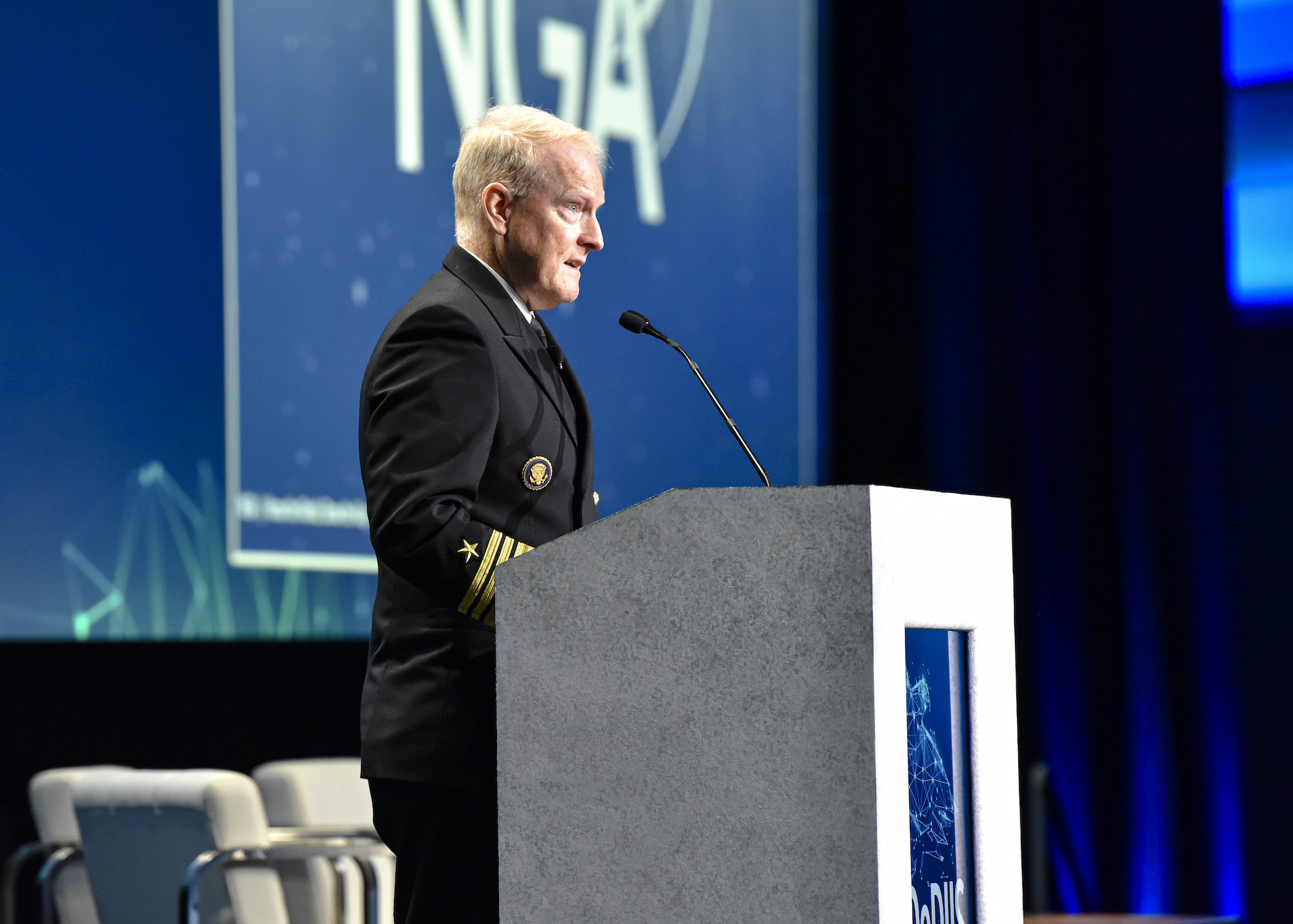
The NGA, combining intelligence and combat support functions, is responsible for collecting geospatial intelligence (GEOINT) from satellites and various sources, converting it into actionable data for military operations and decision-making. Although the agency already employs AI through the Pentagon’s notable Maven computer vision program, NGA Director Vice Adm. Frank Whitworth aims to further maximize this technology’s potential.
Whitworth remarked, “As I was looking at the last several years, the ‘A’ in NGA was associated with alliterative descriptors such as ‘action’ or ‘acceleration.’ This year, I chose to emphasize AI as a focal point.”
Driving Factors: Multimodal AI
The push for AI integration is driven in part by research on multimodal artificial intelligence. Similar to generative AI, these models can process information from multiple sources, including text, images, and audio. However, unlike generative AI, which creates new content, multimodal AI enhances understanding by providing integrated data outputs.
For the NGA, this development could mean producing comprehensive intelligence packages beyond just imagery, a necessity as data volumes are predicted to increase substantially due to new sensors being deployed across various domains.
Tackling Challenges with AI
“Differentiating enemies from non-enemies is a complex task,” Whitworth explained. “While our primary identification methods utilize imagery-derived intelligence, we’re always exploring corroborative sources.”
Although NGA has executed three test cases for multimodal AI, these capabilities remain in early development. Whitworth emphasized that the agency continues to investigate alternative data collection and verification strategies beyond computer vision.
Leveraging Existing AI Programs
In addition to new developments, NGA plans to utilize lessons from ongoing AI-focused projects like Maven, applying insights to critical roles such as warning. According to Whitworth, “Warning involves establishing a baseline of global activities and being able to identify anomalies. This requires enhancements in workflow and automation, involving both AI and ML.”
The warning mission falls under the agency’s Analytic Services Production Environment for the National System for GEOINT program, or ASPEN. Launched in 2023 to handle increasing data quantities, ASPEN employs automation and AI to provide more precise warning indicators.
Structural Changes and Industry Collaboration
To ensure successful AI integration across all roles, NGA has established a new program executive office for advanced analytics, led by Rachael Martin. This office aims to consolidate the agency’s AI and ML best practices.
Additionally, NGA recently appointed Mark Munsell as its inaugural director of AI standards, alongside Trey Treadwell and Joseph O’Callaghan as directors of AI programs and AI missions, respectively.
Whitworth stated, “We didn’t have dedicated personnel for AI. Now, as we mature, we need roles like these to ensure AI and ML are treated with the seriousness they deserve.”
Exploring Commercial AI Solutions
NGA is also scouting AI-enabled solutions from the commercial sector that could integrate into its workflows efficiently. The agency employs innovative procurement methods to engage commercial solutions swiftly.
One example is Project Aegir, procured through the Defense Innovation Unit’s commercial solutions opening process, which focuses on using commercial techniques to track illicit maritime activities in the U.S. Indo-Pacific Command area. Furthermore, the agency considers using bailment agreements to temporarily lend government-owned systems to small companies for development and testing.
Whitworth noted, “Our focus is on quick industry engagement. We’ve utilized the CSO and are testing bailment agreements because industry moves rapidly.”
For the latest developments and insights on AI and technology trends, visit aitechtrend.com.
Note: This article is inspired by content from defensescoop.com. It has been rephrased for originality. Images are credited to the original source.