

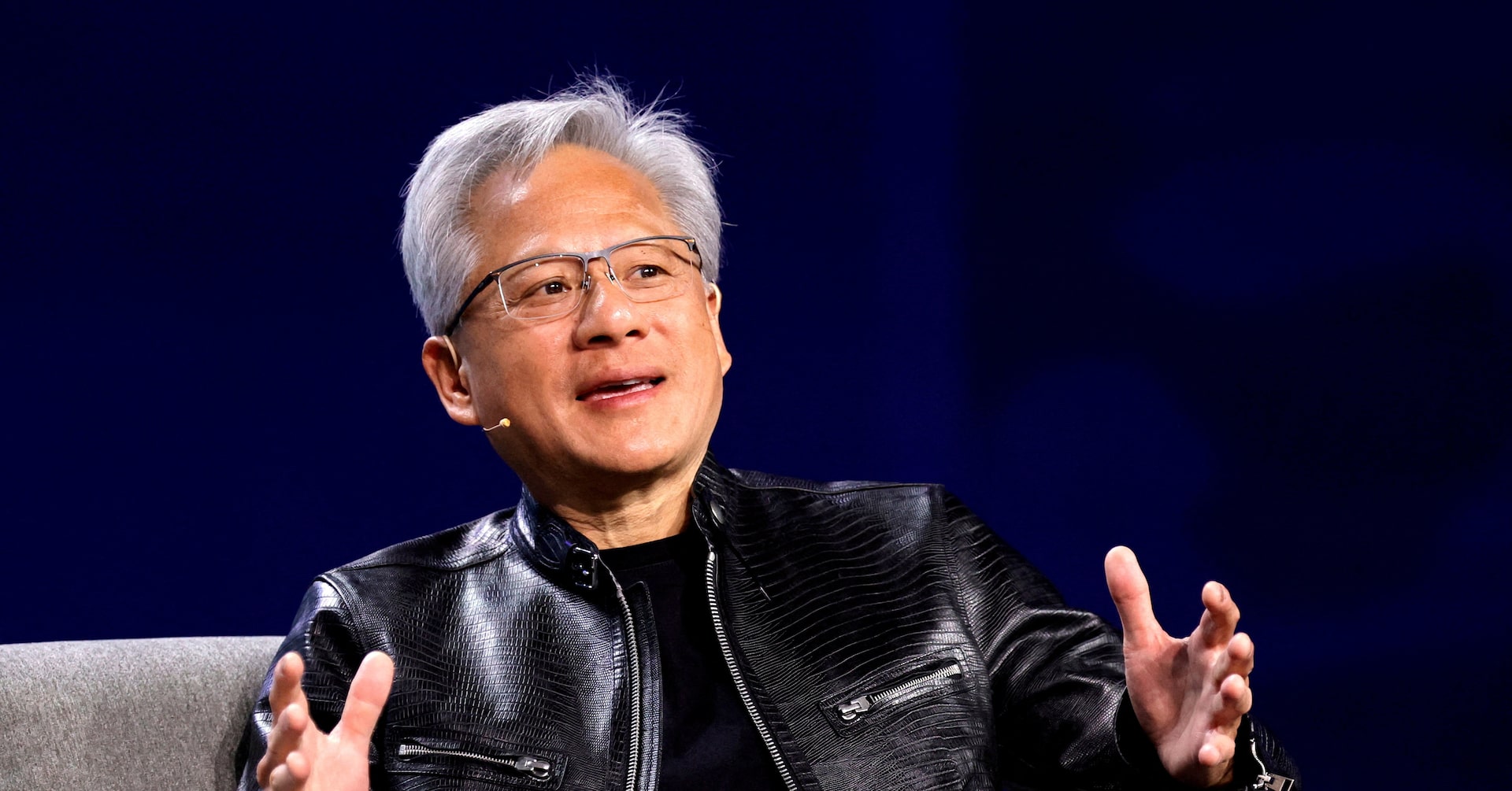
Huang Addresses AI Concerns at San Francisco Conference
At a recent artificial intelligence conference hosted by Cisco Systems in San Francisco, Nvidia CEO Jensen Huang strongly refuted growing concerns that artificial intelligence (AI) will render traditional software tools obsolete. His comments came amidst a wave of stock selloffs affecting software companies globally, triggered by anxieties over AI’s potential disruption of the tech industry.
Huang called the idea that AI will replace software tools “illogical” and emphasized that AI innovations are fundamentally built on existing software structures rather than seeking to eliminate them. “There’s this notion that the tool in the software industry is in decline and will be replaced by AI. It is the most illogical thing in the world, and time will prove itself,” Huang stated.
Global Markets React to AI Disruption Fears
The market reaction to AI-related developments has been swift and widespread. Last week, AI developer Anthropic released an updated version of its chatbot, sparking fears of disruption across the data and professional services industries. That unease continues to ripple through global markets, hitting software stocks hard in India, Japan, and China.
In India, the NIFTY IT index dropped 6.3% on Wednesday, with leading tech services provider Infosys plunging 7.3%—one of the steepest declines in the sector. China’s CSI Software Services Index fell 3%, reflecting the broader regional unease. Meanwhile, in Hong Kong, shares of Kingdee International Software Group plummeted over 13%.
Japan also witnessed significant losses, with staffing agency Recruit Holdings losing 9% and Nomura Research declining by 8%. These figures underscore the growing investor anxiety about how AI might reshape or even displace traditional software-based business models.
AI Is a Tool, Not a Replacement, Says Huang
Huang argued that AI should not be viewed as a replacement for software, but rather as a user of existing tools. He explained that the most recent advancements in AI are centered around enhancing tool usage, not eliminating tools altogether. “If you were a human or robot—artificial or general robotics—would you use tools or reinvent tools? The answer, obviously, is to use tools. That’s why the latest breakthroughs in AI are about tool use, because the tools are designed to be explicit,” he elaborated.
His comments were aimed at calming fears within both the tech industry and investment communities, many of whom are grappling with the implications of rapid AI development. Huang’s perspective positions AI as a complement to traditional software, rather than a disruptive force that seeks to replace it entirely.
AI Developments Continue to Fuel Market Volatility
Despite Huang’s reassurances, the market continues to react strongly to AI-related developments. The recent volatility underscores a broader uncertainty about how AI will integrate into existing business models and what that means for long-established tech firms.
Other recent news in the AI space has added to the market’s jitters. Cerebras Systems, an AI chip maker, announced it had raised $1 billion in late-stage funding, highlighting the investor enthusiasm for new AI technologies. Meanwhile, Amazon revealed plans to leverage AI to speed up its TV and film production processes, and ElevenLabs secured an $11 billion valuation in its latest funding round. These developments reinforce the perception that AI is rapidly advancing and becoming more commercially viable.
The Nasdaq has proposed a “fast entry” rule to expedite the inclusion of large new AI-related listings, further demonstrating the sector’s momentum. At the same time, companies like Johnson Controls have raised their profit forecasts for 2026, citing AI-driven demand for cooling equipment. These shifts reflect both the opportunities and uncertainties surrounding AI integration across industries.
Industry Leaders Call for Perspective
As AI continues to evolve, industry leaders like Huang are urging stakeholders to maintain perspective. He emphasized that the foundational role of software in enabling AI should not be overlooked. “Software tools are not going away; they are being enhanced,” Huang concluded.
His comments serve as a reminder that while AI holds transformative potential, it still relies heavily on the software ecosystems that have powered technological innovation for decades. As the tech industry navigates this new landscape, balancing innovation with stability will be key to long-term success.
This article is inspired by content from Original Source. It has been rephrased for originality. Images are credited to the original source.