

Nvidia Gains U.S. Approval to Sell AI Chips to China
Nvidia announced that the U.S. government has given the green light for the company to resume sales of its artificial intelligence (AI) chips to China. This decision reverses a previous ban imposed in April, signaling a shift in the U.S. approach to tech exports amid ongoing tensions with Beijing.
In a blog post published Monday, the Silicon Valley-based company stated that it is currently filing applications to sell its H20 chips to Chinese customers. Nvidia noted that the U.S. government has assured them licenses will be granted, allowing deliveries to begin in the near future. Additionally, the firm unveiled a new chip model that complies entirely with U.S. export regulations, designed specifically for the Chinese market.
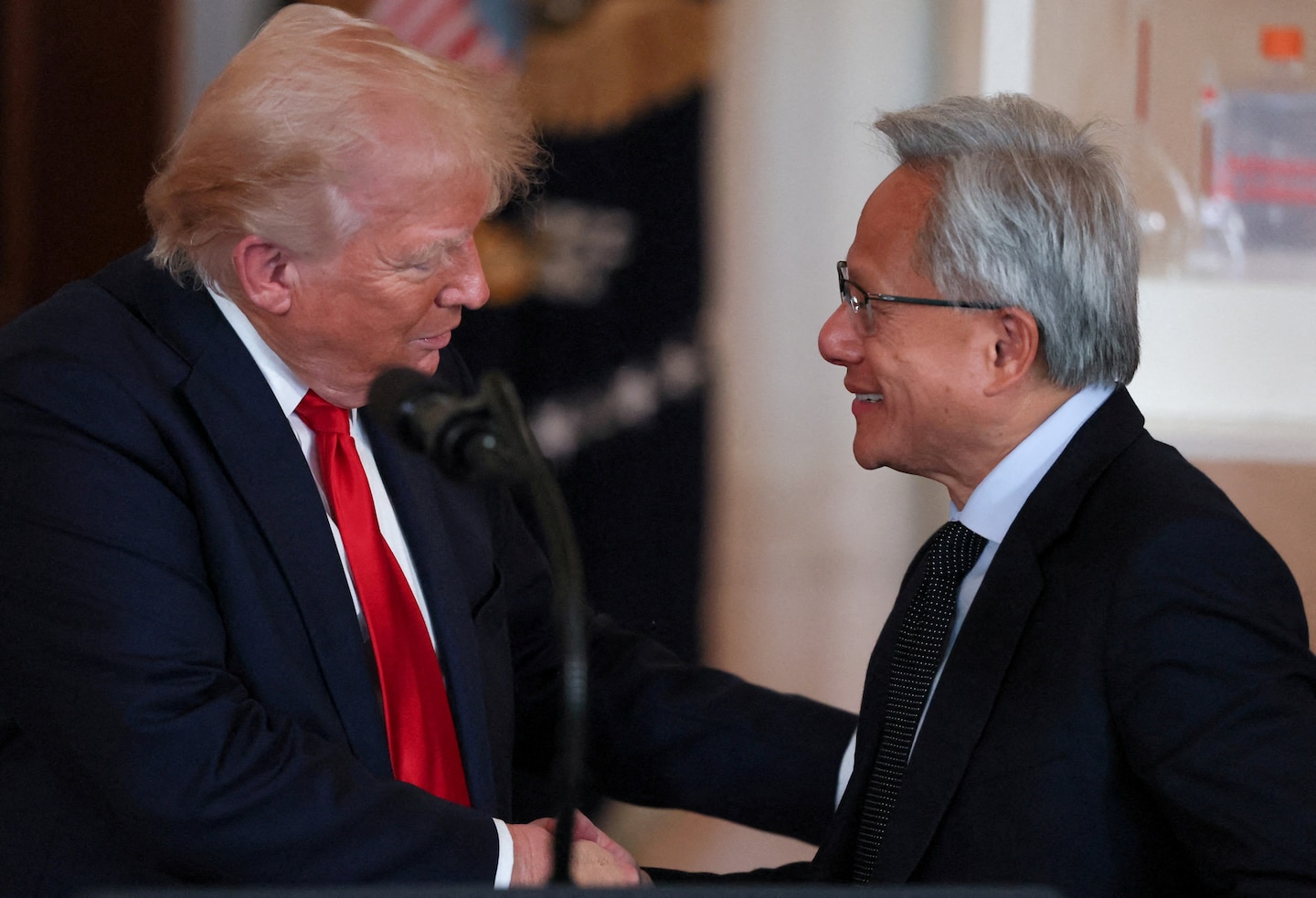
While the White House has yet to confirm Nvidia’s announcement, the development comes as CEO Jensen Huang visits Beijing following a meeting with President Donald Trump in Washington just days earlier. The move highlights Nvidia’s efforts to navigate the delicate balance between the world’s two largest economies, both heavily invested in advancing AI technology.
Geopolitical Tensions and Strategic Importance
“Nvidia’s situation is emblematic of the broader challenges American companies face amid U.S.-China geopolitical competition,” said Ryan Fedasiuk, a former adviser in the U.S. State Department’s Office of China Coordination. “But Nvidia is unique due to its critical role in both the global economy and American national security.”
Nvidia recently made headlines as the first publicly traded company to close at a market capitalization of $4 trillion. Its chips are essential for training the most advanced AI systems, making it a pivotal player in global tech development.
China remains a key market for Nvidia, housing numerous leading AI firms and a dense network of developers. The country accounted for approximately 13 percent of Nvidia’s revenue last year, according to company filings.
U.S. Concerns Over National Security
Despite the financial benefits, Nvidia’s ties with China have raised alarms in Washington. Lawmakers worry that AI chips sold to Chinese entities could end up aiding Beijing’s military or intelligence operations, potentially weakening America’s technological edge.
U.S. Senators Elizabeth Warren and Jim Banks echoed these concerns in a letter to Huang last Friday. They urged the executive to avoid engaging with Chinese firms suspected of collaborating with China’s military or intelligence agencies during his visit.
Huang, however, has publicly dismissed such apprehensions. In a recent CNN interview, he stated, “We don’t have to worry about that,” when asked about the potential military use of Nvidia’s chips by China. He stressed that for the U.S. to maintain leadership in AI, its technology must be adopted globally, including in China.
Not all experts agree with Huang’s assessment. A former U.S. Commerce Department official noted, “It’s very hard to disentangle China’s AI ambitions for the commercial space from the military space.” The official added that despite Huang’s stance, there is both open-source and classified evidence indicating that China’s People’s Liberation Army (PLA) has made concerted efforts to obtain advanced AI chips.
Broader Trade Negotiations at Play
This policy reversal arrives amid broader trade discussions between Washington and Beijing. The Trump administration has recently pledged to ease some export restrictions as part of ongoing negotiations aimed at resolving a prolonged tariff conflict between the two nations.
While it remains unclear whether Nvidia’s case is directly tied to these talks, analysts suggest that the move reflects President Trump’s more transactional and unpredictable approach to trade and export policy.
“We need long-term commitment from the U.S. to coordinate with like-minded allies to achieve strategic goals,” said Chiang Min-yen, deputy director for economic security at the Research Institute for Democracy, Society and Emerging Technology (DSET) in Taipei. “Right now, that consistency is lacking.”
China’s Push for Self-Reliance
Huang’s current visit to China — his third this year — includes meetings with both government and industry leaders. According to Nvidia, he is scheduled to host a press conference on Wednesday. In April, Huang also met with Chinese Vice Premier He Lifeng in Beijing.
An article published Tuesday by The Paper, a Chinese state-run outlet, emphasized that Huang’s frequent visits “reaffirm his commitment to the Chinese market at a critical moment.”
Yet while Chinese tech firms may welcome the resumption of Nvidia chip sales, Beijing continues to prioritize reducing its dependency on foreign technology. Companies like Huawei Technologies are spearheading efforts to develop domestic alternatives to Nvidia’s products.
“China is in a tricky position,” said Fedasiuk. “They still rely on Nvidia to drive short-term growth in their AI sector, but they’re investing hundreds of billions to create a future where Nvidia is no longer essential.”
This article is inspired by content from Original Source. It has been rephrased for originality. Images are credited to the original source.