

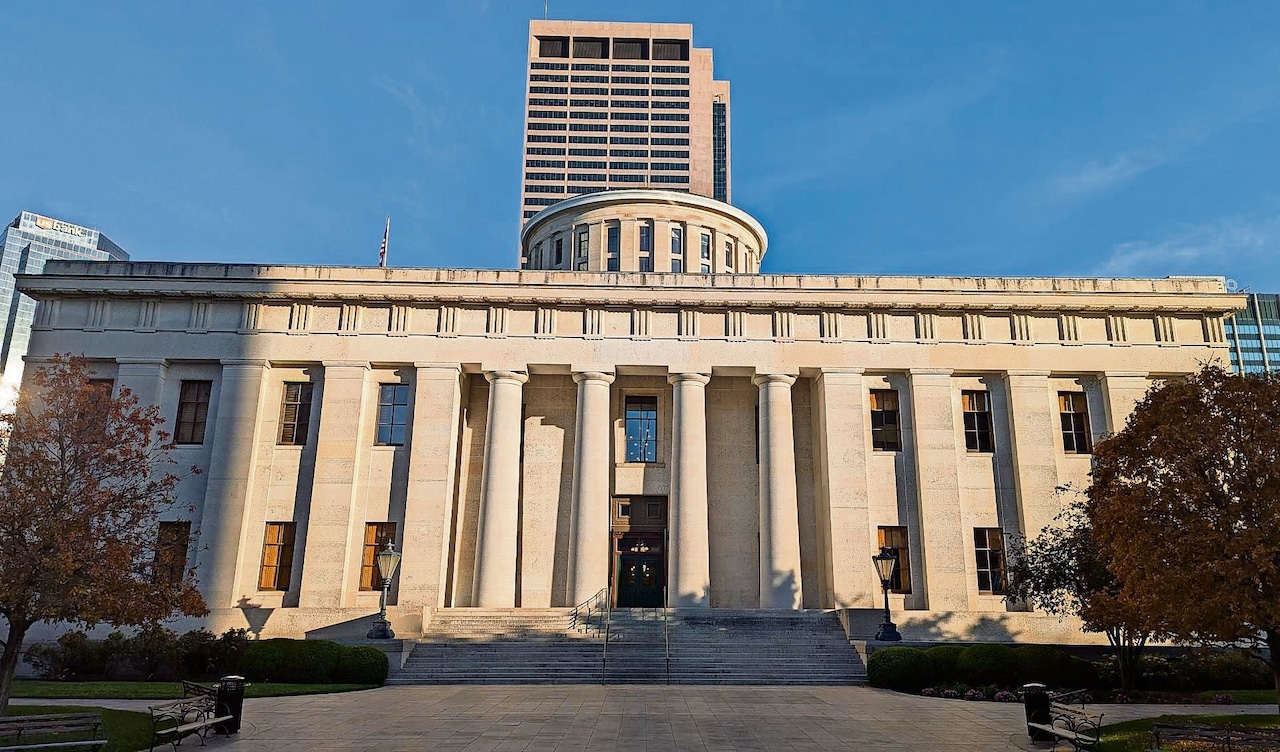
State Republicans at Crossroads Over AI Regulation
In a surprising twist, Ohio’s Republican lawmakers are joining forces with Democrats to propose legislation regulating artificial intelligence, sparking a potential showdown with powerful tech industry donors. This bipartisan momentum raises a key question: Will GOP support hold strong against the financial influence of Big Tech?
The Ohio House recently introduced House Bill 524, sponsored jointly by a Republican and a Democrat, which would impose legal consequences on AI companies whose chatbots promote self-harm or violence. Under the bill, the Ohio Attorney General would have authority to investigate such cases, issue cease-and-desist orders, and pursue civil penalties of up to $50,000 per infraction.
Legislation Challenges Tech-Backed Political Norms
The bill follows another proposed measure that bans AI systems from performing or facilitating marriage ceremonies. These efforts fly in the face of conventional Republican alignment with deregulatory policies and raise eyebrows among political observers.
Chris Quinn, editor of cleveland.com, commented on the podcast Today in Ohio, “What I’m surprised about with both of these pieces of legislation is the Republicans clearly aren’t getting the JD Vance memo.” He pointed out that Vance’s political rise was significantly influenced by tech billionaires who staunchly oppose regulation, particularly around emerging technologies like AI.
Tech Influence and Political Contradictions
Senator JD Vance, a notable Ohio Republican, has been widely viewed as a political figure shaped by Silicon Valley donors. A recent Washington Post article noted Vance’s alignment with a group advocating for a tech-elite-driven governance model, suggesting that major decisions should not be left to the general public.
Quinn speculates that such affiliations may eventually steer Republican lawmakers away from supporting regulations. “My bet is this one doesn’t get passed,” he said. “The memo will come down—‘We don’t want regulations on technology.’ They want free sailing and they plan to use their influence and power to make sure the people running the country know that and obey them.”
Is Big Tech’s Reach Delayed at the State Level?
Courtney Astolfi, another contributor to the Today in Ohio podcast, offered a theory about why Ohio Republicans may currently support regulation. “I wonder if AI companies just haven’t gotten around to pumping money at the state level yet. Maybe they’ve started at the federal level,” she posited.
This opens the door to a broader discussion about the evolving role of state legislatures in technological oversight. With federal regulation still lagging, state governments may emerge as new battlegrounds for establishing AI accountability.
Public Safety vs. Market Freedom
At the heart of the debate is a fundamental conflict between public safety and market freedom. Proponents of regulation argue that AI systems, particularly chatbots, can cause real-world harm and must be held accountable. Opponents, often backed by tech industry dollars, warn that overregulation could stifle innovation and limit economic growth.
In the case of House Bill 524, lawmakers are responding to growing concerns about how unregulated AI tools may encourage harmful behavior. By empowering the Attorney General to act decisively, the bill aims to introduce a layer of governmental oversight that many believe is long overdue.
Political Fallout and Future Implications
Whether or not the bill ultimately passes, the debate is likely to have lasting repercussions. If Republicans retreat under industry pressure, it could signal a broader alignment of the party with corporate interests over public welfare. On the other hand, sustained bipartisan support could mark a turning point in how American lawmakers address technology’s rapid advance.
As Quinn and his co-hosts noted, the issue reflects a deeper tension in contemporary governance—balancing the benefits of technological progress with the need to protect citizens from its unintended consequences.
This article is inspired by content from Original Source. It has been rephrased for originality. Images are credited to the original source.