

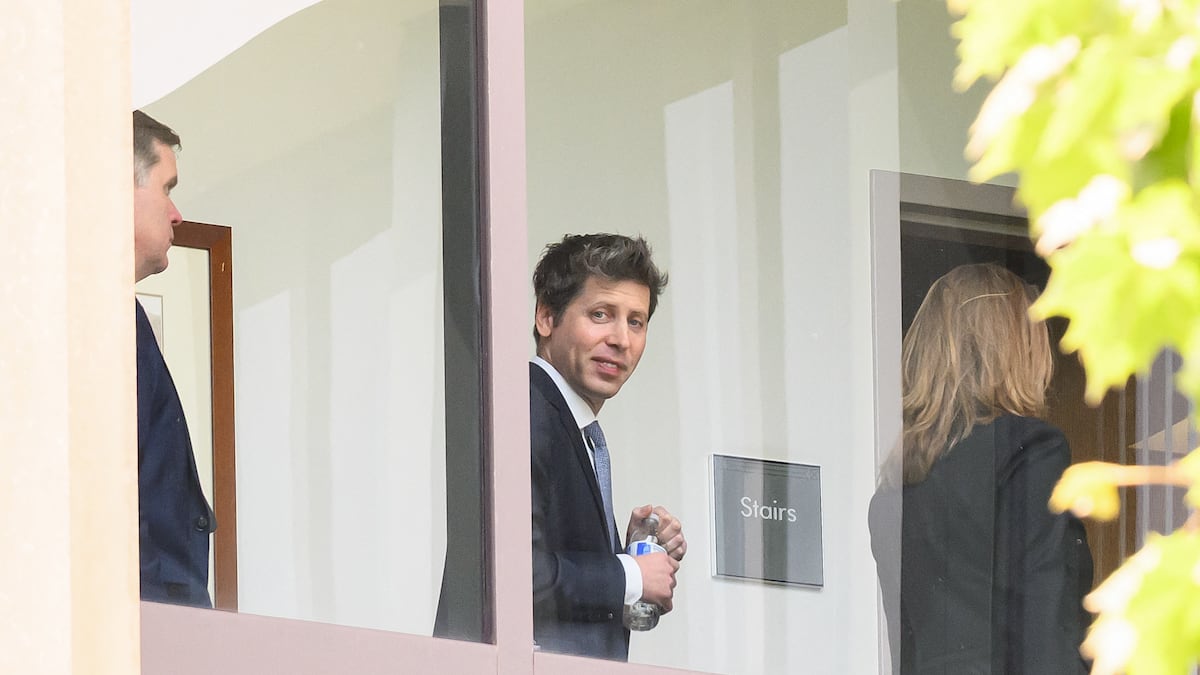
OpenAI Trial: Sam Altman Defends Against Elon Musk’s Allegations
The OpenAI lawsuit has taken center stage in Silicon Valley as Sam Altman, CEO of OpenAI, faces off against co-founder Elon Musk over accusations that Altman and his team “stole a charity” by shifting OpenAI from a nonprofit to a lucrative for-profit company.
On Tuesday, Altman took the stand at the federal courthouse in Oakland, California, to respond directly to Musk’s claims. This high-profile OpenAI lawsuit is now in its third week and has drawn attention from across the technology industry due to the stakes and the personalities involved. At its core, the trial examines whether the transformation of OpenAI into a for-profit juggernaut betrayed its original mission of advancing artificial intelligence for the benefit of humanity.
The Allegations: From Charity to For-Profit Powerhouse
Elon Musk’s legal team argues that OpenAI abandoned its nonprofit ideals when it established a for-profit arm, which ultimately attracted billions in investment and made the company a leader in AI. Musk claims that Altman, along with OpenAI president Greg Brockman and support from Microsoft, prioritized personal and corporate gain over the founding mission. Musk himself contributed $38 million to the early nonprofit, and his lawyers allege that he was pushed aside when he sought more control.
OpenAI’s defense, however, paints a different picture. Altman and his colleagues argue that Musk’s claims are driven by regret and competition, especially after he launched his own AI company, xAI, and attempted to lure talent away from OpenAI. On the stand, Altman described Musk’s actions as “business interference,” highlighting the tumultuous relationship between the two tech titans.
Inside the Courtroom: Testimonies and Tensions
During his testimony, Altman recounted the early days of OpenAI, when the founding team debated how best to compete in the rapidly evolving AI landscape. To attract top researchers and raise significant funding, they determined a for-profit entity was necessary. Yet, the co-founders agreed that no single individual should control the future of artificial general intelligence (AGI). This decision, Altman said, prompted Musk’s departure from the board in 2018—a move Altman claims boosted employee morale due to Musk’s demanding management style.
The trial has revealed private texts and emails showing Musk was aware of—and at times supportive of—plans to structure OpenAI as a for-profit. OpenAI’s legal team has also suggested Musk wanted to control the new entity and was kept informed of decisions even after stepping down. Meanwhile, Musk’s attorneys have sought to cast doubt on Altman’s trustworthiness and intentions, citing moments in court when Altman admitted he may not have always told the truth in his career.
The Stakes: Billions and the Future of AI
Musk’s suit is not only about reputation. If he prevails, Altman, Brockman, and Microsoft could be found liable for “breach of charitable trust” and “unjust enrichment.” Musk seeks up to $150 billion to be returned to the nonprofit and the dismantling of OpenAI’s for-profit entity. Such an outcome could fundamentally alter OpenAI’s trajectory, disrupt its ongoing AI research, and potentially reshape the global AI landscape.
OpenAI’s nonprofit parent still owns the for-profit company, now valued in the hundreds of billions, but Musk argues its influence has been marginalized. Altman maintains that the for-profit model was essential to ensure OpenAI’s survival and global leadership, particularly following the launch of ChatGPT in 2022.
Closing Arguments and What Comes Next
With closing arguments scheduled for Thursday, the tech world is watching closely. The advisory jury and Judge Yvonne Gonzalez Rogers are expected to reach a decision as early as next week. Whatever the outcome, this OpenAI lawsuit is likely to set important precedents for how nonprofit and for-profit motives intersect in the world of advanced technology.
Ultimately, the trial offers a rare look behind the curtain at Silicon Valley’s power struggles, investment strategies, and ethical debates as AI technology accelerates at a breakneck pace. The verdict will not only impact OpenAI and its leadership but could influence how future tech organizations balance commercial ambitions with their foundational missions.
This article is inspired by content from Original Source. It has been rephrased for originality. Images are credited to the original source.