

Tensions Escalate Between Pentagon and AI Leader Anthropic
Over the past week, a standoff has emerged between the United States’ highest defense officials and Anthropic, a leading artificial intelligence company known for its commitment to responsible AI development. The discord centers on how Anthropic’s technology, particularly its Claude chatbot system, is being deployed under a substantial $200 million defense contract. The company’s longstanding pledge to uphold strict AI safety standards is now being tested as the Pentagon—recently rebranded as the Department of War—appears to challenge these boundaries.
AI in National Security: The Claude System’s Role
Anthropic’s Claude system has been recognized for its advanced capabilities in data analysis, which are valued in national security applications. The company made history as the first AI provider to operate on classified government networks, a feat made possible through a 2024 partnership with Palantir, a prominent defense data contractor. Palantir announced that Claude would help government agencies swiftly process complex information, thereby enabling informed and timely decision-making in critical situations.
Palantir has historically supported military operations by integrating data from various sources, such as space sensors, to improve targeting accuracy. However, the company has also faced scrutiny over its work with law enforcement and previous administrations, raising questions about the ethical boundaries of AI in defense.
Operation in Venezuela Sparks Concerns
The relationship between Anthropic and the Pentagon became especially strained following media reports suggesting that Anthropic’s technology played a role in the operation to capture Venezuelan President Nicolás Maduro. While it remains unclear how Claude was specifically used, sources close to Anthropic assert that the company has not identified any violations of its usage policies in connection with the operation. Anthropic maintains rigorous oversight over how its AI tools are employed, especially in sensitive government contexts.
According to recent reports, an Anthropic employee voiced concerns about the potential use of their AI in the Venezuela operation during a meeting with Palantir representatives. This incident reportedly alarmed Palantir executives and contributed to a perceived rupture between Anthropic and the Department of War.
Official Responses: Uncertainty and Disagreement
When questioned, an Anthropic spokesperson refrained from confirming or denying the use of Claude in the Venezuela operation, citing the classified nature of military activities. The spokesperson emphasized that discussions with military partners have remained within routine technical boundaries and that no extraordinary concerns have been raised regarding Claude’s deployment in defense missions.
In contrast, Pentagon officials have acknowledged ongoing reviews of their relationship with Anthropic. Sean Parnell, the Pentagon’s chief spokesman, underscored the importance of having partners committed to supporting the military’s objectives in any potential conflict, reiterating that the ultimate goal is to safeguard American troops and citizens.
Negotiations Hit a Roadblock Over AI Guardrails
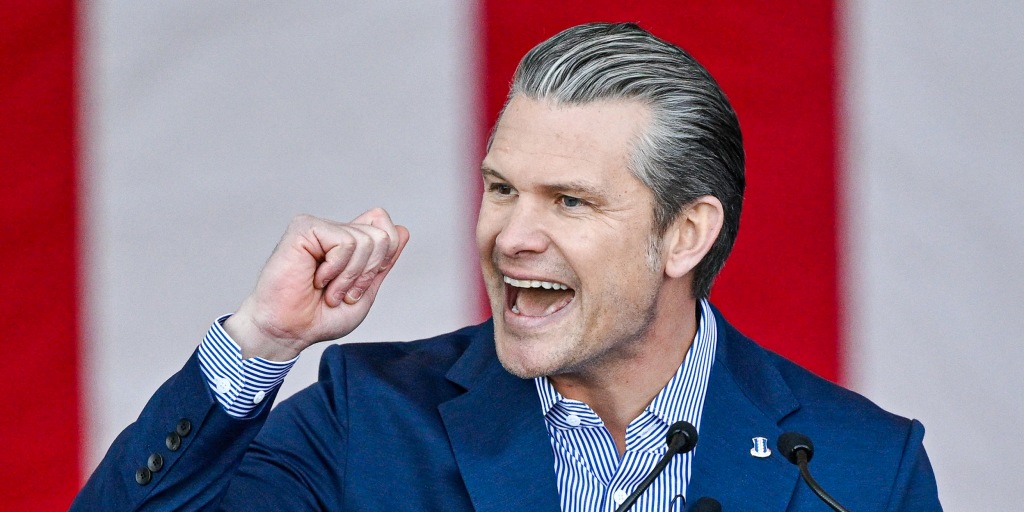
The core of the dispute appears to revolve around the Pentagon’s push for unrestricted access to AI technologies for all lawful purposes. In early January, Defense Secretary Pete Hegseth released a policy document requiring all AI contracts to eliminate company-imposed limitations on how the military can use these systems. This directive is set to be incorporated into all relevant contracts within 180 days, directly affecting Anthropic’s agreements with the Department of War.
Anthropic, for its part, has consistently refused to allow its AI to be used in fully autonomous weapon systems or in domestic surveillance operations. The Pentagon, however, has increased pressure on Anthropic to relax these restrictions, arguing that flexibility is essential for national defense.
Anthropic’s Commitment to Responsible AI
Despite the friction, Anthropic has reiterated its support for national security initiatives, provided that the company’s ethical standards are respected. In recent years, Anthropic has expanded its advisory board to include prominent figures from the defense and intelligence communities, further cementing its role in government operations. The company also collaborates with other AI leaders like OpenAI and Google under separate Defense Department contracts, each valued at up to $200 million.
Dario Amodei, Anthropic’s CEO, has been vocal about the need to equip democratic societies with advanced AI tools while maintaining strict boundaries to prevent misuse. In a public essay, Amodei wrote, “We should arm democracies with AI, but we should do so carefully and within limits.”
Experts Weigh In: Practical Limits and Theoretical Concerns
Michael Horowitz, a former Pentagon official and current professor at the University of Pennsylvania, noted that Anthropic’s systems, like Claude, are not yet suitable for deployment in lethal autonomous weapons. He suggested that the current dispute is more about hypothetical scenarios than about immediate practical applications.
As the Pentagon continues to review its partnerships with AI providers, the manner in which companies like Anthropic balance ethical considerations with government demands will likely set important precedents for the future of military AI integration.
This article is inspired by content from Original Source. It has been rephrased for originality. Images are credited to the original source.