

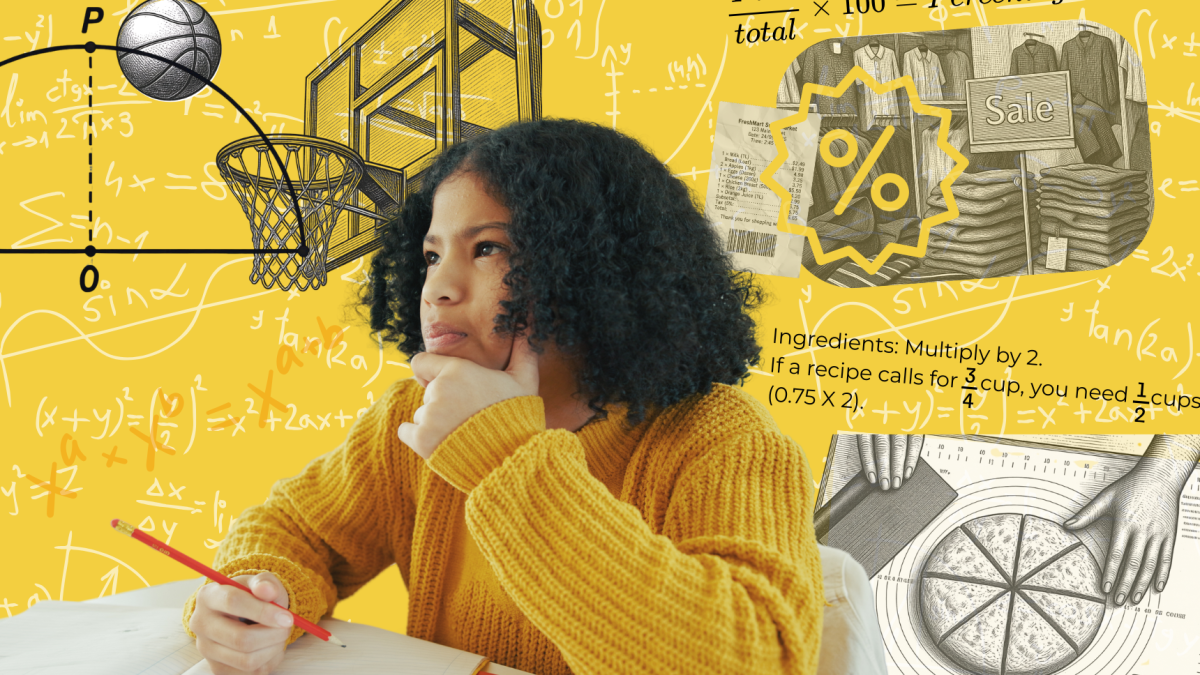
Introduction: The Promise of AI in Personalized Math Learning
Personalized math learning has long been a goal for educators seeking to make mathematics more engaging for students. With the emergence of artificial intelligence, hopes are rising that technology can at last tailor lessons to individual interests and needs. Teachers like Al Rabanera from La Vista High School in Fullerton, California, are already experimenting with AI tools to connect math concepts to real-world topics that resonate with their students—many of whom come from marginalized backgrounds.
For years, educators have tried to personalize math lessons, but results have often fallen short. Now, with generative AI powering platforms such as ChatGPT and Gemini, there’s renewed optimism—and skepticism—about whether personalized math learning can truly be achieved.
AI Tools in Action: Bridging Relevance and Mathematics
Rabanera’s approach is to use AI to create assignments that relate mathematical concepts to the job market—a subject his students care deeply about. By prompting an AI tool with questions about workforce trends, he received data from the U.S. Department of Labor, highlighting correlations between education, gender, and income. The AI also helped craft questions so students could analyze the data using statistical methods they were learning.
This method makes abstract math concepts more tangible. For example, students estimated quartiles on a graph, connecting the exercise to their own lives. One student commented on the real-world implications of wage gaps, demonstrating how personalized math learning can enhance engagement and understanding.
Challenges and Limitations of AI-Powered Personalization
Despite its promise, creating truly personalized math assignments with AI is not simple. Teachers need both time and technical skills to generate meaningful problems that match students’ interests and assess their skills accurately. Furthermore, AI-generated questions sometimes miss the mark in terms of authenticity and realism. For instance, AI might propose physically impossible scenarios, like a concert with sound levels of 400 decibels, or assignments that are simply irrelevant, such as counting pins at a concert.
Research from the EdWeek Research Center shows that 55% of teachers cite low student engagement in academics as a significant challenge, particularly in math. More than a third report that students are less engaged in math than other subjects. Connecting math problems to popular interests—like video games or pop culture—can help, but the process is far from foolproof.
The Reality of Customization: Lessons from Khan Academy and Beyond
Khan Academy, a leader in educational technology, experimented with its Khanmigo chatbot to personalize math tutoring based on students’ interests. However, the company found that referencing topics like basketball or TV shows did not significantly improve students’ academic performance or engagement. Moreover, if AI responses took too long—more than five seconds—students quickly lost interest.
Kristen DiCerbo, Khan Academy’s chief learning officer, noted that sometimes personalized scenarios felt forced or contrived, leading students to tune out. There’s also the concern that limiting content to students’ current interests may prevent them from discovering new passions and areas of knowledge.
Innovative Approaches: Teacher and Student Collaboration with AI
Some researchers and teachers are developing tools to let students choose topics that truly interest them, offering a higher degree of specificity—for example, referencing a favorite musician rather than just “music.” Teachers are also involved in reviewing and refining AI-generated questions to ensure they make sense and align with learning goals. For instance, Leslie Brown, a 7th-grade math teacher in Arkansas, adapted a standard math problem to revolve around fishing spots, making it more relevant for her rural students.
Still, AI isn’t perfect—sometimes generating confusing or unrealistic problems. Teachers and students both play a role in identifying and correcting these issues, ensuring that personalized math learning remains effective and relatable.
Looking Ahead: The Future of Personalized Math Learning
While AI-powered personalization in math education is not without its flaws, the technology continues to evolve. New platforms like Brisk and Magic School AI allow teachers to create themed assignments, such as choose-your-own-adventure math quests, which can boost engagement and offer students choices tailored to their preferences.
Ultimately, personalized math learning powered by AI offers both potential and challenges. Success depends on balancing technical innovation with educational expertise, ensuring that personalized content is both relevant and pedagogically sound. As AI tools improve and teachers become more adept at leveraging them, the dream of truly individualized math education may come closer to reality.
This article is inspired by content from Original Source. It has been rephrased for originality. Images are credited to the original source.