

New Quantum Approach Supercharges Machine Learning
In a groundbreaking study, researchers from Kipu Quantum GmbH and collaborators have developed a revolutionary technique that significantly enhances machine learning (ML) performance using quantum mechanics. The method, based on the principles of spin glass feature mapping, has demonstrated up to 210% performance improvement over classical machine learning approaches.
This advancement marks a pivotal step in the evolution of quantum machine learning, a field that aims to apply quantum computing principles to artificial intelligence. The team, including Anton Simen, Carlos Flores-Garrigos, Murilo Henrique De Oliveira, Gabriel Dario Alvarado Barrios, Juan F. R. Hernández, and Qi Zhang, has introduced a novel way to encode data into a disordered quantum system, enabling the extraction of rich, meaningful features from high-dimensional datasets.
Spin Glass Feature Mapping: A Quantum Leap
The core innovation lies in the use of quantum spin glasses, disordered magnetic systems that exhibit complex dynamics. By encoding classical data into these systems and observing their evolution, the team was able to generate advanced feature representations. These features, when used by classical ML algorithms, resulted in substantial gains in performance across a variety of applications.
Researchers utilized a process called quantum quench, where the quantum system is rapidly evolved. This process, when performed in the coherent regime with annealing times between 10 and 40 nanoseconds, produced the most stable and accurate results. Notably, longer annealing times led to performance degradation due to decoherence effects.
Breakthrough Results Across Key Applications
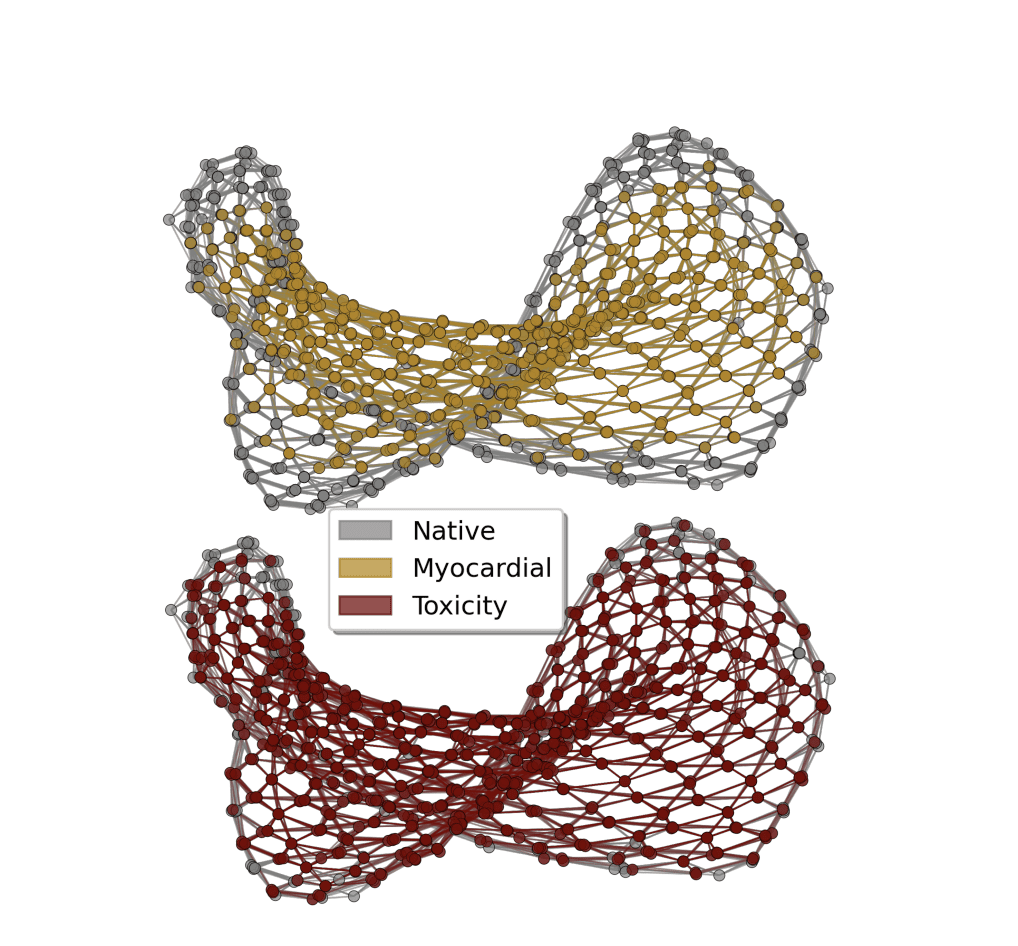
The method was tested on real-world datasets associated with molecular toxicity prediction, myocardial infarction complications, and drug-induced autoimmunity. By feeding the quantum-enhanced features into algorithms like support vector machines, random forests, and gradient boosting, the team observed improvements in accuracy, precision, recall, and area under the curve (AUC).
In some cases, the ML models achieved up to 210% better performance compared to their classical counterparts. These gains underscore the potential for quantum-enhanced data preprocessing to revolutionize how artificial intelligence functions in complex domains such as drug discovery and medical diagnostics.
Industrial Applications and Quantum Advantage
Kipu Quantum has already begun translating these findings into practice by launching an industrial quantum machine learning service. The service is designed to leverage this new feature mapping technique, aiming to deliver practical quantum advantage in commercial settings. The approach allows classical ML to benefit from quantum-derived insights without needing full-scale quantum computers.
The process involves encoding classical data into qubits, using analog quantum computers called annealers to evolve the system, and extracting features at optimal dynamic points. These features are then used as inputs for traditional machine learning models, enhancing their ability to detect subtle patterns in data.
Future Directions and Research Goals
While the results are promising, the researchers acknowledge the need for further investigation. Future research will explore more complex quantum feature encodings, adaptive annealing schedules, and applications across a broader range of problems. The team is also interested in testing the methodology on digital quantum computers and alternative analog platforms, such as neutral-atom quantum systems.
This research represents one of the first concrete demonstrations where quantum-inspired methods have yielded a clear performance advantage in machine learning, potentially bridging the gap between theoretical quantum supremacy and real-world utility.
Scientific Impact and Broader Implications
The study not only showcases the viability of quantum-centric data processing but also opens new doors for hybrid quantum-classical computing architectures. By integrating quantum dynamics into classical workflows, the research sets a precedent for future AI systems that harness the power of quantum mechanics.
The implications are vast for sectors that rely on complex data analysis, including healthcare, pharmaceutical development, and materials science. As quantum hardware continues to evolve, these methods may become increasingly accessible, driving a new era of AI performance and capability.
This article is inspired by content from Original Source. It has been rephrased for originality. Images are credited to the original source.